ALRUNE
Protected Area
T
Why dive here
With 95+ marine species recorded in the area - including seals & sea lions, sea turtles and jellyfish lake - ALRUNE offers some of North Sea Coast's richest wreck diving. Water ranges 3-19°C, warmest July, August, September.
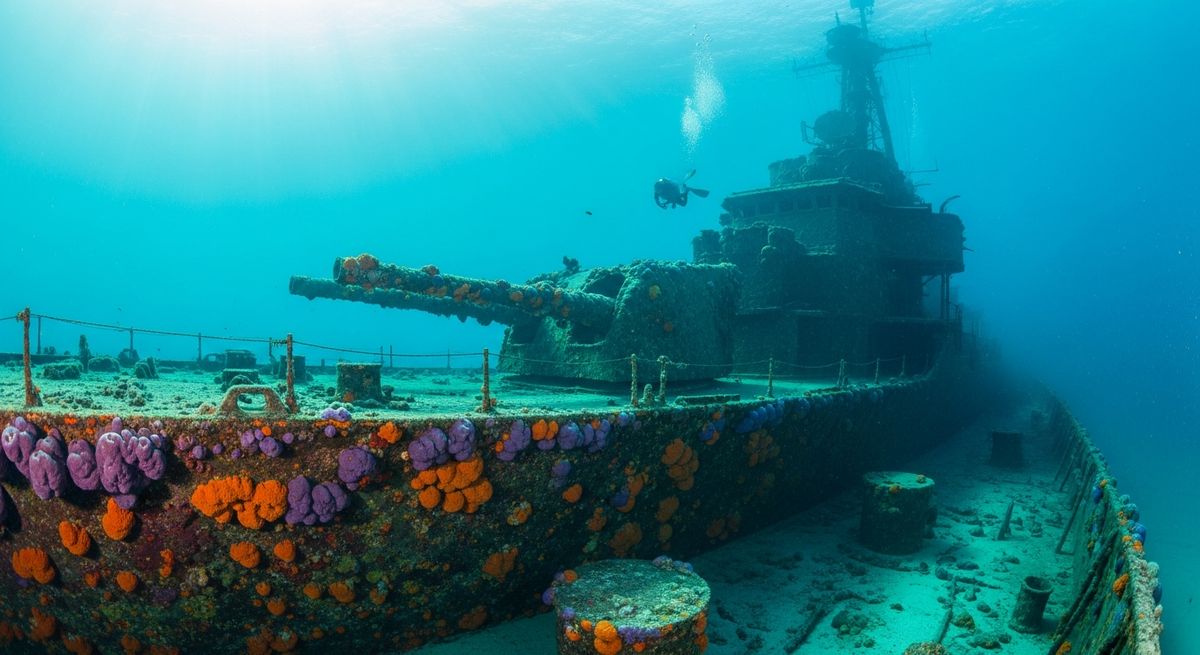
The Alrune isn't a deep dive, sitting at just 8 meters, but what it lacks in depth it more than makes up for in character. This old fishing vessel, sunk back in 1943, feels like a proper piece of history down there. We love the way the North Sea has claimed it, turning the timbers into a rough canvas for the local critters. You'll spend your time here picking through the collapsed hull, imagining the life it had. We often find lumpsuckers tucked into the crevices, their camouflage almost perfect against the barnacled wood. Conger eels are a common sight, peering out from deeper sections, and the current brings in schools of cod and pollock, swirling around the masts that still reach towards the surface. It’s a dive for those who appreciate wrecks with a story, not just perfect visibility. Visibility can be hit or miss, so check local reports, but even on a murkier day, the Alrune has a certain atmospheric charm. Go on a slack tide, if you can, to really take your time exploring.
Typical ALRUNE Dive Profile
Illustrative profile based on site depth and type. Actual dive profiles vary - always follow your dive computer and training.
Safety Notes
Wreck site - avoid penetration without wreck diving certification. Watch for sharp metal and entanglement hazards.
Cold water this month (avg 13°C). Drysuit or thick wetsuit (7mm+) recommended.
ALRUNE Wreck History
Year Sunk
1943
Vessel Type
fishing vessel
Cause
unknown
The Alrune was a Danish fishing vessel that was lost to the sea on June 10, 1943. While the official cause of its sinking is unknown, its final voyage took place in the midst of World War II, when the Danish coast was a perilous place. The North Sea was heavily mined by both Allied and Axis forces, and any vessel, military or civilian, risked a fatal encounter. The Alrune may have been a victim of a mine, an attack, or simply the notoriously rough North Sea weather that has claimed countless ships over the centuries.
Lying at a depth of just 8 meters, the Alrune is a fantastic and highly accessible wreck for novice divers or those on a second dive of the day. Its designation as a 'dangerous wreck' indicates it is likely broken up, with sharp edges that require caution. However, this also creates countless nooks and crannies for marine life to shelter in. Divers can explore the remains of this piece of wartime history, now a thriving artificial reef for the cold-water species of the North Sea, and ponder the fate of the crew on that fateful day in 1943.
Nearest Dive Centres to ALRUNE
Dive shops near ALRUNE
View all dive centres in North Sea CoastReviews for ALRUNE
Conditions
Ocean conditions, forecast and tides for ALRUNE
ALRUNE Ocean Conditions
Monthly averages for ALRUNE, sourced from Open-Meteo marine data - nearest station: Open-Meteo marine grid (55.31, 9.86) (1km away)
October Averages
Sea Temperature
13°C
56°F · Range: 10.7–16.8°C
Air Temperature
11°C
52°F
Wind Speed
7.69 m/s
14.9 knots
Atmospheric Pressure
1010.5 hPa
Based on 4 years of monitoring data · Data sources: Open-Meteo marine data
Plan & book
Ways to dive North Sea Coast, from day trips to liveaboards.
Day trips & courses
via GetYourGuideGuided dives, courses and snorkel trips with instant booking.
Find dive trips in North Sea CoastPlaces to stay
via Booking.comHotels and dive resorts near North Sea Coast.
Search stays in North Sea CoastDive insurance
Most travel insurance excludes or limits scuba. Check what you need before you go.
Dive insurance explainedPartner links: we may earn a commission if you book, at no extra cost to you. How we make money
Where to Stay near ALRUNE
Prices from Booking.com. We may earn a commission at no extra cost to you.