ALTE WESER
Protected Area
Nakskov Fjord
Why dive here
With 95+ marine species recorded in the area - including seals & sea lions, sea turtles and jellyfish lake - ALTE WESER offers some of North Sea Coast's richest wreck diving. Water ranges 3-19°C, warmest July, August, September.
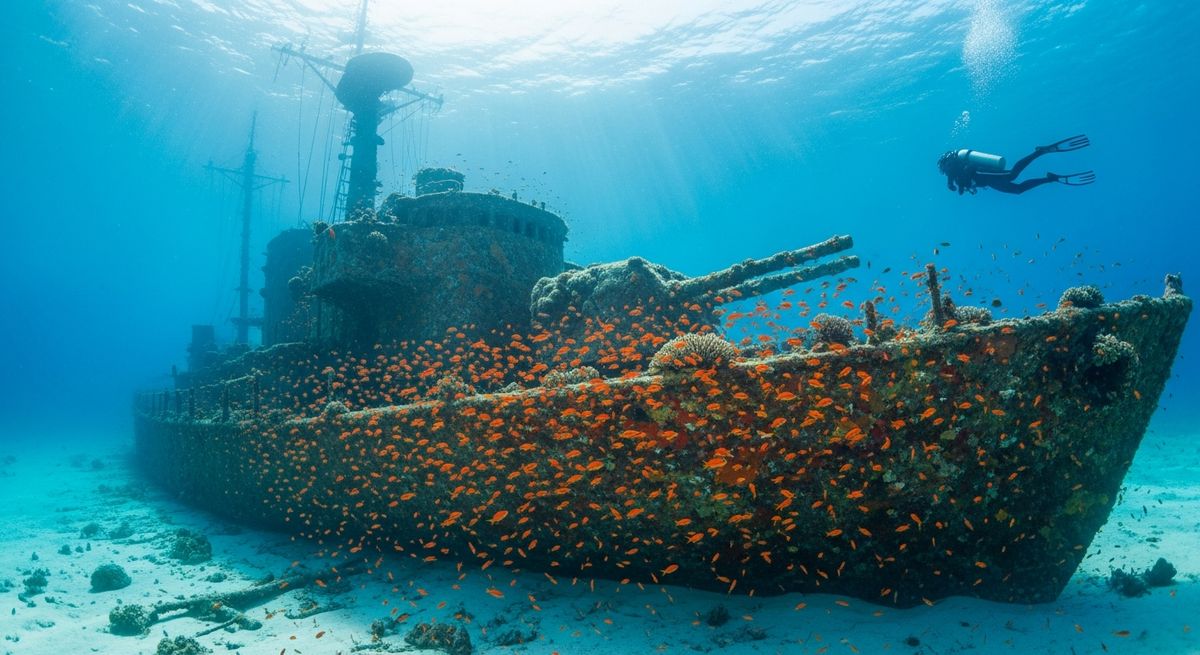
The Alte Weser isn't about deep dives or big pelagics; it's a slice of maritime history, easy to get to and genuinely enjoyable. This old carrier vessel, a decent 60 metres long, sits upright in just 9 metres of water, making it perfect for a relaxed dive, even if you’re newer to wreck diving. We love that you can spend a full bottom time exploring her decks and holds without feeling rushed. Dropping down, the first thing you notice is the sheer scale, especially for such a shallow wreck. Her superstructure is still largely intact, and swimming through the cargo holds feels like stepping back in time. Light shafts pierce the openings, illuminating schools of cod that drift lazily through the interior, alongside blennies peeking from every crevice. Out on the deck, large spider crabs are often scuttling about, completely unbothered by divers. We’d suggest going at slack tide; the North Sea can get a bit pushy, and you want to be able to poke around without fighting the current. If you're into photography, the ambient light inside the wreck on a sunny day can be fantastic, giving those ghostly, atmospheric shots. It’s a proper wreck experience without the usual depth or current challenges.
Typical ALTE WESER Dive Profile
Illustrative profile based on site depth and type. Actual dive profiles vary - always follow your dive computer and training.
Safety Notes
Wreck site - avoid penetration without wreck diving certification. Watch for sharp metal and entanglement hazards.
Cold water this month (avg 13°C). Drysuit or thick wetsuit (7mm+) recommended.
ALTE WESER Wreck History
Year Sunk
1944
Vessel Type
cargo ship
Cause
grounding
Tonnage
979 GRT
The German cargo ship 'Alte Weser' met her end not in a dramatic battle, but at the hands of the notoriously treacherous North Sea. In 1944, during World War II, the vessel was transporting a cargo of stone when she ran aground in a storm off the Danish coast near Esbjerg. The relentless power of the waves proved too much for the stranded ship; it broke in two and settled onto the sandy seabed, becoming a permanent feature of the coastline.
Lying at a very accessible depth of 9 meters, the 'Alte Weser' is a fantastic dive for all skill levels. Its classification as a wreck with parts of the hull and superstructure visible means that on a clear day, you can see the wreck from the surface before you even descend. The shallow depth allows for long, relaxed bottom times and provides plenty of light for photographers. The wreckage is scattered but substantial, creating an ideal habitat for crabs, lobsters, and various species of North Sea fish. It serves as a fascinating and easy-to-explore piece of WWII maritime history.
Nearest Dive Centres to ALTE WESER
Dive shops near ALTE WESER
View all dive centres in North Sea CoastReviews for ALTE WESER
Conditions
Ocean conditions, forecast and tides for ALTE WESER
ALTE WESER Ocean Conditions
Monthly averages for ALTE WESER, sourced from Open-Meteo marine data - nearest station: Open-Meteo marine grid (55.31, 9.86) (1km away)
October Averages
Sea Temperature
13°C
56°F · Range: 10.7–16.8°C
Air Temperature
11°C
52°F
Wind Speed
7.69 m/s
14.9 knots
Atmospheric Pressure
1010.5 hPa
Based on 4 years of monitoring data · Data sources: Open-Meteo marine data
Plan & book
Ways to dive North Sea Coast, from day trips to liveaboards.
Day trips & courses
via GetYourGuideGuided dives, courses and snorkel trips with instant booking.
Find dive trips in North Sea CoastPlaces to stay
via Booking.comHotels and dive resorts near North Sea Coast.
Search stays in North Sea CoastDive insurance
Most travel insurance excludes or limits scuba. Check what you need before you go.
Dive insurance explainedPartner links: we may earn a commission if you book, at no extra cost to you. How we make money
Where to Stay near ALTE WESER
Prices from Booking.com. We may earn a commission at no extra cost to you.