ANDRIOS
Protected Area
A
Why dive here
With 95+ marine species recorded in the area - including seals & sea lions, sea turtles and jellyfish lake - ANDRIOS offers some of North Sea Coast's richest wreck diving. Water ranges 3-19°C, warmest July, August, September.
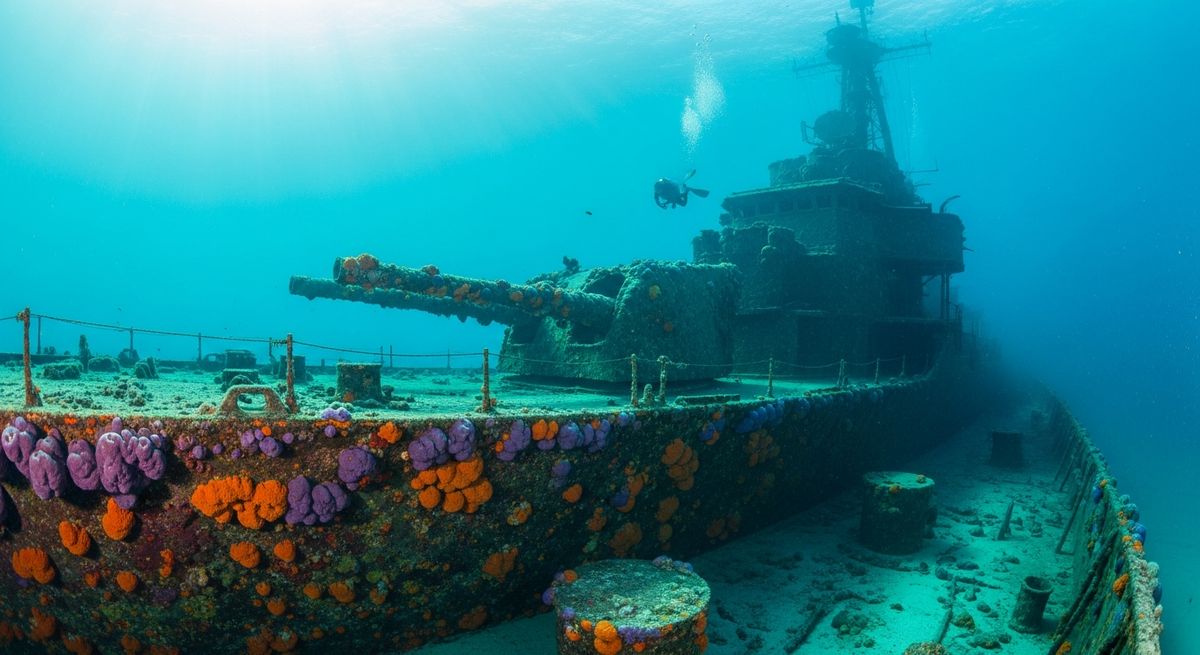
The *Andrios* is a proper North Sea wreck, a stark reminder of the wild conditions here. We always feel a chill descending onto her, even on a calm day. Sunk back in '54, she sits upright in 30 metres, mostly intact, though time and current have done their work on the superstructure. You can penetrate the hold if you’re comfortable in overhead environments, and we’d recommend doing so for a true sense of scale. Sunlight filters down, creating an eerie glow inside, illuminating the schools of cod and pollock that often shelter there. Outside, conger eels peer from every crevice, and the deck is carpeted in anemones and dead man’s fingers. Visibility can swing dramatically, so pick your day carefully; a slack tide and good weather window make all the difference here. It’s a site for experienced wreck divers who appreciate history and don't mind a bit of a current. We think it’s one of the best examples of a genuinely atmospheric wreck dive in the Danish North Sea.
Typical ANDRIOS Dive Profile
Illustrative profile based on site depth and type. Actual dive profiles vary - always follow your dive computer and training.
Safety Notes
Depth of 30m - Advanced Open Water certification recommended.
Wreck site - avoid penetration without wreck diving certification. Watch for sharp metal and entanglement hazards.
Cold water this month (avg 13°C). Drysuit or thick wetsuit (7mm+) recommended.
Always perform a 3-minute safety stop at 5m before surfacing.
ANDRIOS Wreck History
Year Sunk
1954
Vessel Type
cargo ship
Cause
storm
Tonnage
7,176 GRT
The SS ANDRIOS was a Greek-flagged steamship that navigated the world's oceans in the mid-20th century. Like countless other merchant vessels, her story is one of routine cargo runs punctuated by the constant challenge of unpredictable weather. Her final chapter was written in the notoriously harsh and unforgiving North Sea, a body of water known for testing the mettle of any ship and its crew.
In late February of 1954, the ANDRIOS found itself caught in a violent storm while sailing off the Danish coast. Battered by immense waves and hurricane-force winds, the ship's hull was breached and she began to take on water faster than the pumps could handle. An SOS was sent, and in a remarkable feat of seamanship, the entire 32-person crew was rescued by a German trawler before the ANDRIOS succumbed to the sea and slipped beneath the waves.
Resting at a depth of 30 meters, the ANDRIOS is a classic North Sea wreck dive. The cold, nutrient-rich waters mean the wreck is often covered in a dense carpet of marine growth, including anemones and dead man's fingers. Visibility can be variable, but on a clear day, the ship's large structure is an impressive sight. Divers can expect to encounter large schools of cod and pollock that have made the wreck their home. Classified as a 'non-dangerous wreck', it offers a fantastic and relatively safe opportunity for experienced divers to explore a substantial mid-century cargo ship.
Reviews for ANDRIOS
Conditions
Ocean conditions, forecast and tides for ANDRIOS
ANDRIOS Ocean Conditions
Monthly averages for ANDRIOS, sourced from Open-Meteo marine data - nearest station: Open-Meteo marine grid (55.31, 9.86) (1km away)
October Averages
Sea Temperature
13°C
56°F · Range: 10.7–16.8°C
Air Temperature
11°C
52°F
Wind Speed
7.69 m/s
14.9 knots
Atmospheric Pressure
1010.5 hPa
Based on 4 years of monitoring data · Data sources: Open-Meteo marine data
Plan & book
Ways to dive North Sea Coast, from day trips to liveaboards.
Day trips & courses
via GetYourGuideGuided dives, courses and snorkel trips with instant booking.
Find dive trips in North Sea CoastPlaces to stay
via Booking.comHotels and dive resorts near North Sea Coast.
Search stays in North Sea CoastDive insurance
Most travel insurance excludes or limits scuba. Check what you need before you go.
Dive insurance explainedPartner links: we may earn a commission if you book, at no extra cost to you. How we make money
Where to Stay near ANDRIOS
Prices from Booking.com. We may earn a commission at no extra cost to you.