ANNIE TRAMM
Protected Area
Sprogø og Halsskov Rev
Why dive here
With 95+ marine species recorded in the area - including seals & sea lions, sea turtles and jellyfish lake - ANNIE TRAMM offers some of North Sea Coast's richest wreck diving. Water ranges 3-19°C, warmest July, August, September.
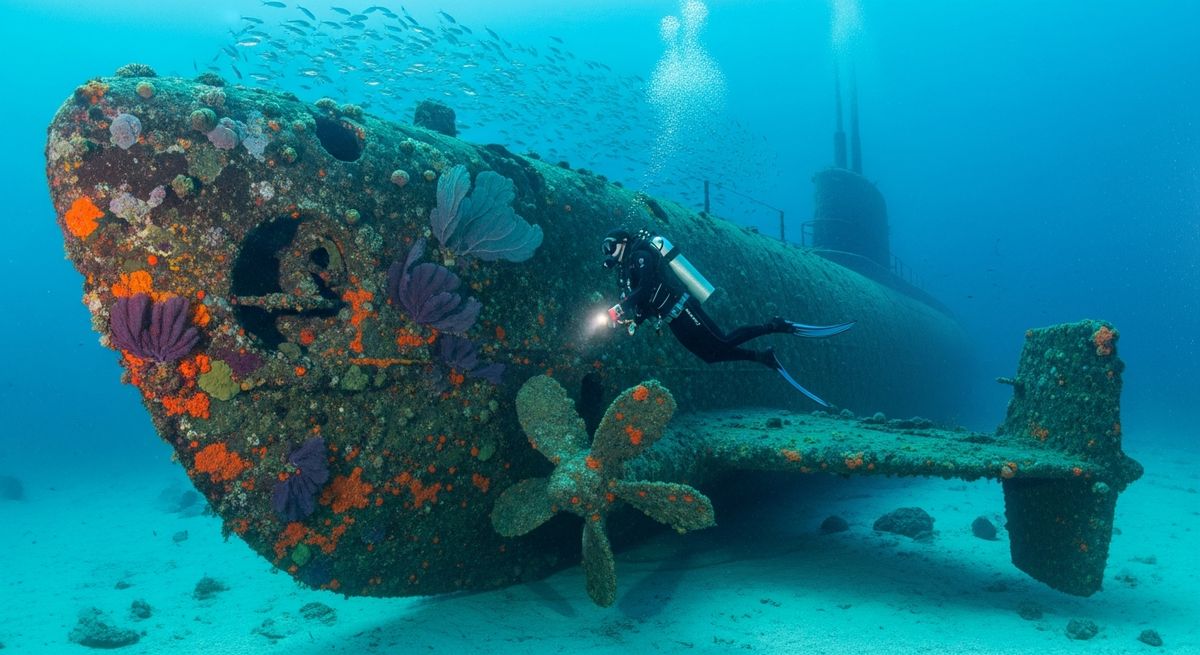
The Annie Tramm is a real North Sea character, a merchant vessel that came to a bad end in a collision. We love it because it’s not just another pile of twisted metal. It’s still remarkably intact, lying at 30m, and feels like a genuine step back in time. You can trace its journey, imagining the cargo, and that’s what makes it a standout for us. Exploring the Annie Tramm means navigating through the holds, poking around the bridge, and admiring the deck structures, all now heavily encrusted with anemones and sponges. Visibility here can be a bit of a lottery, as it often is in the North Sea, but on a good day, the light filters down, illuminating schools of cod darting between the beams. Look for the massive crabs tucked into crevices – they’re everywhere. We’d suggest diving this one on a slack tide; the currents can pick up surprisingly fast. This is a dive for experienced wreck enthusiasts who appreciate history and don't mind a bit of a challenge.
Typical ANNIE TRAMM Dive Profile
Illustrative profile based on site depth and type. Actual dive profiles vary - always follow your dive computer and training.
Safety Notes
Depth of 30m - Advanced Open Water certification recommended.
Wreck site - avoid penetration without wreck diving certification. Watch for sharp metal and entanglement hazards.
Cold water this month (avg 13°C). Drysuit or thick wetsuit (7mm+) recommended.
Always perform a 3-minute safety stop at 5m before surfacing.
ANNIE TRAMM Wreck History
Year Sunk
1911
Vessel Type
cargo ship
Cause
collision
Tonnage
1,061 GRT
The SS Annie Tramm was a German steam-powered merchant ship built at the turn of the 20th century. In September 1911, she was on a routine voyage, transporting a cargo of wood from the Baltic port of Danzig (now Gdańsk) to Hamburg, a journey that took her through the busy shipping lanes of the North Sea.
On the morning of September 21st, 1911, the Annie Tramm encountered thick fog, a common and dangerous hazard for mariners. In the poor visibility, she collided with the British steamer SS Teeswood. The impact was severe, and the Annie Tramm began to sink rapidly. Fortunately, the crew of the Teeswood acted quickly, managing to rescue all of the German sailors before their vessel slipped beneath the waves.
Lying at a depth of 30 meters, the Annie Tramm is now a superb wreck dive for advanced recreational divers. The vessel is broken into two large, distinct sections, offering a fantastic and varied site to explore. The cargo of wood has long since rotted away, but the ship's structure remains. Divers can swim around the impressive boiler and engine block, explore the separated bow and stern sections, and observe the abundant marine life that has colonized this piece of pre-war maritime history on the Danish seabed.
Nearest Dive Centres to ANNIE TRAMM
Dive shops near ANNIE TRAMM
View all dive centres in North Sea CoastReviews for ANNIE TRAMM
Conditions
Ocean conditions, forecast and tides for ANNIE TRAMM
ANNIE TRAMM Ocean Conditions
Monthly averages for ANNIE TRAMM, sourced from Open-Meteo marine data - nearest station: Open-Meteo marine grid (55.31, 9.86) (1km away)
October Averages
Sea Temperature
13°C
56°F · Range: 10.7–16.8°C
Air Temperature
11°C
52°F
Wind Speed
7.69 m/s
14.9 knots
Atmospheric Pressure
1010.5 hPa
Based on 4 years of monitoring data · Data sources: Open-Meteo marine data
Plan & book
Ways to dive North Sea Coast, from day trips to liveaboards.
Day trips & courses
via GetYourGuideGuided dives, courses and snorkel trips with instant booking.
Find dive trips in North Sea CoastPlaces to stay
via Booking.comHotels and dive resorts near North Sea Coast.
Search stays in North Sea CoastDive insurance
Most travel insurance excludes or limits scuba. Check what you need before you go.
Dive insurance explainedPartner links: we may earn a commission if you book, at no extra cost to you. How we make money
Where to Stay near ANNIE TRAMM
Prices from Booking.com. We may earn a commission at no extra cost to you.