ARKONA
Protected Area
Reefs south of Langeland
Why dive here
With 95+ marine species recorded in the area - including seals & sea lions, sea turtles and jellyfish lake - ARKONA offers some of North Sea Coast's richest wreck diving. Water ranges 3-19°C, warmest July, August, September.
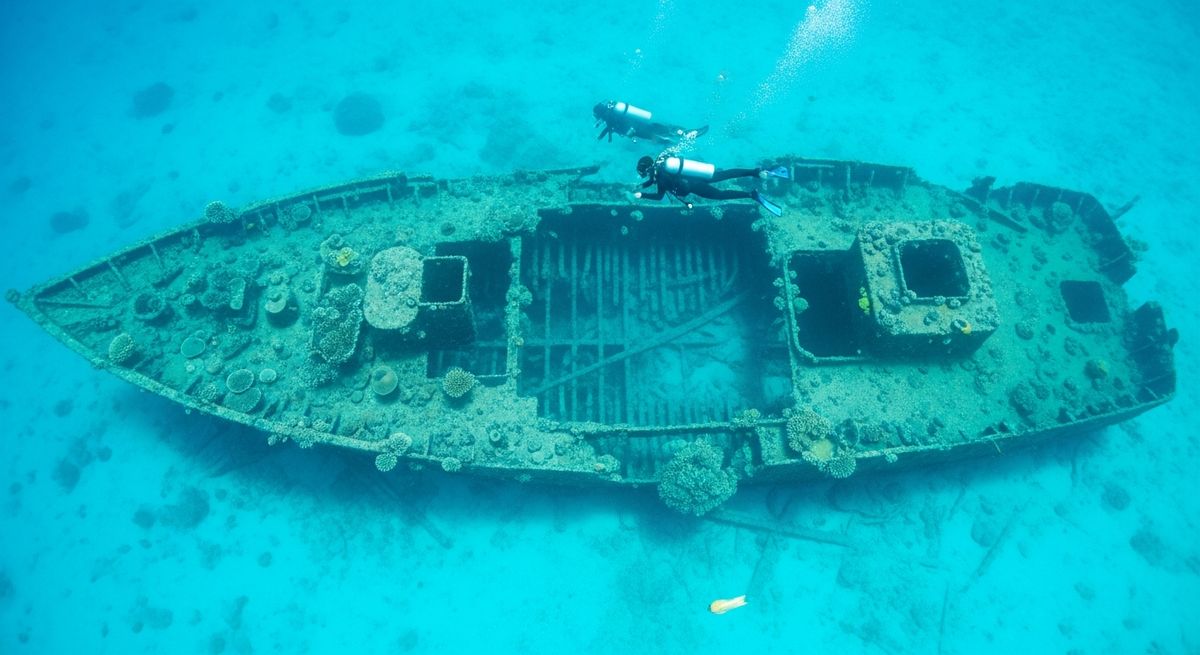
The Arkona, off the North Sea Coast, isn’t about colourful reefs. It’s about history, cold water, and the way the sea reclaims things. We love a wreck with a story, and this steamship, sunk by Allied aircraft in April 1945, has a palpable sense of its past. Lying at a comfortable 23 metres, she’s relatively intact for a vessel bombed and sunk in wartime, though definitely a dangerous wreck as classified. We’d suggest this for experienced cold-water wreck divers comfortable with limited visibility, which can often be the case here. What you get is a raw, tangible piece of history. Expect to see the stern section mostly intact, with machinery scattered around the impact zone. We’ve found the bow largely broken up, but the remaining structure offers plenty of nooks for cod and conger eels to shelter. Visibility, when it’s good, lets you appreciate the sheer scale of the damage and the way the metal has twisted. It’s a somber site, but endlessly fascinating, a true testament to the power of the ocean and human conflict. Dive this one for the character, not the corals.
Typical ARKONA Dive Profile
Illustrative profile based on site depth and type. Actual dive profiles vary - always follow your dive computer and training.
Safety Notes
Depth of 23m - Advanced Open Water certification recommended.
Wreck site - avoid penetration without wreck diving certification. Watch for sharp metal and entanglement hazards.
Cold water this month (avg 13°C). Drysuit or thick wetsuit (7mm+) recommended.
Always perform a 3-minute safety stop at 5m before surfacing.
ARKONA Wreck History
Year Sunk
1945
Vessel Type
cargo ship
Cause
bombed
The steamship Arkona met a violent end on April 17, 1945, a casualty of the final, chaotic weeks of World War II in Europe. As Allied forces pressed their advantage, air power was used extensively to disrupt German shipping and supply lines in the North Sea. The Arkona was caught in one of these raids and was bombed and sunk by Allied aircraft, sending the 26-meter vessel to the seabed.
Resting at a depth of 23 meters, the Arkona is a poignant dive into history. Though small, the wreck is a tangible link to the conflict that defined the 20th century. Divers can explore the remains of this wartime vessel, observing how over the decades it has transformed from a target of war into an artificial reef, now patrolled by the marine life of the North Sea.
Its classification as a 'Dangerous Wreck' serves as a reminder to dive with caution. Potential hazards include collapsing structures, sharp metal, and the possibility of entanglement in fishing nets that have snagged on the wreck over time. For the prepared diver, it offers a compelling and atmospheric exploration of a WWII-era steamship.
Nearest Dive Centres to ARKONA
Dive shops near ARKONA
View all dive centres in North Sea CoastReviews for ARKONA
Conditions
Ocean conditions, forecast and tides for ARKONA
ARKONA Ocean Conditions
Monthly averages for ARKONA, sourced from Open-Meteo marine data - nearest station: Open-Meteo marine grid (55.31, 9.86) (1km away)
October Averages
Sea Temperature
13°C
56°F · Range: 10.7–16.8°C
Air Temperature
11°C
52°F
Wind Speed
7.69 m/s
14.9 knots
Atmospheric Pressure
1010.5 hPa
Based on 4 years of monitoring data · Data sources: Open-Meteo marine data
Plan & book
Ways to dive North Sea Coast, from day trips to liveaboards.
Day trips & courses
via GetYourGuideGuided dives, courses and snorkel trips with instant booking.
Find dive trips in North Sea CoastPlaces to stay
via Booking.comHotels and dive resorts near North Sea Coast.
Search stays in North Sea CoastDive insurance
Most travel insurance excludes or limits scuba. Check what you need before you go.
Dive insurance explainedPartner links: we may earn a commission if you book, at no extra cost to you. How we make money
Where to Stay near ARKONA
Prices from Booking.com. We may earn a commission at no extra cost to you.