ASTRAEA
Protected Area
Maden on Helnæs and the sea west of
Why dive here
With 95+ marine species recorded in the area - including seals & sea lions, sea turtles and jellyfish lake - ASTRAEA offers some of North Sea Coast's richest wreck diving. Water ranges 3-19°C, warmest July, August, September.
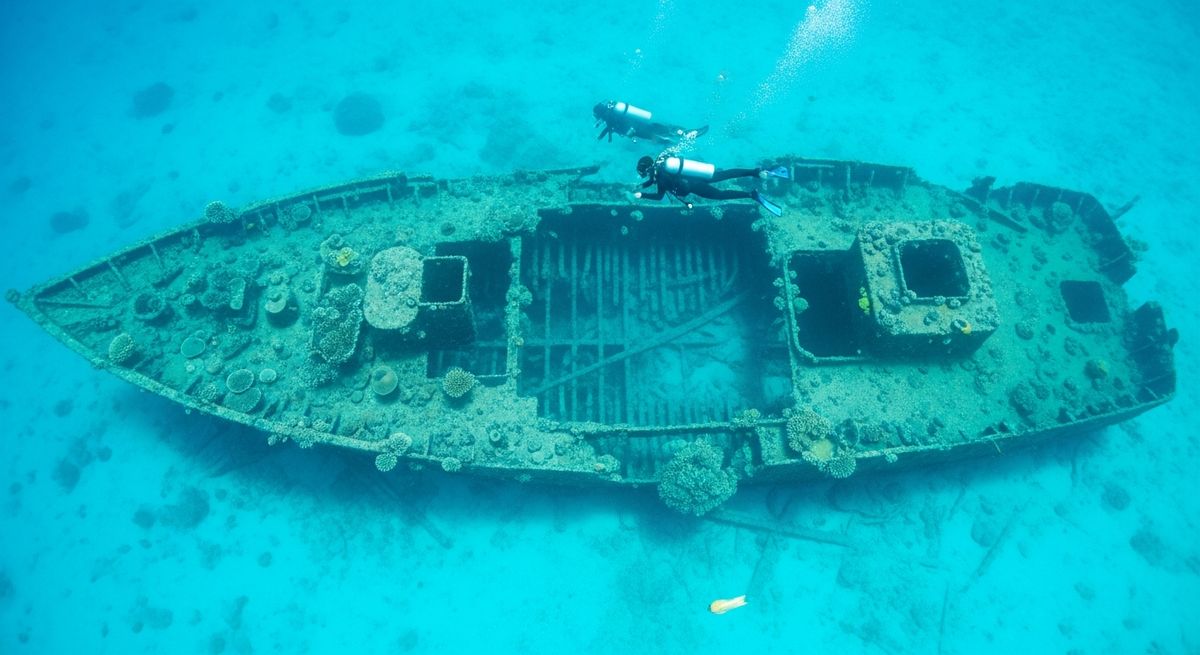
The Astraea is a wreck we always recommend for divers looking to explore a bit of history without the usual North Sea chill. She's shallow, sitting at just ten metres, which makes for long bottom times and great natural light penetration. We love the way the light filters down through the water, illuminating the various nooks and crannies where the local fish like to hide. What makes the Astraea special for us is the story she tells. You're not just looking at a pile of metal; you're seeing the remains of a vessel that met a dramatic end, now completely colonised by the sea. Expect to spend your dive navigating around sections of the hull, spotting flatfish camouflaged against the sand, and exploring the holds where schools of small cod often congregate. The wreck has become an artificial reef, attracting crabs, starfish, and a surprising number of sea slugs. It’s an ideal spot for macro photographers or anyone who appreciates a more intimate wreck dive. We'd suggest aiming for a calm day; visibility can be a bit variable, but on a good day, it's surprisingly clear for the North Sea. Keep an eye on the current too; it’s usually gentle here, but it can pick up.
Typical ASTRAEA Dive Profile
Illustrative profile based on site depth and type. Actual dive profiles vary - always follow your dive computer and training.
Safety Notes
Wreck site - avoid penetration without wreck diving certification. Watch for sharp metal and entanglement hazards.
Cold water this month (avg 13°C). Drysuit or thick wetsuit (7mm+) recommended.
ASTRAEA Wreck History
Vessel Type
unknown
Cause
unknown
The identity and history of the wreck known as Astraea, located off Denmark's North Sea coast, remain a mystery. Resting in just 10 meters of water, it is highly accessible to divers, but its shallow depth also exposes it to the full force of the often-turbulent North Sea. This constant wave action has likely broken the vessel apart over the years. The official classification as a 'Dangerous Wreck' is a stark reminder for divers to be cautious of strong currents, shifting wreckage, and potential entanglement hazards. For local divers and maritime historians, the Astraea presents a puzzle-a scattered collection of remains on the seabed waiting to tell its forgotten story.
Nearest Dive Centres to ASTRAEA
Dive shops near ASTRAEA
Rødme Dyk
Nicus Nature
Broagerlands Dykkercenter
Diving 2000 A/S
Reviews for ASTRAEA
Conditions
Ocean conditions, forecast and tides for ASTRAEA
ASTRAEA Ocean Conditions
Monthly averages for ASTRAEA, sourced from Open-Meteo marine data - nearest station: Open-Meteo marine grid (55.31, 9.86) (1km away)
October Averages
Sea Temperature
13°C
56°F · Range: 10.7–16.8°C
Air Temperature
11°C
52°F
Wind Speed
7.69 m/s
14.9 knots
Atmospheric Pressure
1010.5 hPa
Based on 4 years of monitoring data · Data sources: Open-Meteo marine data
Plan & book
Ways to dive North Sea Coast, from day trips to liveaboards.
Day trips & courses
via GetYourGuideGuided dives, courses and snorkel trips with instant booking.
Find dive trips in North Sea CoastPlaces to stay
via Booking.comHotels and dive resorts near North Sea Coast.
Search stays in North Sea CoastDive insurance
Most travel insurance excludes or limits scuba. Check what you need before you go.
Dive insurance explainedPartner links: we may earn a commission if you book, at no extra cost to you. How we make money
Where to Stay near ASTRAEA
Prices from Booking.com. We may earn a commission at no extra cost to you.