ASTRID DAHL
Protected Area
A
Why dive here
With 95+ marine species recorded in the area - including seals & sea lions, sea turtles and jellyfish lake - ASTRID DAHL offers some of North Sea Coast's richest wreck diving. Water ranges 3-19°C, warmest July, August, September.
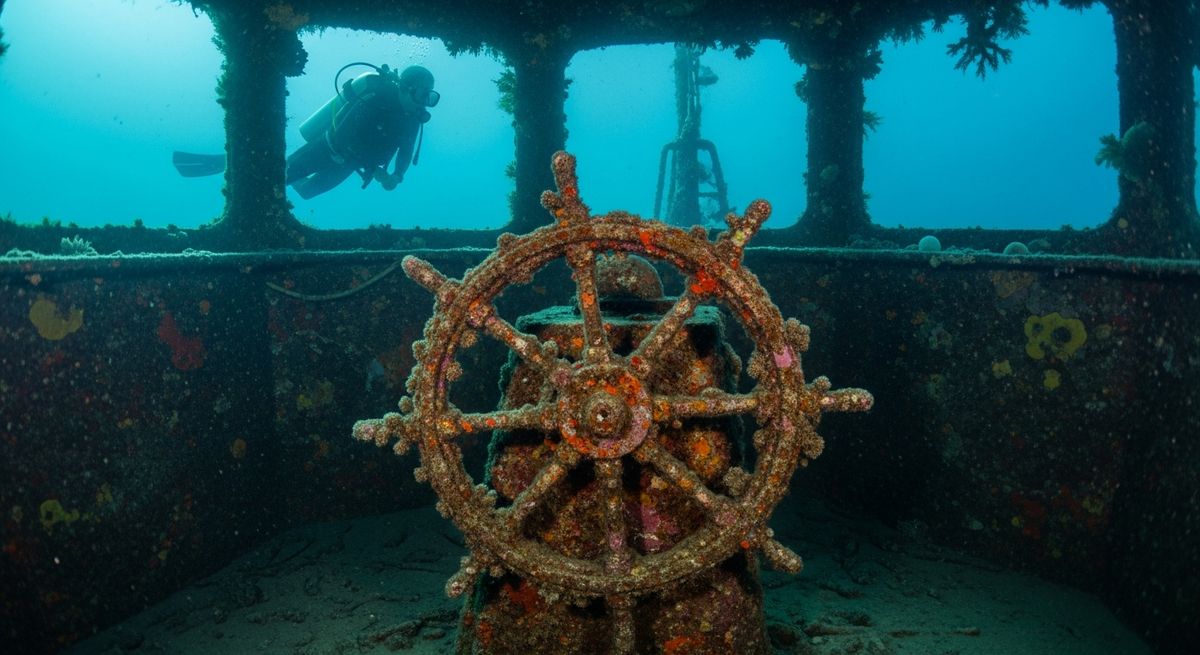
The Astrid Dahl isn't just a hunk of metal; it’s a time capsule, a snapshot of a working fishing vessel frozen mid-sink. At 22 metres, it’s an accessible wreck for most divers, sitting upright and largely intact. We love how the wheelhouse is still there, allowing a peek inside, imagining the frantic final moments. You’ll see schools of cod and pollock circling the superstructure, and we’ve often spotted lumpsuckers clinging to the plating, their little suction cups working overtime in the gentle surge. It feels like a proper shipwreck dive, not just scattered debris. Our favourite part is navigating the stern, where the nets are still draped, now part of the artificial reef structure. Be mindful of currents here; they can pick up, especially on a tide change, so plan your dive accordingly. It’s a site that gives a real sense of history and offers plenty of nooks for patient divers to explore, making it a standout for anyone who appreciates a story with their dive.
Typical ASTRID DAHL Dive Profile
Illustrative profile based on site depth and type. Actual dive profiles vary - always follow your dive computer and training.
Safety Notes
Depth of 22m - Advanced Open Water certification recommended.
Wreck site - avoid penetration without wreck diving certification. Watch for sharp metal and entanglement hazards.
Cold water this month (avg 13°C). Drysuit or thick wetsuit (7mm+) recommended.
Always perform a 3-minute safety stop at 5m before surfacing.
ASTRID DAHL Wreck History
Vessel Type
fishing vessel
Cause
unknown
The Astrid Dahl is a classic North Sea wreck dive, offering a glimpse into the challenging life of a fishing vessel. While the specific details of her loss are not widely documented, she now rests at a depth of 22 meters off the Danish coast, a perfect site for recreational divers. As with many fishing vessels, she likely fell victim to the notoriously rough weather of the region or a similar maritime peril.
Today, the Astrid Dahl has transformed into a thriving artificial reef. Her structure provides shelter for cod, ling, and large crustaceans like lobsters and crabs. The wreck is often draped in lost fishing nets, which, while creating a potential hazard for divers, also act as a lattice for marine growth and attract smaller fish. The 'dangerous wreck' classification serves as a reminder to dive with caution, always carrying a cutting tool and avoiding penetration unless properly trained. For North Sea enthusiasts, she is a rewarding dive that showcases the resilience of nature in reclaiming a man-made object.
Reviews for ASTRID DAHL
Conditions
Ocean conditions, forecast and tides for ASTRID DAHL
ASTRID DAHL Ocean Conditions
Monthly averages for ASTRID DAHL, sourced from Open-Meteo marine data - nearest station: Open-Meteo marine grid (55.31, 9.86) (1km away)
October Averages
Sea Temperature
13°C
56°F · Range: 10.7–16.8°C
Air Temperature
11°C
52°F
Wind Speed
7.69 m/s
14.9 knots
Atmospheric Pressure
1010.5 hPa
Based on 4 years of monitoring data · Data sources: Open-Meteo marine data
Plan & book
Ways to dive North Sea Coast, from day trips to liveaboards.
Day trips & courses
via GetYourGuideGuided dives, courses and snorkel trips with instant booking.
Find dive trips in North Sea CoastPlaces to stay
via Booking.comHotels and dive resorts near North Sea Coast.
Search stays in North Sea CoastDive insurance
Most travel insurance excludes or limits scuba. Check what you need before you go.
Dive insurance explainedPartner links: we may earn a commission if you book, at no extra cost to you. How we make money
Where to Stay near ASTRID DAHL
Prices from Booking.com. We may earn a commission at no extra cost to you.