AUCKLAND H 287
Protected Area
Gilleleje Flak og Tragten
Why dive here
With 95+ marine species recorded in the area - including seals & sea lions, sea turtles and jellyfish lake - AUCKLAND H 287 offers some of North Sea Coast's richest wreck diving. Water ranges 3-19°C, warmest July, August, September.
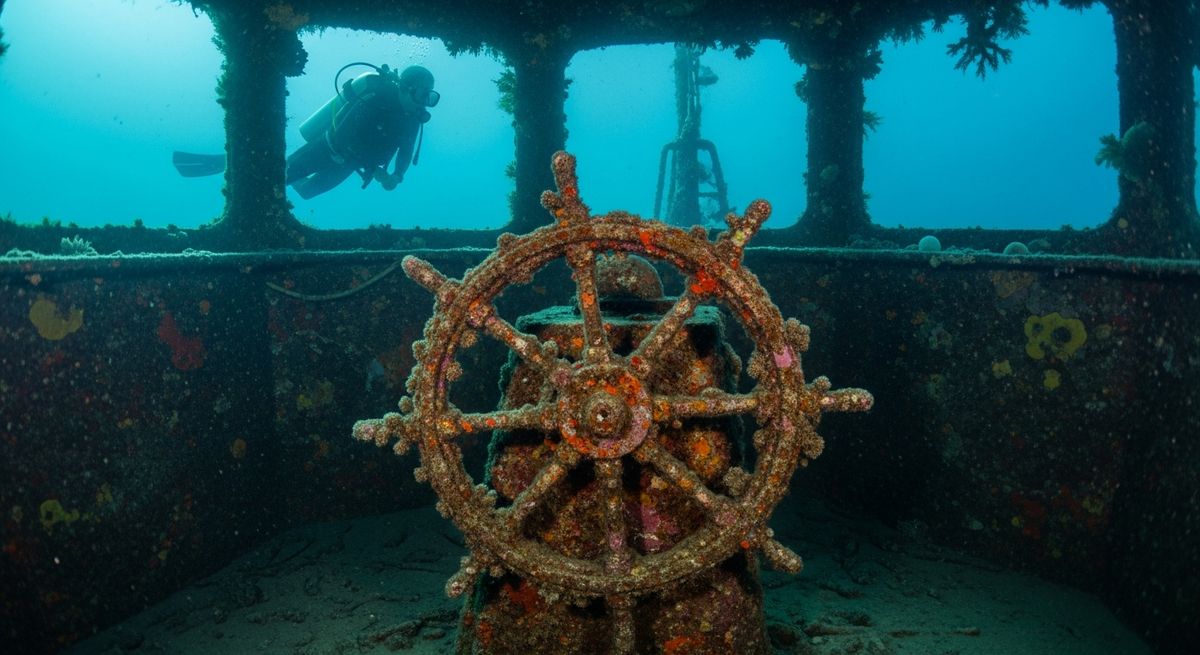
The *Auckland H 287* isn’t just another lump of metal on the seabed. This trawler, lost in 1944, sits upright and largely intact at 22 metres, making it one of our favourite North Sea wrecks for atmosphere alone. You can almost feel the history clinging to its steel plates. We particularly love poking around the bow, where the deck structures are still quite defined, offering plenty of nooks for conger eels to hide. What really sells the *Auckland* for us is the way the wreck has become a home. The hull is absolutely coated in plumose anemones, their feathery white tentacles swaying gently in the current, creating a stark contrast against the dark steel. Keep an eye out for inquisitive cod, they’re often found patrolling the decks, and the occasional ling peeking from deeper recesses. It’s a proper wreck dive for those who appreciate history and the way nature reclaims man-made structures. You’ll want decent buoyancy control to navigate the interior spaces safely, and a good torch is essential to bring out the detail in the anemone colonies.
Typical AUCKLAND H 287 Dive Profile
Illustrative profile based on site depth and type. Actual dive profiles vary - always follow your dive computer and training.
Safety Notes
Depth of 22m - Advanced Open Water certification recommended.
Wreck site - avoid penetration without wreck diving certification. Watch for sharp metal and entanglement hazards.
Cold water this month (avg 13°C). Drysuit or thick wetsuit (7mm+) recommended.
Always perform a 3-minute safety stop at 5m before surfacing.
AUCKLAND H 287 Wreck History
Year Sunk
1944
Vessel Type
fishing vessel
Cause
unknown
The Auckland (H 287) was a British fishing trawler lost to the perils of the Second World War. On February 15, 1944, she vanished while operating in the heavily militarised North Sea. Her exact cause of sinking remains unconfirmed, but as a small civilian vessel in a major conflict zone, she was exceptionally vulnerable. She may have struck a mine from one of the vast defensive minefields, been the victim of an enemy air attack, or simply succumbed to the harsh winter weather while navigating blacked-out waters. Whatever the cause, she became another silent victim of the war at sea.
Today, the wreck lies at a depth of 22 metres off the coast of Denmark. It is a sombre site, classified as a 'Dangerous Wreck', requiring divers to be cautious of entanglement hazards from old nets and sharp, corroded metal. The dive provides a poignant connection to the fishermen who risked, and often lost, their lives to feed a nation at war. Exploring the scattered remains of this humble vessel offers a different perspective on the conflict, reminding us of the immense price paid by civilians.
Reviews for AUCKLAND H 287
Conditions
Ocean conditions, forecast and tides for AUCKLAND H 287
AUCKLAND H 287 Ocean Conditions
Monthly averages for AUCKLAND H 287, sourced from Open-Meteo marine data - nearest station: Open-Meteo marine grid (55.31, 9.86) (1km away)
October Averages
Sea Temperature
13°C
56°F · Range: 10.7–16.8°C
Air Temperature
11°C
52°F
Wind Speed
7.69 m/s
14.9 knots
Atmospheric Pressure
1010.5 hPa
Based on 4 years of monitoring data · Data sources: Open-Meteo marine data
Plan & book
Ways to dive North Sea Coast, from day trips to liveaboards.
Day trips & courses
via GetYourGuideGuided dives, courses and snorkel trips with instant booking.
Find dive trips in North Sea CoastPlaces to stay
via Booking.comHotels and dive resorts near North Sea Coast.
Search stays in North Sea CoastDive insurance
Most travel insurance excludes or limits scuba. Check what you need before you go.
Dive insurance explainedPartner links: we may earn a commission if you book, at no extra cost to you. How we make money
Where to Stay near AUCKLAND H 287
Prices from Booking.com. We may earn a commission at no extra cost to you.