B AND R-HM2
Protected Area
Ringkøbing Fjord vildtreservat
Why dive here
With 95+ marine species recorded in the area - including seals & sea lions, sea turtles and jellyfish lake - B AND R-HM2 offers some of North Sea Coast's richest wreck diving. Water ranges 3-19°C, warmest July, August, September.
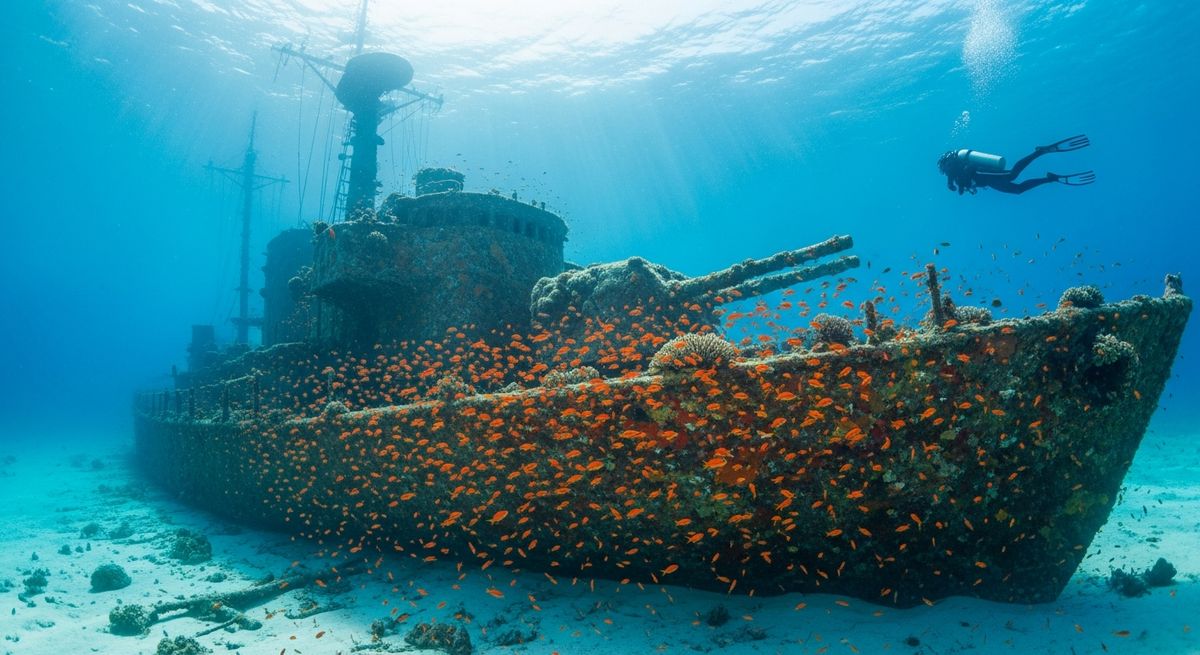
The B AND R-HM2 isn't your typical North Sea wreck. For starters, it’s basically in the shallows, making it surprisingly accessible, though often overlooked. This old barge ran aground near Nymindegab back in '71, and time has taken its toll, breaking it into a few distinct sections. We love diving it on a calm, sunny day when the light penetrates the green water, illuminating the twisted metal and creating an eerie, almost art-like scene. You'll find surprisingly large cod often lurking in the nooks and crannies, alongside crabs scuttling over the barnacle-encrusted hull. The low depth means bottom times are generous, allowing you to really pick through the scattered debris. Our favourite part is navigating the fragmented sections, imagining the gale that brought her down. It's a site that rewards patience and a keen eye, perfect for photographers or anyone who appreciates the stark beauty of a shallow, broken wreck. Just be mindful of currents; even in the shallows, the North Sea can be fickle.
Safety Notes
Wreck site - avoid penetration without wreck diving certification. Watch for sharp metal and entanglement hazards.
Cold water this month (avg 13°C). Drysuit or thick wetsuit (7mm+) recommended.
B AND R-HM2 Wreck History
Year Sunk
1971
Vessel Type
barge
Cause
storm
The B AND R-HM2 was a barge owned by the American engineering firm Brown & Root. In October 1971, while under tow in the notoriously rough North Sea, the vessel broke free during a severe gale. Powerless against the storm, the massive barge drifted until it was unceremoniously thrown ashore near Nymindegab on the west coast of Denmark's Jutland peninsula.
Resting at a depth of zero meters, the B AND R-HM2 is not a dive site but a coastal landmark. The wreck lies stranded on the beach, its rusting steel hull slowly being consumed by the relentless waves and wind. It serves as a stark and photogenic reminder of the power of the North Sea. For visitors to the Danish coast, its skeletal remains offer a dramatic point of interest, particularly as the tides and shifting sands continually change how much of the wreck is visible.
Reviews for B AND R-HM2
Conditions
Ocean conditions, forecast and tides for B AND R-HM2
B AND R-HM2 Ocean Conditions
Monthly averages for B AND R-HM2, sourced from Open-Meteo marine data - nearest station: Open-Meteo marine grid (55.31, 9.86) (1km away)
October Averages
Sea Temperature
13°C
56°F · Range: 10.7–16.8°C
Air Temperature
11°C
52°F
Wind Speed
7.69 m/s
14.9 knots
Atmospheric Pressure
1010.5 hPa
Based on 4 years of monitoring data · Data sources: Open-Meteo marine data
Plan & book
Ways to dive North Sea Coast, from day trips to liveaboards.
Day trips & courses
via GetYourGuideGuided dives, courses and snorkel trips with instant booking.
Find dive trips in North Sea CoastPlaces to stay
via Booking.comHotels and dive resorts near North Sea Coast.
Search stays in North Sea CoastDive insurance
Most travel insurance excludes or limits scuba. Check what you need before you go.
Dive insurance explainedPartner links: we may earn a commission if you book, at no extra cost to you. How we make money
Where to Stay near B AND R-HM2
Prices from Booking.com. We may earn a commission at no extra cost to you.