BAEVEREN
Protected Area
Farvandet nord for Anholt
Why dive here
With 95+ marine species recorded in the area - including seals & sea lions, sea turtles and jellyfish lake - BAEVEREN offers some of North Sea Coast's richest wreck diving. Water ranges 3-19°C, warmest July, August, September.
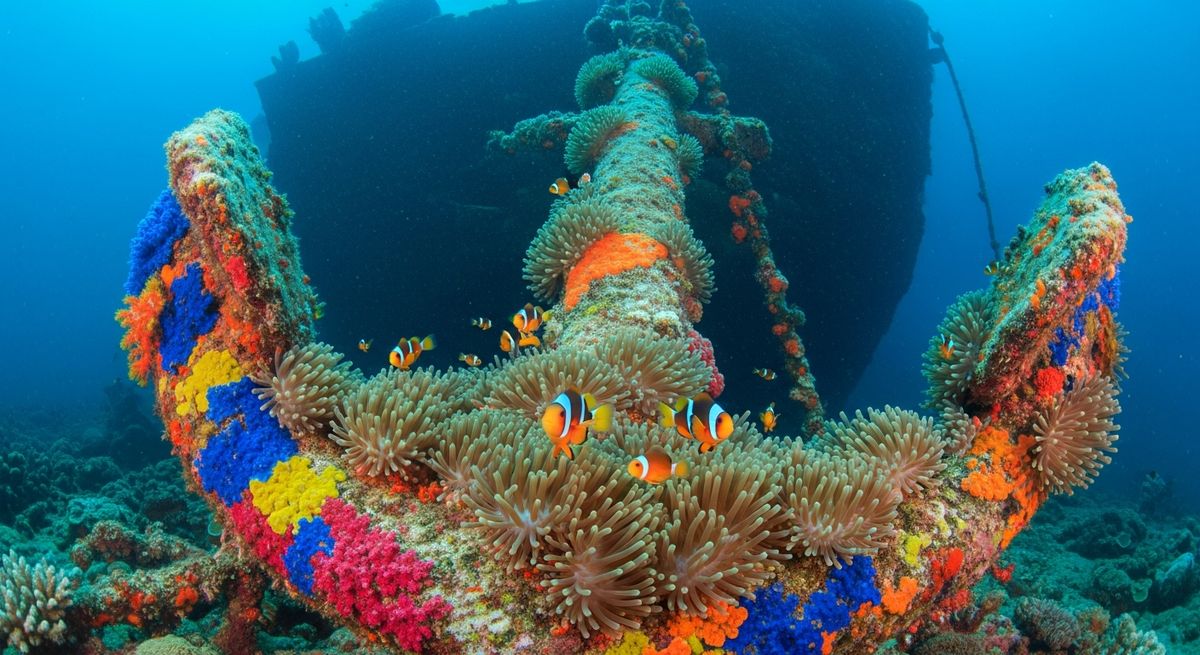
The Baeveren, a dredger that went down in '75, is a proper North Sea wreck dive, a solid pick for those days when the coastguard aren’t making a fuss about the currents. She flipped completely, so you’re diving an inverted hull, which feels a bit like exploring a cavern if you stay shallow, or an upside-down cathedral when you drop down the sides. We love how the strong North Sea currents have carved out the sand around her, exposing more of the structure over time. You’ll often find hefty cod tucked into the shadows, and schools of pollock stream past, drawn to the relief she provides. Visibility can be hit or miss, but on a good day, with the light filtering through the green water, the atmosphere is immense. Our favourite approach is to drop onto the stern and work our way forward, poking into the gantry structure that’s now on its side. It’s a dive for those comfortable with a bit of a push, and who appreciate a wreck that’s truly given itself back to the sea. Bring a good light, even on a sunny day, to really make the most of the nooks and crannies.
Typical BAEVEREN Dive Profile
Illustrative profile based on site depth and type. Actual dive profiles vary - always follow your dive computer and training.
Safety Notes
Depth of 19m - Advanced Open Water certification recommended.
Wreck site - avoid penetration without wreck diving certification. Watch for sharp metal and entanglement hazards.
Cold water this month (avg 13°C). Drysuit or thick wetsuit (7mm+) recommended.
Always perform a 3-minute safety stop at 5m before surfacing.
BAEVEREN Wreck History
Year Sunk
1975
Vessel Type
unknown
Cause
unknown
Resting upside down on the seabed off Denmark's North Sea coast, the Baeveren is an unusual and intriguing dive site. This vessel was not a cargo ship or passenger liner, but a hard-working dredger. Her end came not in a storm or collision, but during a routine tow in August 1975. While unmanned and being moved to a new location, the Baeveren suddenly became unstable, keeled over, and capsized before sinking to the bottom in 19 meters of water.
For divers, the Baeveren's inverted position offers a unique perspective. The dive, accessible to most certified divers, begins with a descent to a hull that looks like a strange, flat reef. Swimming around the perimeter allows you to peer underneath into the shadows of the deck and what remains of the superstructure. The wreck is a playground for marine life, with fish and crustaceans taking shelter in the complex structure of the dredging equipment. Marked by a buoy, she is an easy-to-find and rewarding dive that turns a mundane industrial accident into a fascinating underwater exploration.
Reviews for BAEVEREN
Conditions
Ocean conditions, forecast and tides for BAEVEREN
BAEVEREN Ocean Conditions
Monthly averages for BAEVEREN, sourced from Open-Meteo marine data - nearest station: Open-Meteo marine grid (55.31, 9.86) (1km away)
October Averages
Sea Temperature
13°C
56°F · Range: 10.7–16.8°C
Air Temperature
11°C
52°F
Wind Speed
7.69 m/s
14.9 knots
Atmospheric Pressure
1010.5 hPa
Based on 4 years of monitoring data · Data sources: Open-Meteo marine data
Plan & book
Ways to dive North Sea Coast, from day trips to liveaboards.
Day trips & courses
via GetYourGuideGuided dives, courses and snorkel trips with instant booking.
Find dive trips in North Sea CoastPlaces to stay
via Booking.comHotels and dive resorts near North Sea Coast.
Search stays in North Sea CoastDive insurance
Most travel insurance excludes or limits scuba. Check what you need before you go.
Dive insurance explainedPartner links: we may earn a commission if you book, at no extra cost to you. How we make money
Where to Stay near BAEVEREN
Prices from Booking.com. We may earn a commission at no extra cost to you.