BARTHOL
Protected Area
Nissum Bredning with Harboore and Agger Tange
Why dive here
With 95+ marine species recorded in the area - including seals & sea lions, sea turtles and jellyfish lake - BARTHOL offers some of North Sea Coast's richest wreck diving. Water ranges 3-19°C, warmest July, August, September.
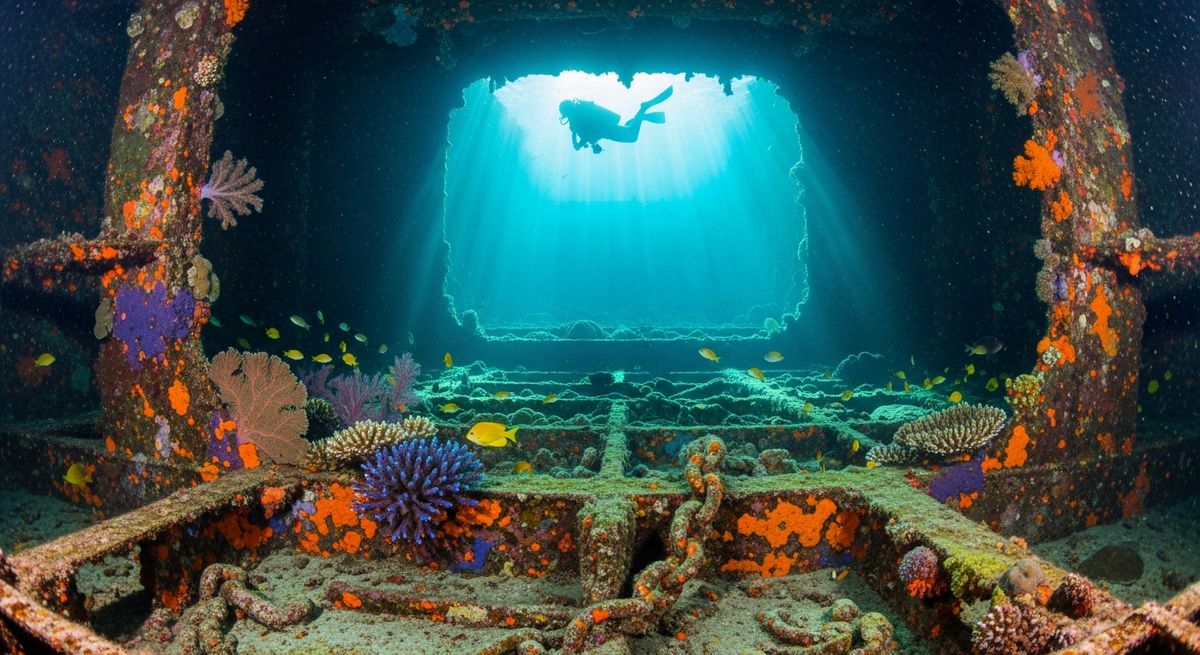
Barthol is a bit of an enigma, and that's precisely why we love it. Forget deep blue ocean dives; this is a true North Sea experience, a shallow dive at just 2 metres, right on the coast. It's listed as a "dangerous wreck," which immediately tells you it's got character. We're talking about a wreck from the 1800s, so don't expect an intact ship, but rather a scattered archaeological site. What you'll find are the bones of a past era, timber frames and ironwork strewn across the sandy seabed, all heavily colonised by local marine life. It's a fantastic spot for macro photography, or just slowly poking around, imagining the history. Crabs scuttle between barnacle-encrusted timbers, and small schools of fish dart in and out of the crevices. Visibility can vary wildly here, typical of coastal North Sea dives, so pick your day carefully – we always aim for a calm morning after a few days of settled weather. It's a dive for those who appreciate history and the rugged beauty of a truly wild coastline, rather than colourful corals. Bring a good torch, even in two metres of water, to peer into the shadows under the wreck pieces.
Typical BARTHOL Dive Profile
Illustrative profile based on site depth and type. Actual dive profiles vary - always follow your dive computer and training.
Safety Notes
Wreck site - avoid penetration without wreck diving certification. Watch for sharp metal and entanglement hazards.
Cold water this month (avg 13°C). Drysuit or thick wetsuit (7mm+) recommended.
BARTHOL Wreck History
Vessel Type
unknown
Cause
unknown
The wreck known as the Barthol is a mysterious site located off the North Sea coast of Denmark. Lying in the shallows at a mere 2 metres, its history and identity are lost to time. With no records of its sinking or original name, it remains an enigma for local divers and maritime historians. Its classification as a 'dangerous wreck' serves as a crucial warning; despite the shallow depth, the site may contain sharp, unstable structures or be subject to strong coastal currents, demanding caution from anyone who approaches.
For divers and even snorkelers, the Barthol offers a unique and accessible, yet potentially hazardous, exploration. The shallow water allows for long bottom times and excellent light penetration on clear days, illuminating the wreckage and the marine life that has claimed it. Exploring this site is less about historical context and more about the raw experience of a submerged structure, its form slowly being reclaimed by the North Sea.
Nearest Dive Centres to BARTHOL
Dive shops near BARTHOL
View all dive centres in North Sea CoastReviews for BARTHOL
Conditions
Ocean conditions, forecast and tides for BARTHOL
BARTHOL Ocean Conditions
Monthly averages for BARTHOL, sourced from Open-Meteo marine data - nearest station: Open-Meteo marine grid (55.31, 9.86) (1km away)
October Averages
Sea Temperature
13°C
56°F · Range: 10.7–16.8°C
Air Temperature
11°C
52°F
Wind Speed
7.69 m/s
14.9 knots
Atmospheric Pressure
1010.5 hPa
Based on 4 years of monitoring data · Data sources: Open-Meteo marine data
Plan & book
Ways to dive North Sea Coast, from day trips to liveaboards.
Day trips & courses
via GetYourGuideGuided dives, courses and snorkel trips with instant booking.
Find dive trips in North Sea CoastPlaces to stay
via Booking.comHotels and dive resorts near North Sea Coast.
Search stays in North Sea CoastDive insurance
Most travel insurance excludes or limits scuba. Check what you need before you go.
Dive insurance explainedPartner links: we may earn a commission if you book, at no extra cost to you. How we make money
Where to Stay near BARTHOL
Prices from Booking.com. We may earn a commission at no extra cost to you.