BERGLIOT
Protected Area
Sydlige Nordsø
Why dive here
With 95+ marine species recorded in the area - including seals & sea lions, sea turtles and jellyfish lake - BERGLIOT offers some of North Sea Coast's richest wreck diving. Water ranges 3-19°C, warmest July, August, September.
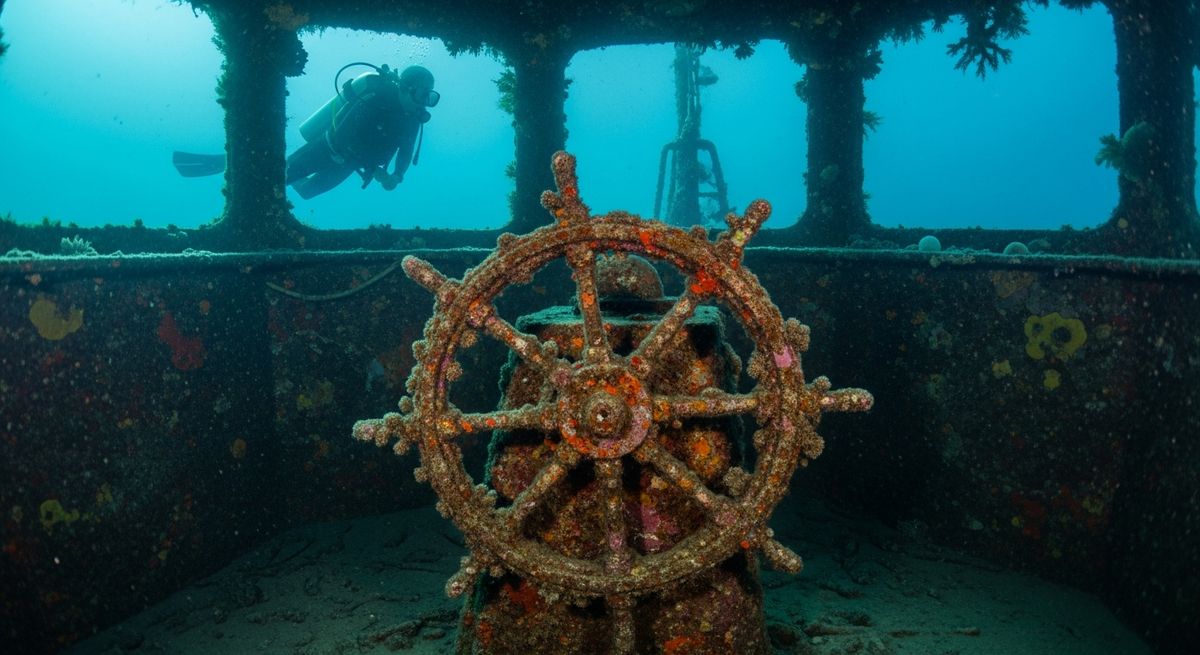
The Bergljot, off the North Sea Coast, is a real favourite of ours. Dropping to 21 metres, this isn't a dive for the absolute beginner, but if you’re comfortable with a bit of chill and some current, it’s immensely rewarding. She's a steamship, sunk way back in 1899 after running aground on Horns Reef, and the history just seeps from her bones. What makes Bergljot special? It's the way she’s been utterly colonised by life. We’re talking massive plumose anemones carpeting every surface, their white tentacles swaying like a field of flowers in the gentle surge. Deadman's fingers are everywhere, too, their leathery branches adding texture to the steel. We often find lumpsuckers tucked into crevices, their suction cups holding fast against the flow, and every now and then a gurnard will dart out from beneath a collapsed hull plate. You can really explore here, poking around the debris field that stretches out from the main wreck. We love trying to piece together what she once was, imagining the cargo holds and the engine room. It’s a good idea to go with a guide who knows the site well; they’ll point out the best spots for finding critters and help you navigate the often-murky North Sea visibility. It’s a proper wreck dive, full of atmosphere and the quiet hum of marine life reclaiming what’s hers.
Typical BERGLIOT Dive Profile
Illustrative profile based on site depth and type. Actual dive profiles vary - always follow your dive computer and training.
Safety Notes
Depth of 21m - Advanced Open Water certification recommended.
Wreck site - avoid penetration without wreck diving certification. Watch for sharp metal and entanglement hazards.
Cold water this month (avg 13°C). Drysuit or thick wetsuit (7mm+) recommended.
Always perform a 3-minute safety stop at 5m before surfacing.
BERGLIOT Wreck History
Year Sunk
1899
Vessel Type
cargo ship
Cause
grounding
The SS Bergliot was a late 19th-century steamship, a workhorse of the seas connecting ports across Northern Europe. In June of 1899, she was on a routine passage from Newport, Wales, to Fredrickhaven, Denmark, laden with cargo. Her journey, however, was cut short by one of the North Sea's most notorious maritime hazards.
On June 13, 1899, the Bergliot ran hard aground on the treacherous Horns Reef. The reef, a massive and shallow sandbank system extending from the coast of Jutland, has claimed countless vessels over the centuries. Despite the violent stranding that doomed the ship, the incident had a fortunate outcome for those aboard; all 13 members of the crew were successfully rescued before the sea consumed the vessel.
Today, the remains of the Bergliot lie at a depth of 21 meters. As a designated 'Dangerous Wreck', the structure is significantly broken up, its iron bones scattered across the seabed. For divers, this creates a fascinating and complex site to explore. The wreckage provides a solid substrate for a host of North Sea marine life, from anemones and dead man's fingers to shoals of fish seeking shelter. It serves as a stark reminder of the power of the sea and the perils faced by mariners in the age of steam.
Reviews for BERGLIOT
Conditions
Ocean conditions, forecast and tides for BERGLIOT
BERGLIOT Ocean Conditions
Monthly averages for BERGLIOT, sourced from Open-Meteo marine data - nearest station: Open-Meteo marine grid (55.31, 9.86) (1km away)
October Averages
Sea Temperature
13°C
56°F · Range: 10.7–16.8°C
Air Temperature
11°C
52°F
Wind Speed
7.69 m/s
14.9 knots
Atmospheric Pressure
1010.5 hPa
Based on 4 years of monitoring data · Data sources: Open-Meteo marine data
Plan & book
Ways to dive North Sea Coast, from day trips to liveaboards.
Day trips & courses
via GetYourGuideGuided dives, courses and snorkel trips with instant booking.
Find dive trips in North Sea CoastPlaces to stay
via Booking.comHotels and dive resorts near North Sea Coast.
Search stays in North Sea CoastDive insurance
Most travel insurance excludes or limits scuba. Check what you need before you go.
Dive insurance explainedPartner links: we may earn a commission if you book, at no extra cost to you. How we make money
Where to Stay near BERGLIOT
Prices from Booking.com. We may earn a commission at no extra cost to you.