BERNLEF
Protected Area
Gilleleje Flak og Tragten
Why dive here
With 95+ marine species recorded in the area - including seals & sea lions, sea turtles and jellyfish lake - BERNLEF offers some of North Sea Coast's richest wreck diving. Water ranges 3-19°C, warmest July, August, September.
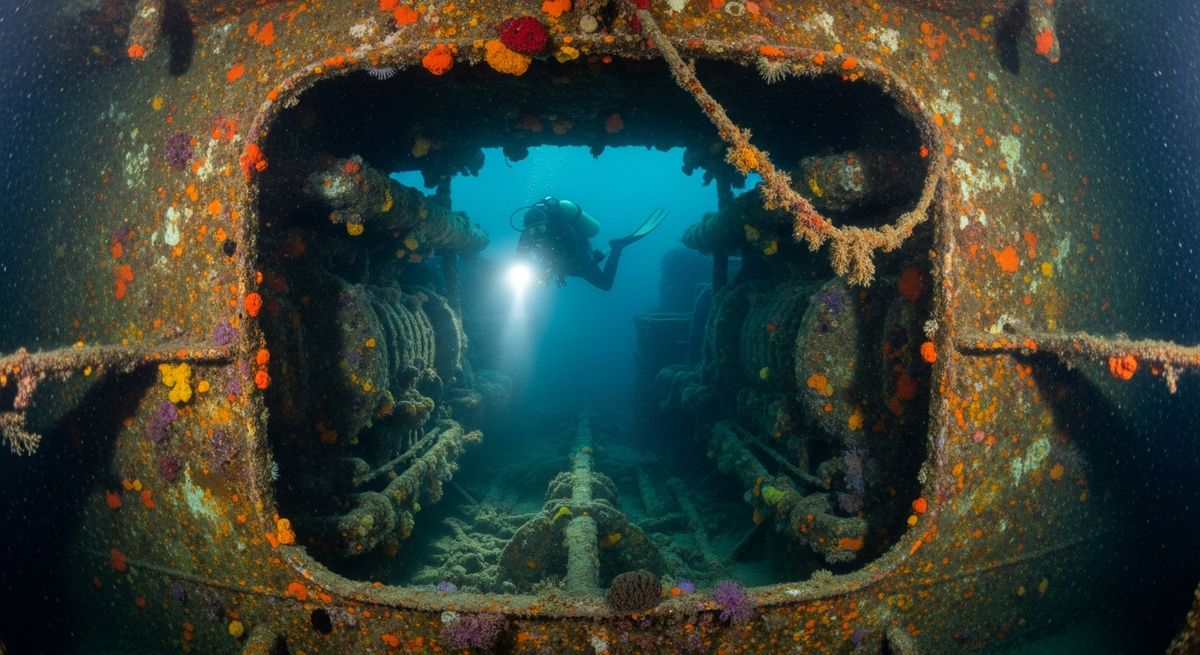
The Bernlef, oh, she’s a proper wreck dive, sitting upright and mostly intact on the North Sea floor. We love how atmospheric it feels down there, a real sense of history clinging to the steel. Dropping onto her deck at 18 metres, you’re immediately struck by her scale, 92 metres of wartime history. It’s not a vibrant coral kingdom, obviously, but the structure itself provides endless nooks for crabs and lobsters, and we’ve seen some hefty cod patrolling the hold openings. Our favourite part is exploring the stern, the damage from that 1945 explosion still visible, twisted metal telling its own story. Visibility can be a bit of a lottery, as it often is on the North Sea coast, so pick your day carefully – calm weather usually means better conditions. If you’re into probing shadowy passageways and imagining the ship’s last moments, the Bernlef delivers a genuinely cool experience. Bring a good torch; there’s plenty to illuminate.
Typical BERNLEF Dive Profile
Illustrative profile based on site depth and type. Actual dive profiles vary - always follow your dive computer and training.
Safety Notes
Wreck site - avoid penetration without wreck diving certification. Watch for sharp metal and entanglement hazards.
Cold water this month (avg 13°C). Drysuit or thick wetsuit (7mm+) recommended.
Always perform a 3-minute safety stop at 5m before surfacing.
BERNLEF Wreck History
Year Sunk
1945
Vessel Type
cargo ship
Cause
unknown
Tonnage
2,492 GRT
The wreck of the SS Bernlef is a stark reminder that the dangers of war linger long after the fighting stops. This Dutch steamship was a wartime standard vessel, built to serve the Allied cause. Her end came on August 14, 1945, three months after VE Day and on the very day Japan's surrender was announced, effectively ending World War II. While sailing off the coast of North Zealand, Denmark, a violent explosion ripped through the ship, sending her to the bottom in minutes.
The exact cause of the explosion has never been definitively determined. It was most likely an untriggered German mine, one of thousands that still littered the shipping lanes, but an accidental detonation of her own cargo has also been considered a possibility. Whatever the cause, the Bernlef became one of the last maritime casualties of the war in European waters.
Today, the Bernlef rests on a sandy seabed at a depth of 18 meters. The wreck is broken into several sections but is still recognizable as a ship. It has become a popular artificial reef, attracting large schools of cod and other North Sea life. Its relatively shallow depth and interesting history make it a fascinating dive for those exploring the Danish coast, offering a moment of reflection on the hidden perils of the sea.
Reviews for BERNLEF
Conditions
Ocean conditions, forecast and tides for BERNLEF
BERNLEF Ocean Conditions
Monthly averages for BERNLEF, sourced from Open-Meteo marine data - nearest station: Open-Meteo marine grid (55.31, 9.86) (1km away)
October Averages
Sea Temperature
13°C
56°F · Range: 10.7–16.8°C
Air Temperature
11°C
52°F
Wind Speed
7.69 m/s
14.9 knots
Atmospheric Pressure
1010.5 hPa
Based on 4 years of monitoring data · Data sources: Open-Meteo marine data
Plan & book
Ways to dive North Sea Coast, from day trips to liveaboards.
Day trips & courses
via GetYourGuideGuided dives, courses and snorkel trips with instant booking.
Find dive trips in North Sea CoastPlaces to stay
via Booking.comHotels and dive resorts near North Sea Coast.
Search stays in North Sea CoastDive insurance
Most travel insurance excludes or limits scuba. Check what you need before you go.
Dive insurance explainedPartner links: we may earn a commission if you book, at no extra cost to you. How we make money
Where to Stay near BERNLEF
Prices from Booking.com. We may earn a commission at no extra cost to you.