BIRGIT THOR
Protected Area
L
Why dive here
With 95+ marine species recorded in the area - including seals & sea lions, sea turtles and jellyfish lake - BIRGIT THOR offers some of North Sea Coast's richest wreck diving. Water ranges 3-19°C, warmest July, August, September.
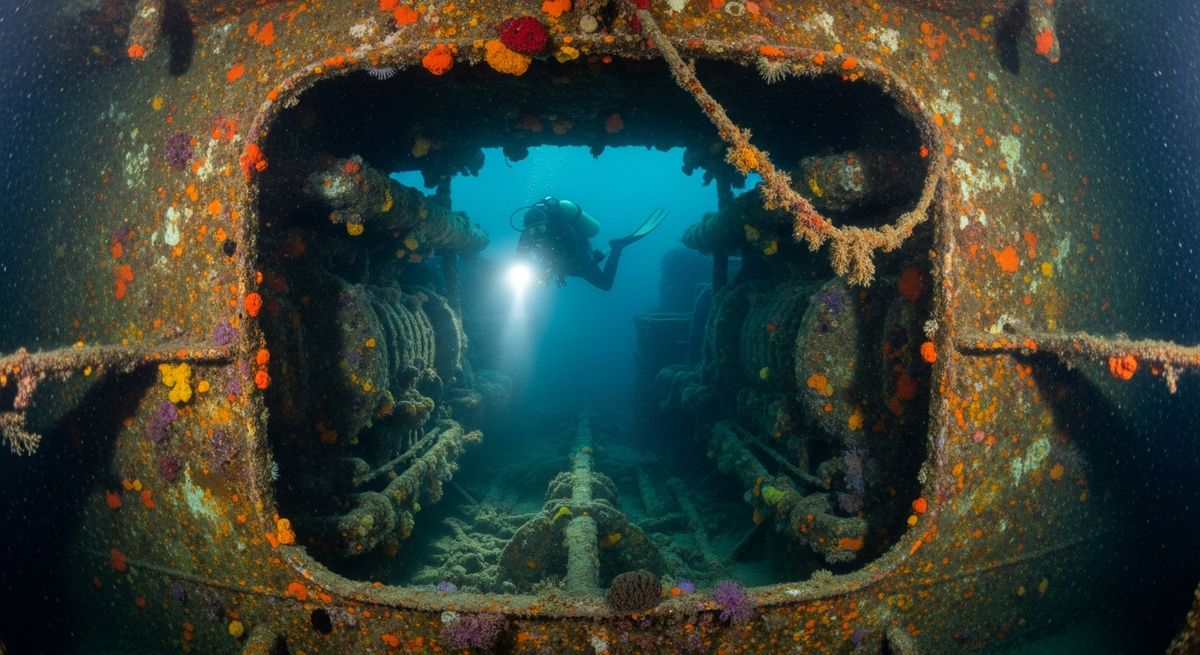
The Birgit Thor is one of our favourite North Sea wrecks, a cargo vessel that went down in a storm back in '78. She sits upright at 21 metres, and you can really feel the history as you descend. It's a proper wreck dive, with a lot to poke around in, especially if you're comfortable with a bit of overhead. We love finning through the open holds, watching the light shaft down, and seeing the huge schools of cod and pollock that have made her home. The stern section is particularly interesting, with a fair amount of her superstructure still intact. You'll often find conger eels peering out from nooks and crannies. We'd suggest going on a calm day, as the North Sea can kick up a fuss, and a bit of current can really churn things up here. Visibility averages 5-10 metres, but on a good day, it can be even better, giving you a real sense of her scale. It's a great dive for those who appreciate a solid piece of maritime history and don't mind a bit of a chill.
Typical BIRGIT THOR Dive Profile
Illustrative profile based on site depth and type. Actual dive profiles vary - always follow your dive computer and training.
Safety Notes
Depth of 21m - Advanced Open Water certification recommended.
Wreck site - avoid penetration without wreck diving certification. Watch for sharp metal and entanglement hazards.
Cold water this month (avg 13°C). Drysuit or thick wetsuit (7mm+) recommended.
Always perform a 3-minute safety stop at 5m before surfacing.
BIRGIT THOR Wreck History
Year Sunk
1978
Vessel Type
cargo ship
Cause
storm
The BIRGIT THOR was a workhorse of the Danish coast, a motor vessel plying its trade between local ports. Its final journey began as a routine passage from Vejle to Frederiksværk, but it would end in a battle against the infamous fury of the North Sea. On October 5, 1978, the ship was caught in a severe storm. Battered by relentless waves, it began taking on water. The crew, facing a losing fight, made the difficult decision to abandon their vessel, and the BIRGIT THOR was left to the mercy of the sea, eventually succumbing and sinking to the seabed.
Today, the wreck of the BIRGIT THOR rests at a depth of 21 meters, making it a fantastic and accessible site for certified recreational divers. The North Sea conditions can be challenging, with currents and variable visibility, but the reward is a visit to a complete shipwreck with a dramatic story. Divers can explore the vessel's structure, now a thriving artificial reef for cod, crabs, and colorful anemones. It serves as a powerful reminder of the unforgiving nature of the sea and a fascinating underwater time capsule from the late 1970s.
Reviews for BIRGIT THOR
Conditions
Ocean conditions, forecast and tides for BIRGIT THOR
BIRGIT THOR Ocean Conditions
Monthly averages for BIRGIT THOR, sourced from Open-Meteo marine data - nearest station: Open-Meteo marine grid (55.31, 9.86) (1km away)
October Averages
Sea Temperature
13°C
56°F · Range: 10.7–16.8°C
Air Temperature
11°C
52°F
Wind Speed
7.69 m/s
14.9 knots
Atmospheric Pressure
1010.5 hPa
Based on 4 years of monitoring data · Data sources: Open-Meteo marine data
Plan & book
Ways to dive North Sea Coast, from day trips to liveaboards.
Day trips & courses
via GetYourGuideGuided dives, courses and snorkel trips with instant booking.
Find dive trips in North Sea CoastPlaces to stay
via Booking.comHotels and dive resorts near North Sea Coast.
Search stays in North Sea CoastDive insurance
Most travel insurance excludes or limits scuba. Check what you need before you go.
Dive insurance explainedPartner links: we may earn a commission if you book, at no extra cost to you. How we make money
Where to Stay near BIRGIT THOR
Prices from Booking.com. We may earn a commission at no extra cost to you.