BJERKA (PROBABLY)
Protected Area
Nakskov Fjord
Why dive here
With 95+ marine species recorded in the area - including seals & sea lions, sea turtles and jellyfish lake - BJERKA (PROBABLY) offers some of North Sea Coast's richest wreck diving. Water ranges 3-19°C, warmest July, August, September.
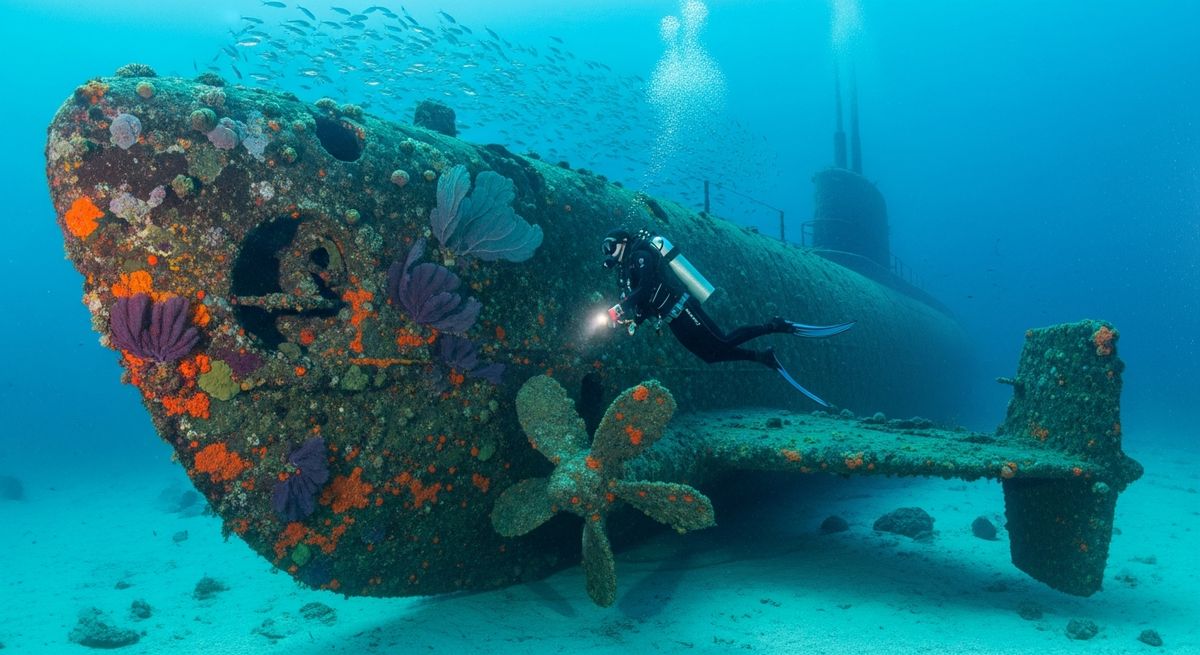
The Bjerkå, probably, is one of those North Sea wrecks that just keeps giving. This isn't a deep dive, sitting in around 7 metres, but what it lacks in depth it makes up for in atmosphere and history. We love the way the light filters down through the murky green, illuminating just enough of the crumpled plates to hint at the steamship she once was. You can almost feel the chill of that February morning in 1915 when she struck the mine. We've spent hours poking around the scattered debris, imagining the final moments. The bow is particularly striking, still somewhat intact and leaning at an angle that feels dramatic, even after all these years. What really draws us back, though, is the sheer volume of life that's made a home here. Big cod lurk in the shadowed nooks, their eyes unblinking, and there are usually some hefty crabs scuttling away as you approach. The visibility can be a bit of a lottery out here on the Danish North Sea coast, but on a calm day, it’s remarkably clear for such shallow water. We'd suggest timing your dive for slack water; the currents can pick up, making it a bit of a workout. It's a proper wreck dive, best suited for those who appreciate the historical context and don't mind a bit of a rummage in less than tropical conditions.
Typical BJERKA (PROBABLY) Dive Profile
Illustrative profile based on site depth and type. Actual dive profiles vary - always follow your dive computer and training.
Safety Notes
Wreck site - avoid penetration without wreck diving certification. Watch for sharp metal and entanglement hazards.
Cold water this month (avg 13°C). Drysuit or thick wetsuit (7mm+) recommended.
BJERKA (PROBABLY) Wreck History
Year Sunk
1915
Vessel Type
cargo ship
Cause
mine
The Norwegian steamship Bjerka was a neutral vessel caught in the indiscriminate warfare of World War I. On February 20th, 1915, while on a commercial passage from Burntisland, Scotland, to Nakskov, Denmark, she sailed into a recently laid minefield. The resulting explosion was catastrophic, sinking the ship and adding her name to the long list of civilian casualties in the "war to end all wars." The North Sea was a major theatre of naval conflict, and both sides used naval mines extensively, creating vast, invisible fields of danger for all shipping.
Lying in just 7 metres of water off the Danish coast, the Bjerka is now a very shallow wreck, making it accessible to divers of all levels. However, decades of exposure to powerful North Sea storms and currents have likely reduced the vessel to a scattered field of wreckage. The site is classified as a "dangerous wreck," indicating potential hazards like sharp metal, so caution is essential. Divers can explore the ship's remains, including boilers and hull plating, which are now an artificial reef teeming with local marine life. It serves as a poignant reminder of the civilian cost of a global conflict.
Nearest Dive Centres to BJERKA (PROBABLY)
Dive shops near BJERKA (PROBABLY)
View all dive centres in North Sea CoastReviews for BJERKA (PROBABLY)
Conditions
Ocean conditions, forecast and tides for BJERKA (PROBABLY)
BJERKA (PROBABLY) Ocean Conditions
Monthly averages for BJERKA (PROBABLY), sourced from Open-Meteo marine data - nearest station: Open-Meteo marine grid (55.31, 9.86) (1km away)
October Averages
Sea Temperature
13°C
56°F · Range: 10.7–16.8°C
Air Temperature
11°C
52°F
Wind Speed
7.69 m/s
14.9 knots
Atmospheric Pressure
1010.5 hPa
Based on 4 years of monitoring data · Data sources: Open-Meteo marine data
Plan & book
Ways to dive North Sea Coast, from day trips to liveaboards.
Day trips & courses
via GetYourGuideGuided dives, courses and snorkel trips with instant booking.
Find dive trips in North Sea CoastPlaces to stay
via Booking.comHotels and dive resorts near North Sea Coast.
Search stays in North Sea CoastDive insurance
Most travel insurance excludes or limits scuba. Check what you need before you go.
Dive insurance explainedPartner links: we may earn a commission if you book, at no extra cost to you. How we make money
Where to Stay near BJERKA (PROBABLY)
Prices from Booking.com. We may earn a commission at no extra cost to you.