BLENDA
Protected Area
Ålborg Bugt, østlige del
Why dive here
With 95+ marine species recorded in the area - including seals & sea lions, sea turtles and jellyfish lake - BLENDA offers some of North Sea Coast's richest wreck diving. Water ranges 3-19°C, warmest July, August, September.
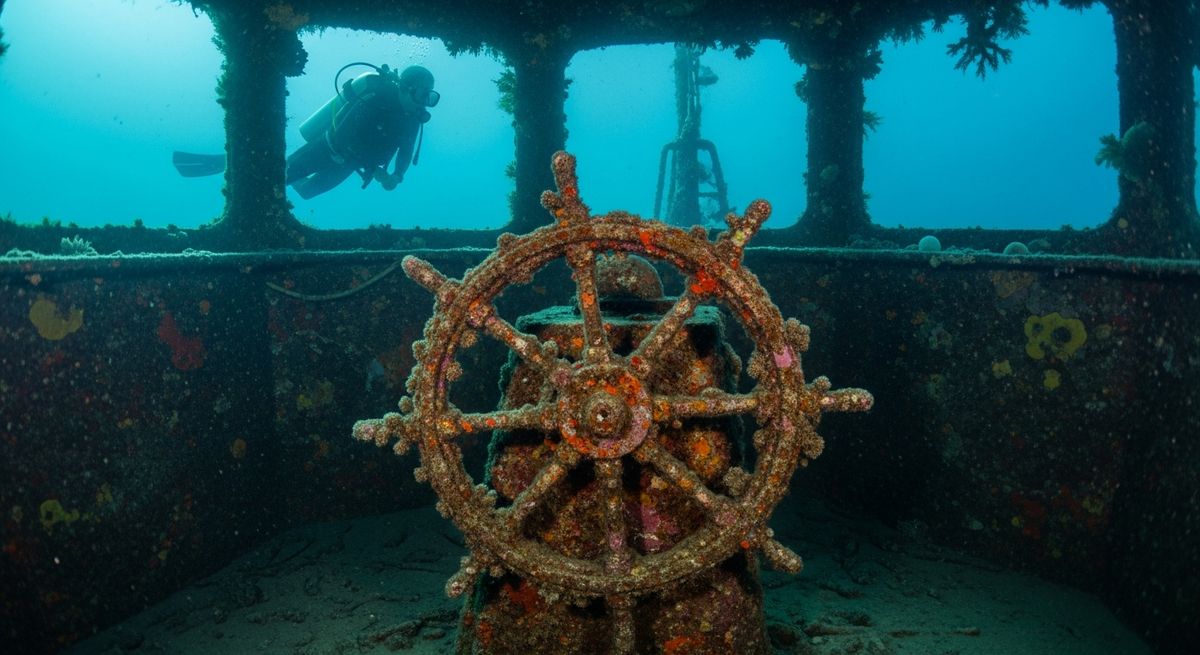
The Blenda is pure North Sea wreck diving. This isn't a site for coral fanatics, but if you love history, the sheer atmosphere of a metal hulk on the seabed, then you’ll appreciate it. Sunk by a mine in 1920, the Blenda is a dangerous wreck, but that just means it’s well broken up. Don’t expect a perfect silhouette. Instead, you get a sprawling, jumbled playground of twisted steel beams, plates, and machinery parts, all lying in just 5 metres of water. We love a shallow wreck; it means more bottom time, more chances to really pick over the details. We’ve spent hours here, tracing the ghostly outline of what was once a 70-metre steamship. It’s the small things that get you – a boiler, still recognisable, or the faint curve of a bow section. Crabs scuttle in the shadows, and schools of small fish weave through the rusty skeleton. Visibility can swing, but on a good day, when the light penetrates through the green North Sea, it’s genuinely evocative. Our favourite time to dive it is on a slack tide, just after high water, when the current drops and you can really take your time. This is a site for divers who appreciate the story behind the dive, not just the pretty pictures.
Typical BLENDA Dive Profile
Illustrative profile based on site depth and type. Actual dive profiles vary - always follow your dive computer and training.
Safety Notes
Wreck site - avoid penetration without wreck diving certification. Watch for sharp metal and entanglement hazards.
Cold water this month (avg 13°C). Drysuit or thick wetsuit (7mm+) recommended.
BLENDA Wreck History
Year Sunk
1920
Vessel Type
warship
Cause
mined
Tonnage
800 tons
Launched in 1898, the HMS Blenda was an Örnen-class torpedo cruiser in the Swedish Navy. These fast, lightly-armoured vessels were designed for reconnaissance and torpedo attacks. Alongside her sister ships, the Blenda played a crucial role in patrolling Swedish waters during the First World War, safeguarding the nation's neutrality in a conflict that engulfed much of Europe. After the war, she continued her service, a veteran of a tense but ultimately peaceful period in her country's history.
The Blenda's end came not in the heat of battle, but from its lingering aftermath. On November 21, 1920, while on a routine voyage, she struck a stray mine left over from the Great War. The explosion was catastrophic, sending the warship to the bottom of the North Sea. Today, she rests in just 5 meters of water, making her an exceptionally shallow and accessible wreck. However, her designation as a 'Dangerous Wreck' is a stark reminder of the twisted metal and sharp edges that litter the site. Divers can explore the scattered remains of this historic vessel in excellent light, a dive that is both a simple shallow excursion and a poignant visit to a victim of a long-concluded war.
Reviews for BLENDA
Conditions
Ocean conditions, forecast and tides for BLENDA
BLENDA Ocean Conditions
Monthly averages for BLENDA, sourced from Open-Meteo marine data - nearest station: Open-Meteo marine grid (55.31, 9.86) (1km away)
October Averages
Sea Temperature
13°C
56°F · Range: 10.7–16.8°C
Air Temperature
11°C
52°F
Wind Speed
7.69 m/s
14.9 knots
Atmospheric Pressure
1010.5 hPa
Based on 4 years of monitoring data · Data sources: Open-Meteo marine data
Plan & book
Ways to dive North Sea Coast, from day trips to liveaboards.
Day trips & courses
via GetYourGuideGuided dives, courses and snorkel trips with instant booking.
Find dive trips in North Sea CoastPlaces to stay
via Booking.comHotels and dive resorts near North Sea Coast.
Search stays in North Sea CoastDive insurance
Most travel insurance excludes or limits scuba. Check what you need before you go.
Dive insurance explainedPartner links: we may earn a commission if you book, at no extra cost to you. How we make money
Where to Stay near BLENDA
Prices from Booking.com. We may earn a commission at no extra cost to you.