BOOTHIA
Protected Area
Agger Tange
Why dive here
With 95+ marine species recorded in the area - including seals & sea lions, sea turtles and jellyfish lake - BOOTHIA offers some of North Sea Coast's richest wreck diving. Water ranges 3-19°C, warmest July, August, September.
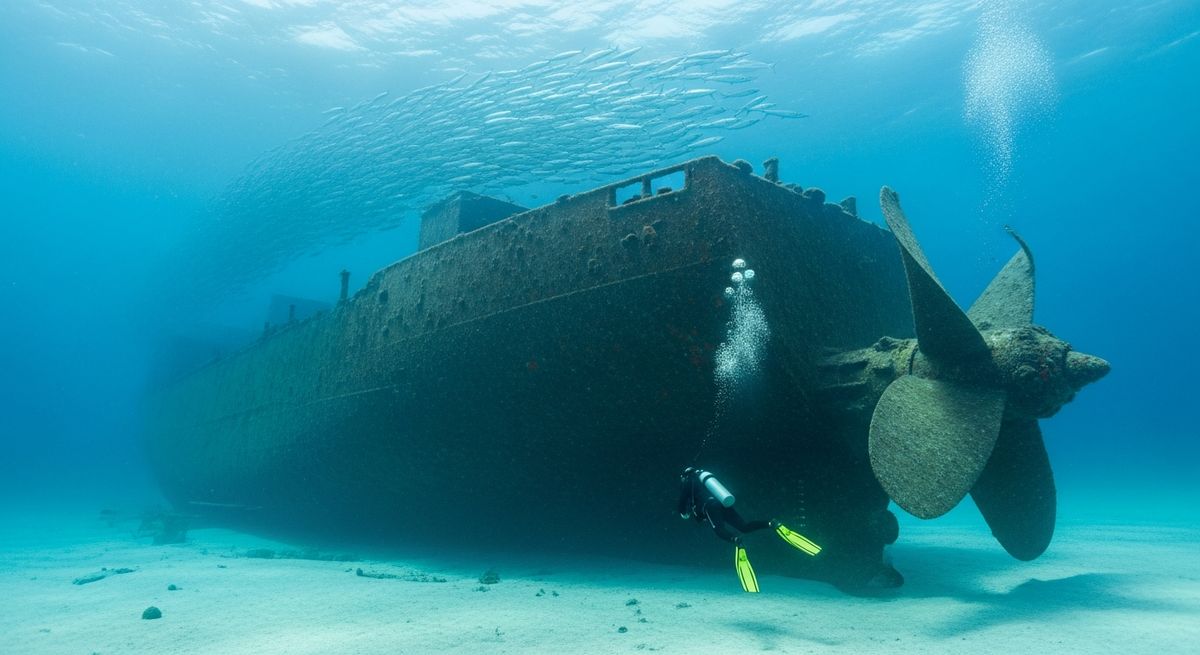
The Boothia is an absolute joy if you’re into shallow wreck diving, especially on a calm day. We love that it’s so accessible, sitting at just 6m deep, perfect for a long bottom time exploring every nook and cranny. This fishing vessel went down in '79, and while it’s not enormous, it’s got a real story to it, feeling more like an archaeological dig than just another wreck. You’ll drop down onto the wheelhouse, usually the first thing that catches your eye. From there, you can spend ages poking around the deck, imagining the last moments of the crew. We’ve found some lovely big cod sheltering in the deeper sections of the hull, and the occasional lumpfish clinging to the metalwork, all camouflaged against the rust. Our favourite part is the mast, still standing proud, often a magnet for schools of juvenile pollack dancing in the current. Visibility can be a bit hit or miss, typical for the North Sea, but if you hit it on a good day, the light filtering through the mast is quite something. It's a superb site for photographers looking for an atmospheric shot without the usual deep-water challenges.
Typical BOOTHIA Dive Profile
Illustrative profile based on site depth and type. Actual dive profiles vary - always follow your dive computer and training.
Safety Notes
Wreck site - avoid penetration without wreck diving certification. Watch for sharp metal and entanglement hazards.
Cold water this month (avg 13°C). Drysuit or thick wetsuit (7mm+) recommended.
BOOTHIA Wreck History
Year Sunk
1979
Vessel Type
fishing vessel
Cause
unknown
The fishing vessel Boothia came to rest off Denmark's North Sea coast in November 1979. While the specific details of its sinking have faded with time, its remains offer a fantastic opportunity for divers. Lying in just 6 meters of water, the Boothia is one of the most accessible wrecks in the region, suitable for divers of all levels and even snorkelers on a clear day.
The most compelling feature of the site is that the vessel's masts are still visible, reaching up towards the surface as if grasping for the air. This provides a dramatic and slightly eerie visual as you descend. The shallow depth allows for long, relaxed dives, giving you plenty of time to explore the wreck's structure, which is now encrusted with North Sea marine life and provides a sanctuary for schools of small fish.
Nearest Dive Centres to BOOTHIA
Dive shops near BOOTHIA
View all dive centres in North Sea CoastReviews for BOOTHIA
Conditions
Ocean conditions, forecast and tides for BOOTHIA
BOOTHIA Ocean Conditions
Monthly averages for BOOTHIA, sourced from Open-Meteo marine data - nearest station: Open-Meteo marine grid (55.31, 9.86) (1km away)
October Averages
Sea Temperature
13°C
56°F · Range: 10.7–16.8°C
Air Temperature
11°C
52°F
Wind Speed
7.69 m/s
14.9 knots
Atmospheric Pressure
1010.5 hPa
Based on 4 years of monitoring data · Data sources: Open-Meteo marine data
Plan & book
Ways to dive North Sea Coast, from day trips to liveaboards.
Day trips & courses
via GetYourGuideGuided dives, courses and snorkel trips with instant booking.
Find dive trips in North Sea CoastPlaces to stay
via Booking.comHotels and dive resorts near North Sea Coast.
Search stays in North Sea CoastDive insurance
Most travel insurance excludes or limits scuba. Check what you need before you go.
Dive insurance explainedPartner links: we may earn a commission if you book, at no extra cost to you. How we make money
Where to Stay near BOOTHIA
Prices from Booking.com. We may earn a commission at no extra cost to you.