BOSSANOVA
Protected Area
L
Why dive here
With 95+ marine species recorded in the area - including seals & sea lions, sea turtles and jellyfish lake - BOSSANOVA offers some of North Sea Coast's richest wreck diving. Water ranges 3-19°C, warmest July, August, September.
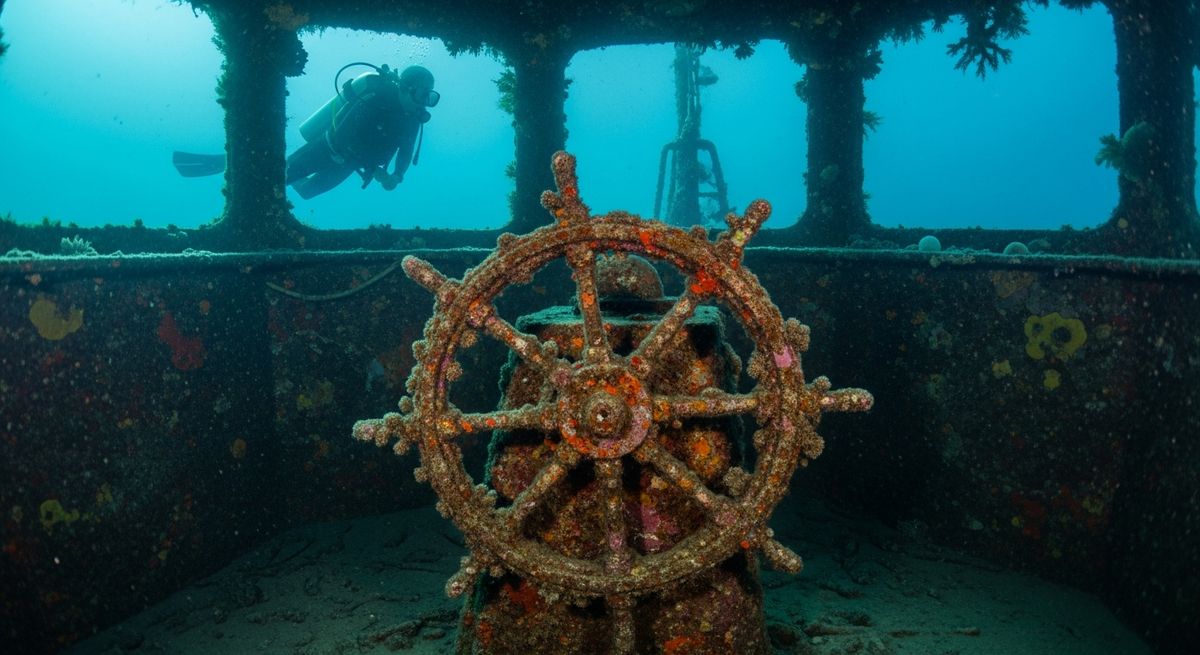
The Bossanova isn't some sprawling galleon, but we love it precisely for its compact, approachable nature. It’s a support craft, 12 metres long, sitting upright at 21m. Visibility here can be a game of chance, typical for the North Sea, but on a good day, the wreck truly shines. The hold is open, inviting you in, a dark maw where conger eels often lurk, thick as your arm. We’ve also seen lobsters tucked into every crevice, their antennae waving in the current. The current can be stiff, so we always suggest diving this one on a slack tide, if possible. Even then, expect a bit of a workout. What we find most compelling about Bossanova is how completely it has been reclaimed. It’s not just a piece of metal; it’s a living reef. The deck is carpeted with anemones and dead man's fingers, a riot of orange and white. It’s a proper penetration dive for those with the right training, but even from the outside, circling the wheelhouse, you get a real sense of its history. Definitely one for wreck enthusiasts who appreciate the smaller, more intimate sites.
Typical BOSSANOVA Dive Profile
Illustrative profile based on site depth and type. Actual dive profiles vary - always follow your dive computer and training.
Safety Notes
Depth of 21m - Advanced Open Water certification recommended.
Wreck site - avoid penetration without wreck diving certification. Watch for sharp metal and entanglement hazards.
Cold water this month (avg 13°C). Drysuit or thick wetsuit (7mm+) recommended.
Always perform a 3-minute safety stop at 5m before surfacing.
BOSSANOVA Wreck History
Vessel Type
support vessel
Cause
unknown
In an ironic twist of fate, the Bossanova, once a dive support craft, now serves the diving community as a wreck to be explored. This small, 12-meter vessel lies at a depth of 21 meters off Denmark's North Sea coast. The history of this utility boat-how it came to sink and when-remains a local mystery. Its purpose was to support underwater operations, but some unknown event sent it to the seabed, where it began a new life as an artificial reef.
Given its compact size, divers can easily circumnavigate the entire Bossanova in a single dive. It's an intimate wreck experience, allowing for a thorough exploration of its structure. The North Sea conditions can be challenging, and its classification as a "dangerous wreck" means divers should be cautious of potential hazards like sharp metal or snagged fishing lines. For those prepared, it offers a unique opportunity to dive on a vessel that was once on the other side of the safety line, now a silent resident of the seafloor.
Reviews for BOSSANOVA
Conditions
Ocean conditions, forecast and tides for BOSSANOVA
BOSSANOVA Ocean Conditions
Monthly averages for BOSSANOVA, sourced from Open-Meteo marine data - nearest station: Open-Meteo marine grid (55.31, 9.86) (1km away)
October Averages
Sea Temperature
13°C
56°F · Range: 10.7–16.8°C
Air Temperature
11°C
52°F
Wind Speed
7.69 m/s
14.9 knots
Atmospheric Pressure
1010.5 hPa
Based on 4 years of monitoring data · Data sources: Open-Meteo marine data
Plan & book
Ways to dive North Sea Coast, from day trips to liveaboards.
Day trips & courses
via GetYourGuideGuided dives, courses and snorkel trips with instant booking.
Find dive trips in North Sea CoastPlaces to stay
via Booking.comHotels and dive resorts near North Sea Coast.
Search stays in North Sea CoastDive insurance
Most travel insurance excludes or limits scuba. Check what you need before you go.
Dive insurance explainedPartner links: we may earn a commission if you book, at no extra cost to you. How we make money
Where to Stay near BOSSANOVA
Prices from Booking.com. We may earn a commission at no extra cost to you.