BOUNTY
Protected Area
Sandbanker ud for Thorsminde
Why dive here
With 95+ marine species recorded in the area - including seals & sea lions, sea turtles and jellyfish lake - BOUNTY offers some of North Sea Coast's richest wreck diving. Water ranges 3-19°C, warmest July, August, September.
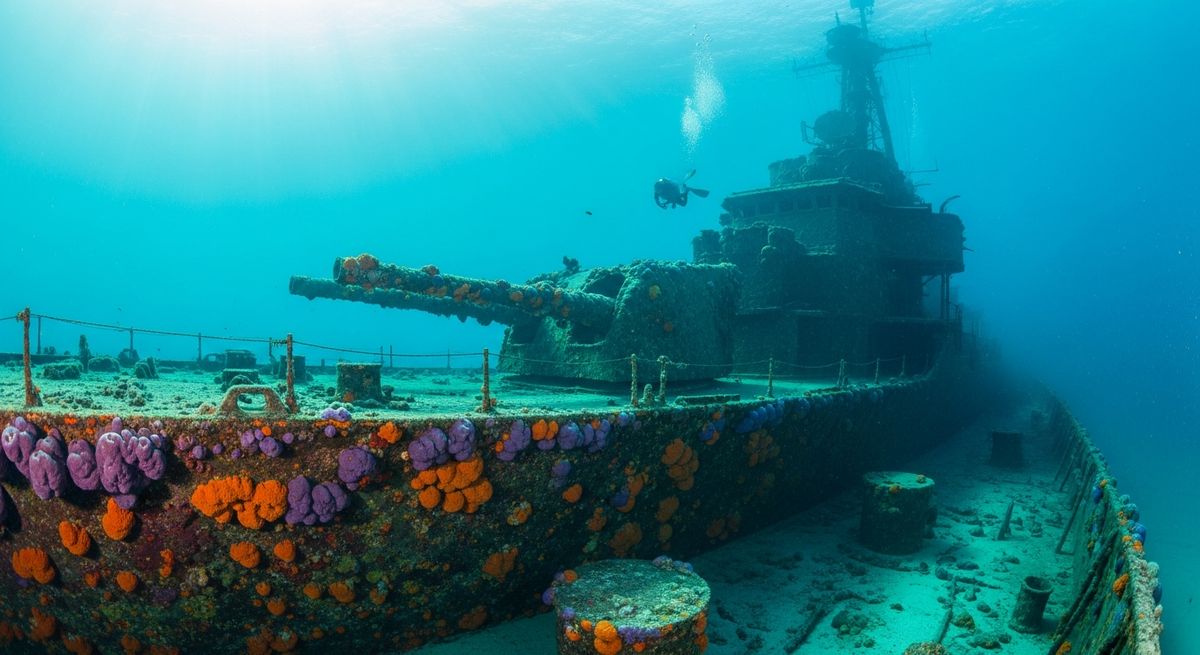
The North Sea can be a bit of a grey lady sometimes, but the Bounty wreck off the Danish coast is one of those dives that reminds you why we keep coming back. We love how the strong currents and chilly water have preserved this fishing vessel since it went down in 1979; the whole structure is still incredibly intact. Dropping down to 31 metres, you’ll find her upright on the seabed, a real ghost ship feeling. Exploring the Bounty is a journey into an accidental museum. The wheelhouse is still there, and you can fin your way through sections of the hold, imagining the fishing gear that would have been stowed. What really gets us, though, is the sheer volume of life that’s made her home. Huge cod often patrol the decks, and the wreck itself is plastered in anemones and dead man’s fingers. The light filtering down through the green water, catching the anemones, is a beautiful sight. It’s a dive for those who appreciate history and the rugged beauty of a cold-water wreck, definitely one for the drysuit brigade. Pick a slack tide; the currents can be serious.
Typical BOUNTY Dive Profile
Illustrative profile based on site depth and type. Actual dive profiles vary - always follow your dive computer and training.
Safety Notes
Deep dive (31m) - monitor air consumption closely. Advanced certification recommended.
Wreck site - avoid penetration without wreck diving certification. Watch for sharp metal and entanglement hazards.
Cold water this month (avg 13°C). Drysuit or thick wetsuit (7mm+) recommended.
Always perform a 3-minute safety stop at 5m before surfacing.
BOUNTY Wreck History
Year Sunk
1979
Vessel Type
fishing vessel
Cause
unknown
This Bounty is a world away from the tall ship of legend. This is a hardworking fishing vessel that met its end in the cold, challenging waters of the North Sea in February 1979. The specific cause of its sinking is unknown, but it now lies on a sandy seabed off the Danish coast, a silent monument to the unforgiving nature of the sea.
Sitting at 31 meters, the Bounty is a dive for the more experienced. North Sea conditions can mean strong currents and limited visibility, but for well-prepared divers, the wreck is a rewarding challenge. It is classified as a 'Dangerous Wreck,' likely due to the presence of snagged fishing nets and deteriorating sharp metal. Divers should exercise extreme caution, but can expect to see a largely intact modern trawler, now acting as a haven for the very fish it once pursued, including cod, ling, and large crustaceans.
Reviews for BOUNTY
Conditions
Ocean conditions, forecast and tides for BOUNTY
BOUNTY Ocean Conditions
Monthly averages for BOUNTY, sourced from Open-Meteo marine data - nearest station: Open-Meteo marine grid (55.31, 9.86) (1km away)
October Averages
Sea Temperature
13°C
56°F · Range: 10.7–16.8°C
Air Temperature
11°C
52°F
Wind Speed
7.69 m/s
14.9 knots
Atmospheric Pressure
1010.5 hPa
Based on 4 years of monitoring data · Data sources: Open-Meteo marine data
Plan & book
Ways to dive North Sea Coast, from day trips to liveaboards.
Day trips & courses
via GetYourGuideGuided dives, courses and snorkel trips with instant booking.
Find dive trips in North Sea CoastPlaces to stay
via Booking.comHotels and dive resorts near North Sea Coast.
Search stays in North Sea CoastDive insurance
Most travel insurance excludes or limits scuba. Check what you need before you go.
Dive insurance explainedPartner links: we may earn a commission if you book, at no extra cost to you. How we make money
Where to Stay near BOUNTY
Prices from Booking.com. We may earn a commission at no extra cost to you.