BRODRENE
Protected Area
Vresen og havet mellem Fyn og Langeland
Why dive here
With 95+ marine species recorded in the area - including seals & sea lions, sea turtles and jellyfish lake - BRODRENE offers some of North Sea Coast's richest wreck diving. Water ranges 3-19°C, warmest July, August, September.
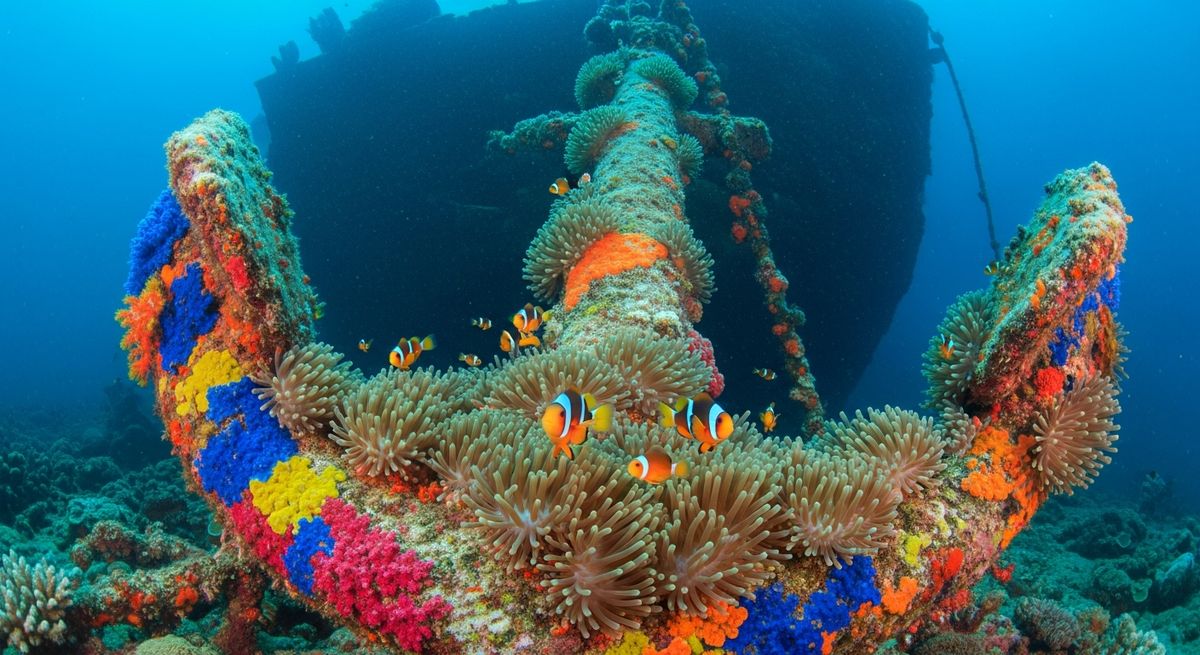
Brodrene, a fishing vessel sunk in 1941, isn't your postcard-perfect tropical wreck, and that's precisely why we love it. Down at 20 metres, the North Sea chill hits you, but the visibility, often a good 10-15 metres, means you can really appreciate the ship's outline. You’re descending into history here. We find the sheer atmosphere of the wreck, even with its designation as 'dangerous', is what makes it a standout. The collapsing sections and the way the sand has reclaimed parts of the hull give it a ghostly, skeletal feel. Exploring Brodrene means navigating around the ribs of the ship, which are now completely covered in plumose anemones – their feathery polyps waving in the gentle surge. It’s a riot of white and orange against the darker steel. Look closely and you’ll spot gobies darting between crevices, and common crabs scuttling over the plates. Our favourite spot is usually around the stern, where the structure is a bit more defined, offering some genuine swim-throughs for careful divers. This wreck really suits those who appreciate historical context and don't mind a bit of a chill; it's a raw, authentic North Sea dive. We’d suggest diving this one on an incoming tide for the best visibility.
Typical BRODRENE Dive Profile
Illustrative profile based on site depth and type. Actual dive profiles vary - always follow your dive computer and training.
Safety Notes
Depth of 20m - Advanced Open Water certification recommended.
Wreck site - avoid penetration without wreck diving certification. Watch for sharp metal and entanglement hazards.
Cold water this month (avg 13°C). Drysuit or thick wetsuit (7mm+) recommended.
Always perform a 3-minute safety stop at 5m before surfacing.
BRODRENE Wreck History
Year Sunk
1941
Vessel Type
fishing vessel
Cause
unknown
The story of the fishing vessel Brodrene is a small mystery from the turbulent years of World War II. Lost on August 3, 1941, this humble vessel now lies on the floor of the North Sea off the coast of Denmark. Whether she struck a mine, was caught in a storm, or was a victim of an undocumented attack remains unknown. She is a reminder of the constant danger faced even by civilian vessels in wartime.
At a depth of 20 meters, the Brodrene is an accessible wreck for many divers, but the site comes with a caution. It is classified as a 'dangerous wreck', meaning divers should be wary of potential entanglement hazards from old fishing nets or sharp, collapsing structures. For the prepared diver, the wreck is a magnet for the marine life of the North Sea and an intriguing, atmospheric site to explore and ponder its unknown fate.
Nearest Dive Centres to BRODRENE
Dive shops near BRODRENE
View all dive centres in North Sea CoastReviews for BRODRENE
Conditions
Ocean conditions, forecast and tides for BRODRENE
BRODRENE Ocean Conditions
Monthly averages for BRODRENE, sourced from Open-Meteo marine data - nearest station: Open-Meteo marine grid (55.31, 9.86) (1km away)
October Averages
Sea Temperature
13°C
56°F · Range: 10.7–16.8°C
Air Temperature
11°C
52°F
Wind Speed
7.69 m/s
14.9 knots
Atmospheric Pressure
1010.5 hPa
Based on 4 years of monitoring data · Data sources: Open-Meteo marine data
Plan & book
Ways to dive North Sea Coast, from day trips to liveaboards.
Day trips & courses
via GetYourGuideGuided dives, courses and snorkel trips with instant booking.
Find dive trips in North Sea CoastPlaces to stay
via Booking.comHotels and dive resorts near North Sea Coast.
Search stays in North Sea CoastDive insurance
Most travel insurance excludes or limits scuba. Check what you need before you go.
Dive insurance explainedPartner links: we may earn a commission if you book, at no extra cost to you. How we make money
Where to Stay near BRODRENE
Prices from Booking.com. We may earn a commission at no extra cost to you.