BRYNJE
Protected Area
Røsnæs, Røsnæs Rev og Kalundborg Fjord
Why dive here
With 95+ marine species recorded in the area - including seals & sea lions, sea turtles and jellyfish lake - BRYNJE offers some of North Sea Coast's richest wreck diving. Water ranges 3-19°C, warmest July, August, September.
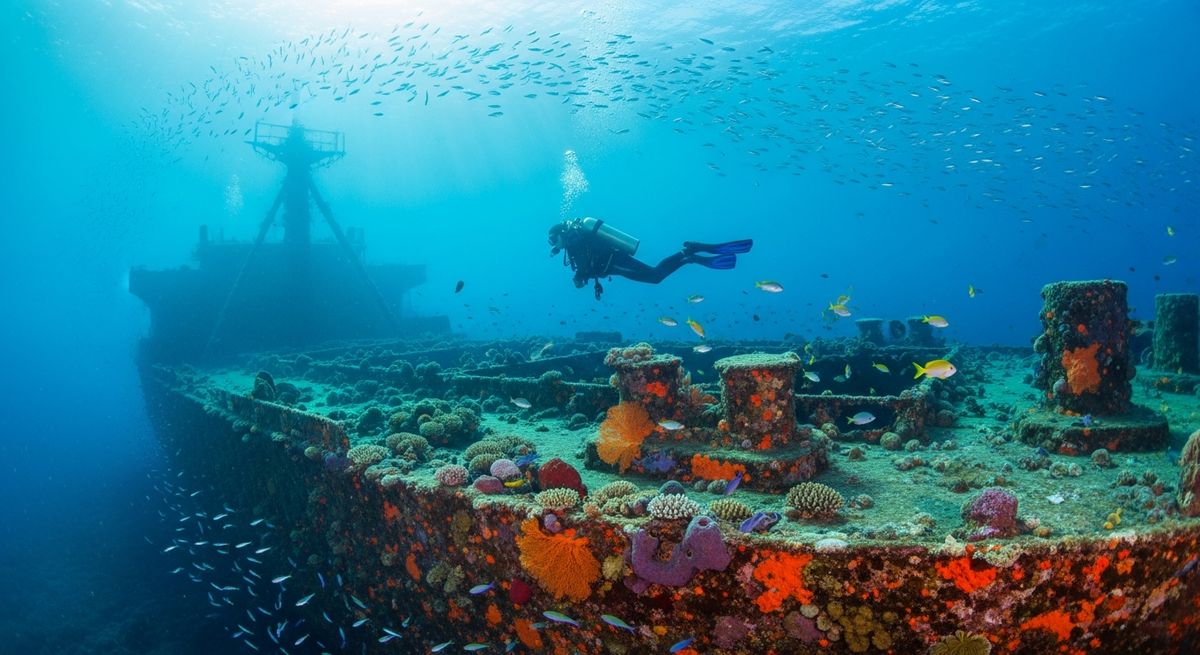
The Brynje is pure North Sea grit, and we love it for that. She’s a steamship, sunk in 1941, lying in a manageable 15 meters. What you get here isn’t coral, obviously, but a dramatic, broken silhouette against the green water, absolutely smothered in anemones and dead man's fingers. Our favourite part is dropping down onto the stern, where the prop is still clearly visible, a dark cross against the seabed. Penetration is out of the question; this wreck is unstable, but you can weave through the collapsed holds and superstructure, often bumping into cod or a curious ballan wrasse. We’d suggest going at slack tide for the best visibility, otherwise, the surge can really kick up the silt. It’s a dive for those who appreciate history and the sheer resilience of marine life adapting to a steel reef.
Typical BRYNJE Dive Profile
Illustrative profile based on site depth and type. Actual dive profiles vary - always follow your dive computer and training.
Safety Notes
Wreck site - avoid penetration without wreck diving certification. Watch for sharp metal and entanglement hazards.
Cold water this month (avg 13°C). Drysuit or thick wetsuit (7mm+) recommended.
Always perform a 3-minute safety stop at 5m before surfacing.
BRYNJE Wreck History
Year Sunk
1941
Vessel Type
cargo ship
Cause
mine
The SS Brynje was a Norwegian steam-powered cargo ship caught in the crossfire of World War II. In an era when merchant shipping was the lifeline for nations at war, vessels like the Brynje played a crucial, and incredibly dangerous, role in transporting essential goods and materials across seas that had become active battlegrounds.
On July 20, 1941, while navigating the Danish North Sea coast, her luck ran out. The Brynje struck a naval mine, one of the thousands laid by both Allied and Axis forces to disrupt shipping lanes. The resulting explosion was catastrophic, and the ship sank, taking her cargo and her story to the seabed. She became one of the many silent casualties of the long and brutal Battle of the Atlantic.
Today, the wreck of the Brynje rests at a depth of 15 meters. This shallow depth makes it a fantastic and accessible dive for divers of all levels, from newly certified to seasoned veterans. While North Sea conditions can mean variable visibility, the wreck offers a compelling exploration. Divers can trace the outlines of the hull and deck structures, now heavily encrusted with marine growth and home to schools of fish, crabs, and other local sea life, providing a poignant intersection of military history and natural reclamation.
Nearest Dive Centres to BRYNJE
Dive shops near BRYNJE
View all dive centres in North Sea CoastReviews for BRYNJE
Conditions
Ocean conditions, forecast and tides for BRYNJE
BRYNJE Ocean Conditions
Monthly averages for BRYNJE, sourced from Open-Meteo marine data - nearest station: Open-Meteo marine grid (55.31, 9.86) (1km away)
October Averages
Sea Temperature
13°C
56°F · Range: 10.7–16.8°C
Air Temperature
11°C
52°F
Wind Speed
7.69 m/s
14.9 knots
Atmospheric Pressure
1010.5 hPa
Based on 4 years of monitoring data · Data sources: Open-Meteo marine data
Plan & book
Ways to dive North Sea Coast, from day trips to liveaboards.
Day trips & courses
via GetYourGuideGuided dives, courses and snorkel trips with instant booking.
Find dive trips in North Sea CoastPlaces to stay
via Booking.comHotels and dive resorts near North Sea Coast.
Search stays in North Sea CoastDive insurance
Most travel insurance excludes or limits scuba. Check what you need before you go.
Dive insurance explainedPartner links: we may earn a commission if you book, at no extra cost to you. How we make money
Where to Stay near BRYNJE
Prices from Booking.com. We may earn a commission at no extra cost to you.