BUNDEKUH
Protected Area
Schultz og Hastens Grund samt Briseis Flak
Why dive here
With 95+ marine species recorded in the area - including seals & sea lions, sea turtles and jellyfish lake - BUNDEKUH offers some of North Sea Coast's richest wreck diving. Water ranges 3-19°C, warmest July, August, September.
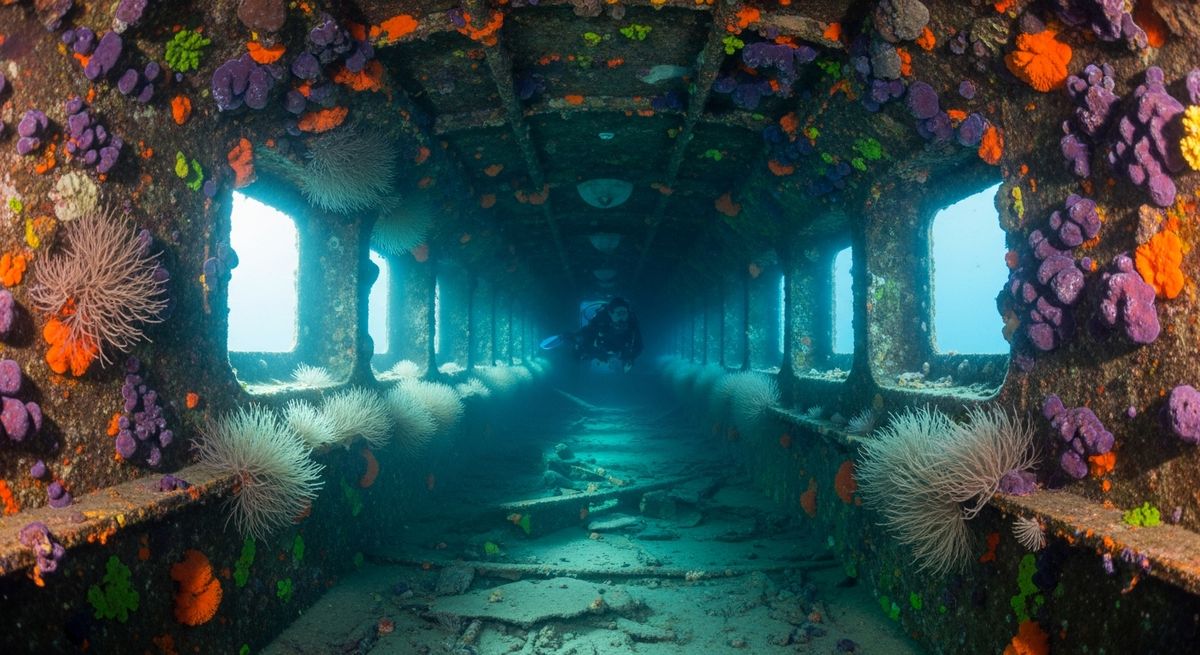
Bundekuh isn't your average North Sea trawler; she's got character. Lying at a comfortable 19 metres, this wreck is surprisingly intact in places, her superstructure still offering genuine penetration opportunities for those with the right training and gear. We’ve always found the engine room to be particularly atmospheric, dark and silty, with the occasional glimpse of a conger eel peeking out from a pipe. Visibility can be a bit of a gamble here, common for the North Sea, but on a good day, when the light penetrates through the green water, the sight of the hull draped in plumose anemones is really quite something. It's an excellent dive for those who enjoy exploring confined spaces or perfecting their wreck navigation. You'll likely see decent-sized cod lurking in the shadows, plus schools of pollock darting between the rusty plates. Our favourite detail has to be the intact deck crane, often covered in dead man's fingers, a real focal point for photographers. We'd suggest aiming for slack tide, as currents can pick up around the wreck and make exploration tricky. Keep an eye on your bottom time though; it’s easy to get lost in the details here.
Typical BUNDEKUH Dive Profile
Illustrative profile based on site depth and type. Actual dive profiles vary - always follow your dive computer and training.
Safety Notes
Depth of 19m - Advanced Open Water certification recommended.
Wreck site - avoid penetration without wreck diving certification. Watch for sharp metal and entanglement hazards.
Cold water this month (avg 13°C). Drysuit or thick wetsuit (7mm+) recommended.
Always perform a 3-minute safety stop at 5m before surfacing.
BUNDEKUH Wreck History
Vessel Type
fishing vessel
Cause
unknown
The BUNDEKUH is an enigmatic trawler resting on the seabed off the Danish North Sea coast. Its history is lost to time, with no official records detailing its final voyage or the circumstances of its sinking. This air of mystery only adds to the allure for divers seeking a true exploration experience. Classified as a "dangerous wreck," it poses a navigational hazard, a testament to its shallow depth of just 19 meters and its position in a busy maritime region.
Descending onto the BUNDEKUH, divers are met with the classic challenges and rewards of North Sea wreck diving. Visibility can be variable, and currents can be strong, demanding careful planning and execution. The trawler's structure, though likely deteriorating, provides a fascinating artificial reef teeming with cold-water marine life. Lobsters and crabs often hide in the crevices of the decaying hull, while schools of cod and pollack patrol the open-water sections. Exploring the remnants of its fishing gear requires caution due to potential entanglement hazards, but offers a poignant glimpse into the vessel's working past.
Reviews for BUNDEKUH
Conditions
Ocean conditions, forecast and tides for BUNDEKUH
BUNDEKUH Ocean Conditions
Monthly averages for BUNDEKUH, sourced from Open-Meteo marine data - nearest station: Open-Meteo marine grid (55.31, 9.86) (1km away)
October Averages
Sea Temperature
13°C
56°F · Range: 10.7–16.8°C
Air Temperature
11°C
52°F
Wind Speed
7.69 m/s
14.9 knots
Atmospheric Pressure
1010.5 hPa
Based on 4 years of monitoring data · Data sources: Open-Meteo marine data
Plan & book
Ways to dive North Sea Coast, from day trips to liveaboards.
Day trips & courses
via GetYourGuideGuided dives, courses and snorkel trips with instant booking.
Find dive trips in North Sea CoastPlaces to stay
via Booking.comHotels and dive resorts near North Sea Coast.
Search stays in North Sea CoastDive insurance
Most travel insurance excludes or limits scuba. Check what you need before you go.
Dive insurance explainedPartner links: we may earn a commission if you book, at no extra cost to you. How we make money
Where to Stay near BUNDEKUH
Prices from Booking.com. We may earn a commission at no extra cost to you.