BUS 104
Why dive here
With 95+ marine species recorded in the area - including seals & sea lions, sea turtles and jellyfish lake - BUS 104 offers some of North Sea Coast's richest wreck diving. Water ranges 3-19°C, warmest July, August, September.
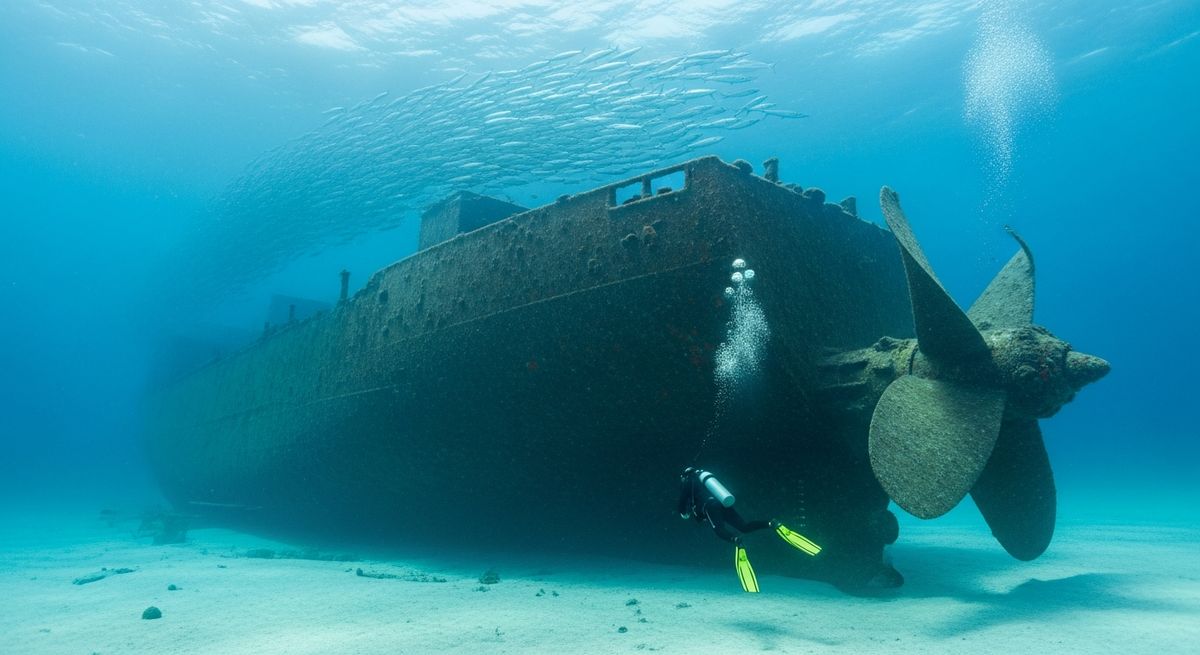
BUS 104 isn’t your typical Danish wreck dive, and that’s precisely why we love it. Sunk by a mine in 1953, this drifter vessel lies in a mere four metres of water, making it a fantastic, chill dive when the conditions are calm. You’ll fin down, and suddenly, the hull appears, surprisingly intact for a wreck that met such a violent end. We particularly enjoy how the light filters through the shallow water, illuminating the wreck’s details, like the remnants of the wheelhouse and the scattered plates. It’s not about big pelagics here, but rather the small, fascinating life that has made the BUS 104 its home. Look closely in the nooks and crannies for blennies peering out, or the occasional crab scuttling across the seabed. On a quiet day, with good visibility, it feels like you've stumbled upon a sunken time capsule. This spot is our pick for a relaxing second dive or for divers who enjoy photographing macro life against a historical backdrop. Keep an eye on the current though; it can pick up quickly.
Typical BUS 104 Dive Profile
Illustrative profile based on site depth and type. Actual dive profiles vary - always follow your dive computer and training.
Safety Notes
Wreck site - avoid penetration without wreck diving certification. Watch for sharp metal and entanglement hazards.
Cold water this month (avg 13°C). Drysuit or thick wetsuit (7mm+) recommended.
BUS 104 Wreck History
Year Sunk
1953
Vessel Type
fishing vessel
Cause
unknown
The wreck of the BUS 104 is a somber reminder of the lingering dangers of war, long after the fighting has ceased. This Danish drifter, a hardworking fishing vessel, met its tragic end on April 18, 1953, when it struck a mine left over from World War II. The explosion sent the small ship to the bottom, a casualty of a conflict that had officially ended years earlier. Its sinking is a poignant entry in the post-war mine casualty logs.
Resting in just 4 meters of water off the North Sea coast of Denmark, the BUS 104 is a fascinating and accessible shallow dive. Classified as a dangerous wreck, divers should approach with care, but the site offers a unique glimpse into the past. Exploring the remains of this simple fishing boat provides a powerful connection to the human cost of conflict and the surprising resilience of the sea, as marine life now thrives where tragedy once struck.
Reviews for BUS 104
Conditions
Ocean conditions, forecast and tides for BUS 104
BUS 104 Ocean Conditions
Monthly averages for BUS 104, sourced from Open-Meteo marine data - nearest station: Open-Meteo marine grid (55.31, 9.86) (1km away)
October Averages
Sea Temperature
13°C
56°F · Range: 10.7–16.8°C
Air Temperature
11°C
52°F
Wind Speed
7.69 m/s
14.9 knots
Atmospheric Pressure
1010.5 hPa
Based on 4 years of monitoring data · Data sources: Open-Meteo marine data
Plan & book
Ways to dive North Sea Coast, from day trips to liveaboards.
Day trips & courses
via GetYourGuideGuided dives, courses and snorkel trips with instant booking.
Find dive trips in North Sea CoastPlaces to stay
via Booking.comHotels and dive resorts near North Sea Coast.
Search stays in North Sea CoastDive insurance
Most travel insurance excludes or limits scuba. Check what you need before you go.
Dive insurance explainedPartner links: we may earn a commission if you book, at no extra cost to you. How we make money
Where to Stay near BUS 104
Prices from Booking.com. We may earn a commission at no extra cost to you.