CAMILLA C
Protected Area
Å
Why dive here
With 95+ marine species recorded in the area - including seals & sea lions, sea turtles and jellyfish lake - CAMILLA C offers some of North Sea Coast's richest wreck diving. Water ranges 3-19°C, warmest July, August, September.
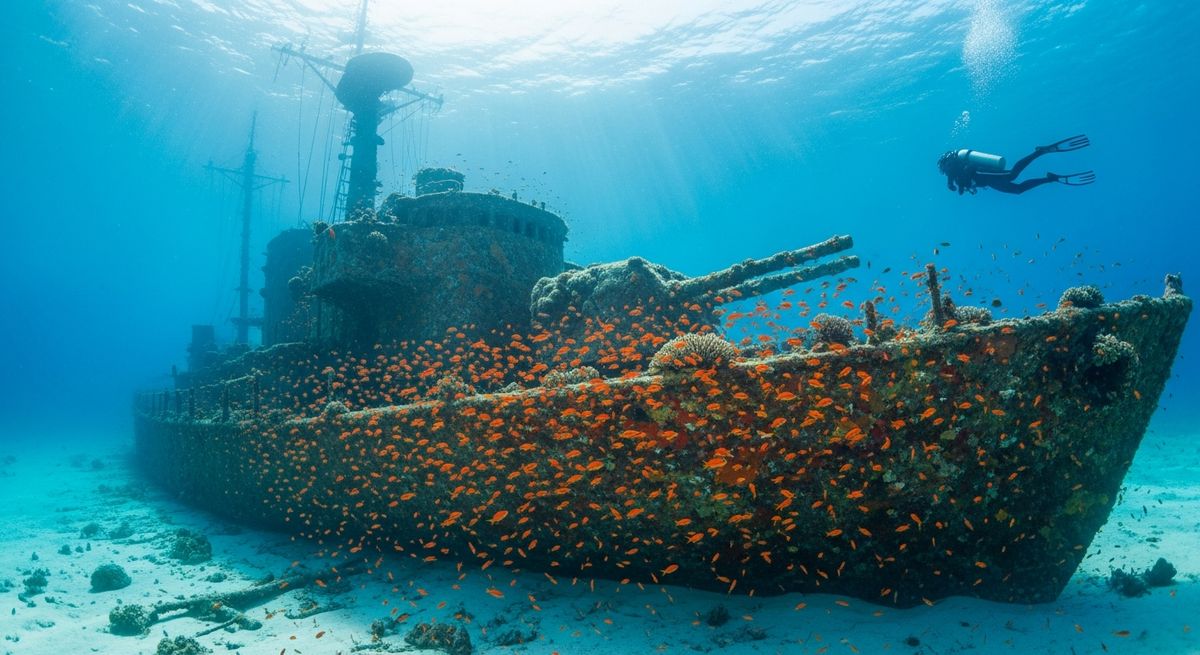
The North Sea isn't always about deep, dark dives, and the Camilla C proves it. We absolutely love this wreck for its accessibility and the way it’s become a living reef. Dropping onto the deck at 30 metres, you're immediately struck by the sheer number of fish – cod, saithe, and often a grumpy wolfish peering out from a crevice. It’s a fishing vessel, and you can still make out the outline of the stern, the collapsed wheelhouse, and various machinery parts now completely encrusted with anemones and hydroids. Visibility can be a bit of a gamble here, typical for the North Sea, but when it’s good, the light penetrating through the water column gives the wreck an almost ethereal glow. We always suggest trying to hit this one on a slack tide; the currents can pick up, making it a bit more challenging to fully explore the nooks and crannies where the ling and conger eels hide. It’s a solid dive for those comfortable with deeper wrecks but without the need for technical skills. You’ll spend most of your bottom time just marvelling at how nature has reclaimed this old trawler.
Typical CAMILLA C Dive Profile
Illustrative profile based on site depth and type. Actual dive profiles vary - always follow your dive computer and training.
Safety Notes
Depth of 30m - Advanced Open Water certification recommended.
Wreck site - avoid penetration without wreck diving certification. Watch for sharp metal and entanglement hazards.
Cold water this month (avg 13°C). Drysuit or thick wetsuit (7mm+) recommended.
Always perform a 3-minute safety stop at 5m before surfacing.
CAMILLA C Wreck History
Vessel Type
fishing vessel
Cause
unknown
The history of the Camilla C is shrouded in mystery. All that is known for certain is that this fishing vessel now lies on the seabed off Denmark's North Sea coast. The date and cause of its sinking are unrecorded, leaving divers to speculate on its final moments. It rests at a depth of 30 metres, placing it in the realm of advanced recreational diving, where the cold, nutrient-rich waters of the North Sea create a unique and challenging environment.
Designated as a 'dangerous wreck', the Camilla C demands respect and careful dive planning, as it is likely entangled in its own nets-a common hazard on lost fishing boats. For the prepared diver, the wreck is a magnet for marine life. Its structure provides a welcome refuge on the otherwise sandy seafloor, attracting large cod, ling, and formidable conger eels. The often-limited visibility adds to the atmosphere of exploration, with the wreck's form slowly emerging from the green twilight as you descend.
Reviews for CAMILLA C
Conditions
Ocean conditions, forecast and tides for CAMILLA C
CAMILLA C Ocean Conditions
Monthly averages for CAMILLA C, sourced from Open-Meteo marine data - nearest station: Open-Meteo marine grid (55.31, 9.86) (1km away)
October Averages
Sea Temperature
13°C
56°F · Range: 10.7–16.8°C
Air Temperature
11°C
52°F
Wind Speed
7.69 m/s
14.9 knots
Atmospheric Pressure
1010.5 hPa
Based on 4 years of monitoring data · Data sources: Open-Meteo marine data
Plan & book
Ways to dive North Sea Coast, from day trips to liveaboards.
Day trips & courses
via GetYourGuideGuided dives, courses and snorkel trips with instant booking.
Find dive trips in North Sea CoastPlaces to stay
via Booking.comHotels and dive resorts near North Sea Coast.
Search stays in North Sea CoastDive insurance
Most travel insurance excludes or limits scuba. Check what you need before you go.
Dive insurance explainedPartner links: we may earn a commission if you book, at no extra cost to you. How we make money
Where to Stay near CAMILLA C
Prices from Booking.com. We may earn a commission at no extra cost to you.