CARL JOLLE
Protected Area
A
Why dive here
With 95+ marine species recorded in the area - including seals & sea lions, sea turtles and jellyfish lake - CARL JOLLE offers some of North Sea Coast's richest wreck diving. Water ranges 3-19°C, warmest July, August, September.
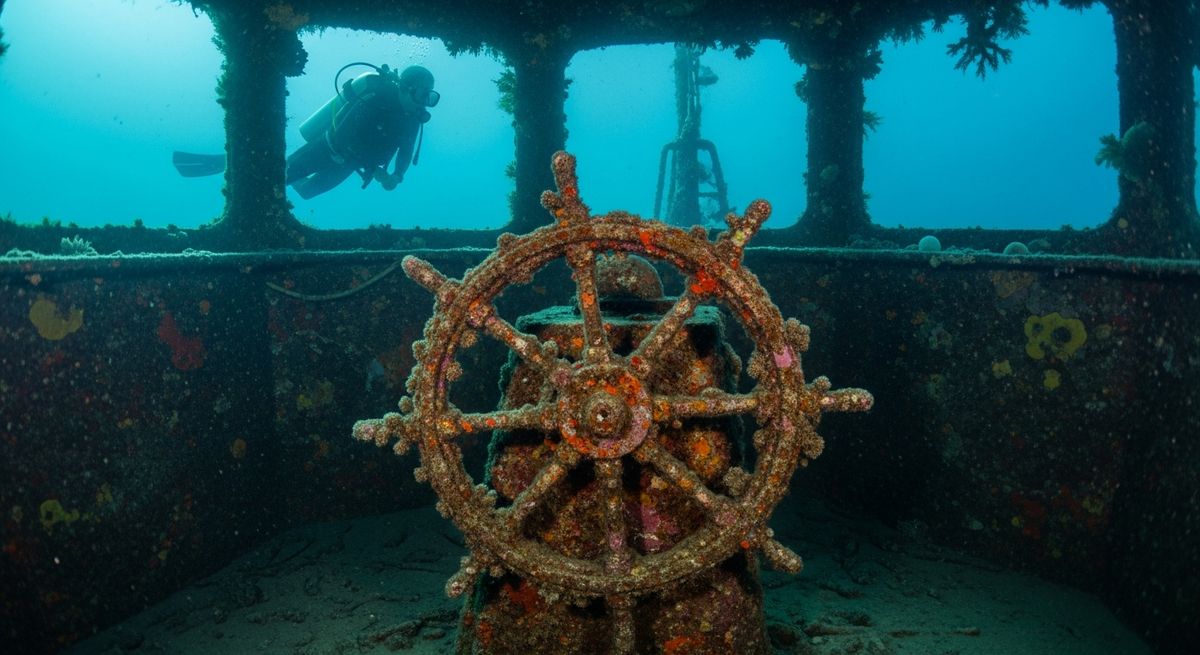
The Carl Jolle, a sunken fishing vessel, sits upright at 24 metres. It’s a compelling piece of North Sea history, and we love how accessible it feels. Dropping down, the hull looms quickly out of the gloom. It’s a dark wreck, often with a moody green light filtering through, which just adds to the atmosphere. You can spend a good chunk of a dive exploring its structure, poking your head into the wheelhouse if the visibility is playing ball. This isn't a deep dive, but the North Sea can bring its own challenges – think currents and thermoclines. We’d suggest keeping a keen eye on the dive plan and your air. Despite the low light, the wreck is a magnet for life. We’ve seen conger eels poking out from pipes and big schools of cod hovering over the deck. It’s a site for divers who appreciate the story behind a wreck and don't mind a bit of a low-visibility adventure. Our favourite part? That moment when the whole outline of the boat suddenly appears.
Typical CARL JOLLE Dive Profile
Illustrative profile based on site depth and type. Actual dive profiles vary - always follow your dive computer and training.
Safety Notes
Depth of 24m - Advanced Open Water certification recommended.
Wreck site - avoid penetration without wreck diving certification. Watch for sharp metal and entanglement hazards.
Cold water this month (avg 13°C). Drysuit or thick wetsuit (7mm+) recommended.
Always perform a 3-minute safety stop at 5m before surfacing.
CARL JOLLE Wreck History
Vessel Type
fishing vessel
Cause
unknown
The Carl Jolle is an enigma resting on the seabed of the North Sea off the Danish coast. Little is known about the history of this fishing vessel or the circumstances that led to its sinking. For divers, this lack of information adds to the allure of exploration. At a depth of 24 meters, the wreck is well within the range of advanced recreational divers and offers a compelling site to investigate.
The wreck is classified as 'Dangerous', a designation that warns divers of potential hazards such as snagged fishing nets, sharp metal edges, or structural instability. This requires careful dive planning and good buoyancy control. Descending onto the Carl Jolle, divers have the chance to piece together its story from the silent clues left behind, making it a true exploration dive where every discovery feels like a revelation.
Reviews for CARL JOLLE
Conditions
Ocean conditions, forecast and tides for CARL JOLLE
CARL JOLLE Ocean Conditions
Monthly averages for CARL JOLLE, sourced from Open-Meteo marine data - nearest station: Open-Meteo marine grid (55.31, 9.86) (1km away)
October Averages
Sea Temperature
13°C
56°F · Range: 10.7–16.8°C
Air Temperature
11°C
52°F
Wind Speed
7.69 m/s
14.9 knots
Atmospheric Pressure
1010.5 hPa
Based on 4 years of monitoring data · Data sources: Open-Meteo marine data
Plan & book
Ways to dive North Sea Coast, from day trips to liveaboards.
Day trips & courses
via GetYourGuideGuided dives, courses and snorkel trips with instant booking.
Find dive trips in North Sea CoastPlaces to stay
via Booking.comHotels and dive resorts near North Sea Coast.
Search stays in North Sea CoastDive insurance
Most travel insurance excludes or limits scuba. Check what you need before you go.
Dive insurance explainedPartner links: we may earn a commission if you book, at no extra cost to you. How we make money
Where to Stay near CARL JOLLE
Prices from Booking.com. We may earn a commission at no extra cost to you.