KARLSHORST
Protected Area
Æsholman
Why dive here
KARLSHORST is a wreck dive in Lofoten Islands, Norway. Water ranges 3-15°C, warmest July, August, September.
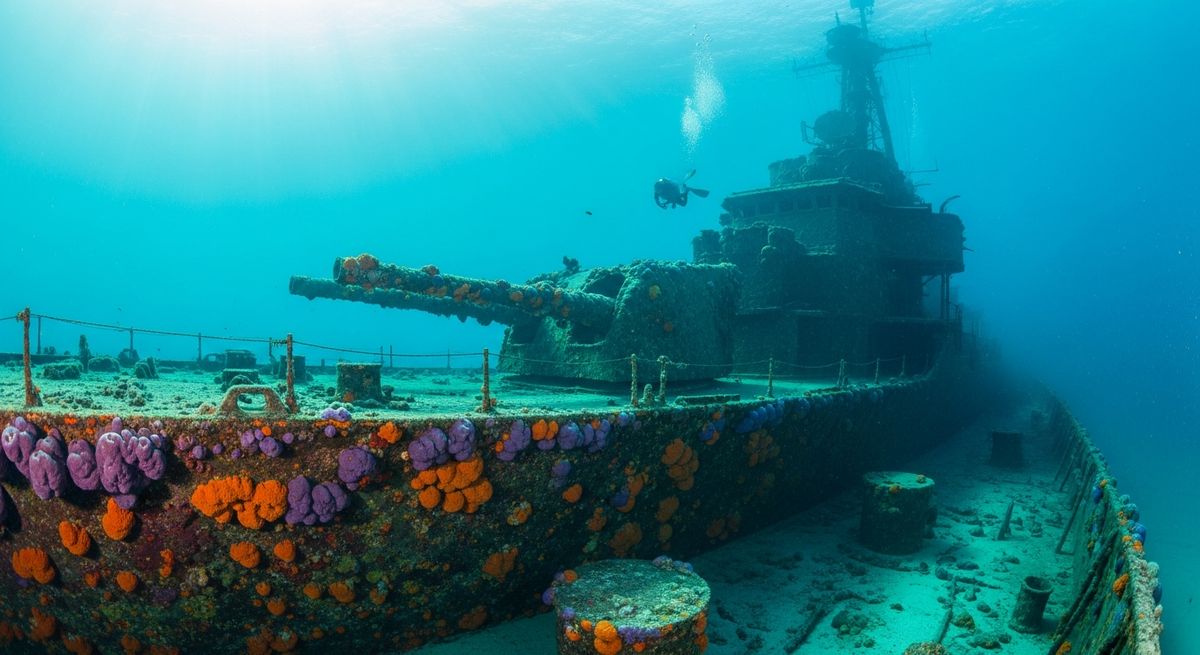
Karlshorst isn’t a deep dive, but what it lacks in depth it more than makes up for in atmosphere. We’re talking about a beast of a wreck, a 93-meter cargo ship that settled upright in just 4 meters of water back in 1977. You can practically reach out and touch the surface while hovering over the wheelhouse, which for us, makes it one of the most accessible large wrecks out there. The sheer scale is what grabs you first. You’re swimming along the massive deck, past gaping cargo holds that swallowed her when the weather turned nasty. Our favourite part? The stern, where the prop is still in place, surprisingly intact. It feels like a ghost ship, still navigating through time. Visibility here can be temperamental, sometimes a bit murky, but when it clears, you get those dramatic shafts of light piercing the water, illuminating the wreck in a way that’s almost theatrical. It’s not about finding rare nudibranchs or vibrant corals, it’s about the sheer presence of this hulking steel structure, a silent testament to a storm long past. This is a dive for anyone who appreciates wreck diving with a story, even if you’re just starting out. You’ll spend your time exploring the upper decks, peering into the holds, and getting a real sense of the ship’s immense size. The ambient light at this depth means you catch glints of the metal, and the occasional cod or pollock will dart out from a shadowed crevice, making the wreck feel truly alive again.
Typical KARLSHORST Dive Profile
Illustrative profile based on site depth and type. Actual dive profiles vary - always follow your dive computer and training.
Safety Notes
Wreck site - avoid penetration without wreck diving certification. Watch for sharp metal and entanglement hazards.
Cold water this month (avg 9°C). Drysuit or thick wetsuit (7mm+) recommended.
Nearest Dive Centres to KARLSHORST
Dive shops near KARLSHORST
View all dive centres in Lofoten IslandsReviews for KARLSHORST
Conditions
Ocean conditions, forecast and tides for KARLSHORST
KARLSHORST Ocean Conditions
Monthly averages for KARLSHORST, sourced from Open-Meteo marine data - nearest station: Open-Meteo marine grid (68.33, 16.05) (9km away)
October Averages
Sea Temperature
9°C
49°F · Range: 5–12.3°C
Air Temperature
1°C
34°F
Wind Speed
4.09 m/s
8.0 knots
Atmospheric Pressure
1009.3 hPa
Based on 4 years of monitoring data · Data sources: Open-Meteo marine data
Plan & book
Ways to dive Lofoten Islands, from day trips to liveaboards.
Day trips & courses
via GetYourGuideGuided dives, courses and snorkel trips with instant booking.
Find dive trips in Lofoten IslandsPlaces to stay
via Booking.comHotels and dive resorts near Lofoten Islands.
Search stays in Lofoten IslandsDive insurance
Most travel insurance excludes or limits scuba. Check what you need before you go.
Dive insurance explainedPartner links: we may earn a commission if you book, at no extra cost to you. How we make money
Where to Stay near KARLSHORST
Prices from Booking.com. We may earn a commission at no extra cost to you.