RFA BOARDALE
Protected Area
Nykvåg/Nykan
Why dive here
RFA BOARDALE is a wreck dive in Lofoten Islands, Norway. Water ranges 3-15°C, warmest July, August, September.
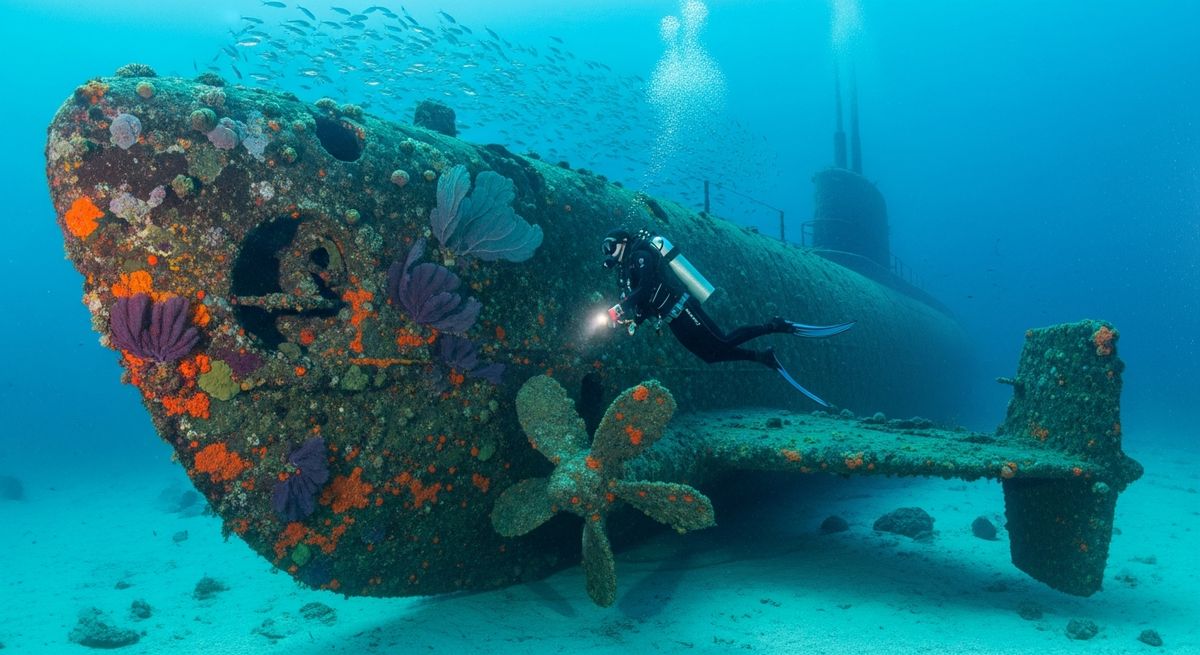
The RFA *Boardale* is an absolute beast of a wreck, a tanker that really gives you a sense of scale. We love how it dominates the seafloor off Lofoten, resting at 60 metres, a proper deep dive that commands respect. Descending onto that massive hull, you immediately feel the history, the sheer size of a vessel built in '37, taken down during the Norwegian campaign. What makes *Boardale* special for us isn't just the depth or the history, but the way it's become part of the environment. The structure itself is a dark, imposing silhouette, but up close, there are nudibranchs in surprising colours clinging to the plates, and often schools of cod hanging around the superstructure. We’d suggest focusing on the stern if you’re limited on bottom time; the prop is a highlight. Visibility can be excellent up here, often 20 metres plus on a good day, but it’s Norway, so prepare for chillier water. This is a dive for experienced technical divers, those who appreciate a significant piece of maritime history and the quiet solitude of a deep wreck.
Typical RFA BOARDALE Dive Profile
Illustrative profile based on site depth and type. Actual dive profiles vary - always follow your dive computer and training.
Safety Notes
Maximum depth 60m exceeds recreational limits (40m). Technical diving certification and equipment required.
Wreck site - avoid penetration without wreck diving certification. Watch for sharp metal and entanglement hazards.
Cold water this month (avg 9°C). Drysuit or thick wetsuit (7mm+) recommended.
Always perform a 3-minute safety stop at 5m before surfacing.
Reviews for RFA BOARDALE
Conditions
Ocean conditions, forecast and tides for RFA BOARDALE
RFA BOARDALE Ocean Conditions
Monthly averages for RFA BOARDALE, sourced from Open-Meteo marine data - nearest station: Open-Meteo marine grid (68.33, 16.05) (9km away)
October Averages
Sea Temperature
9°C
49°F · Range: 5–12.3°C
Air Temperature
1°C
34°F
Wind Speed
4.09 m/s
8.0 knots
Atmospheric Pressure
1009.3 hPa
Based on 4 years of monitoring data · Data sources: Open-Meteo marine data
Plan & book
Ways to dive Lofoten Islands, from day trips to liveaboards.
Day trips & courses
via GetYourGuideGuided dives, courses and snorkel trips with instant booking.
Find dive trips in Lofoten IslandsPlaces to stay
via Booking.comHotels and dive resorts near Lofoten Islands.
Search stays in Lofoten IslandsDive insurance
Most travel insurance excludes or limits scuba. Check what you need before you go.
Dive insurance explainedPartner links: we may earn a commission if you book, at no extra cost to you. How we make money
Where to Stay near RFA BOARDALE
Prices from Booking.com. We may earn a commission at no extra cost to you.