POPI
Protected Area
Espacio marino del Baix Llobregat-Garraf
Why dive here
With 44+ marine species recorded in the area - including dolphins, ocean sunfish (mola mola) and sea turtles - POPI offers some of Costa Brava's richest wreck diving. Water ranges 13-25°C, warmest July, August, September.
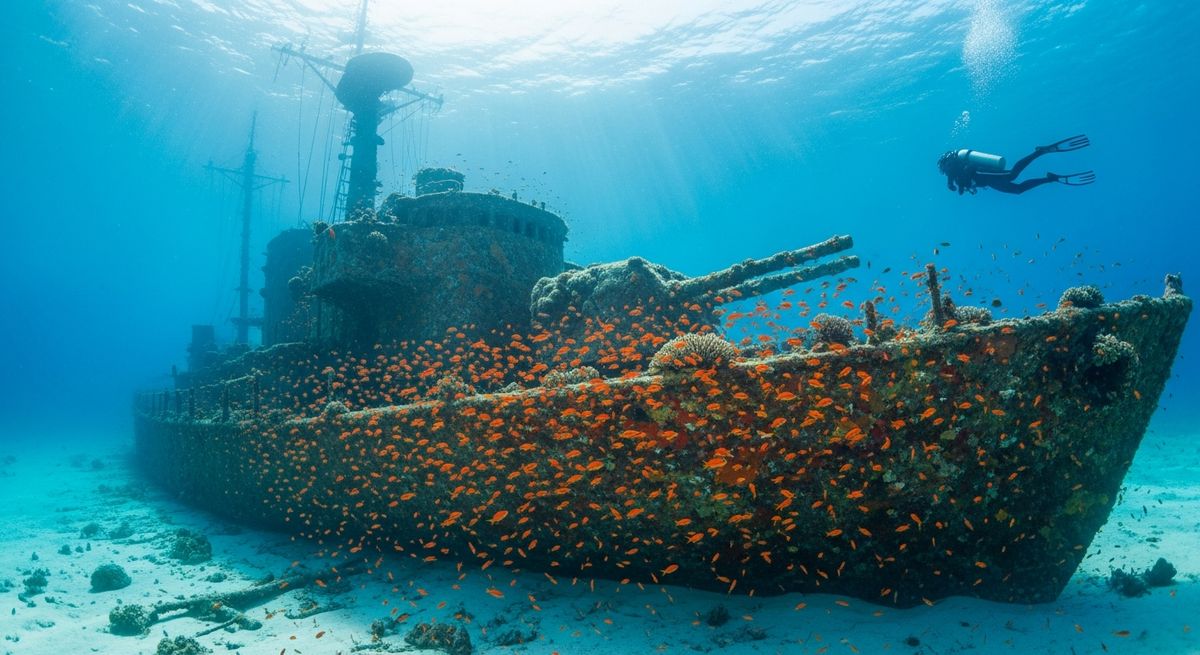
We like Popi for a relaxed afternoon dive, especially if you’re newer to wreck diving or just want an easy cruise. This carrier vessel went down in 1974 after a fire, settling upright at a modest 11 metres. It’s pretty broken up these days, but you can still make out the general shape, the bow and stern sections being the most intact. What we really enjoy is watching how the Mediterranean life has completely taken over. Small schools of damselfish flit in and out of the plating, and you’ll spot plenty of blennies tucked into crevices. It’s not a deep, dramatic wreck, but it’s a friendly one, perfect for extended bottom times and getting comfortable with overhead environments without any real pressure.
Typical POPI Dive Profile
Illustrative profile based on site depth and type. Actual dive profiles vary - always follow your dive computer and training.
Safety Notes
Wreck site - avoid penetration without wreck diving certification. Watch for sharp metal and entanglement hazards.
Always perform a 3-minute safety stop at 5m before surfacing.
Nearest Dive Centres to POPI
Dive shops near POPI
Underwater Barcelona
APNEA NATURA
MIGUEL LOZANO GRANDE
NEXTGEN DIVING TRAVEL S.L.
Medusadive
Vanas Dive
Reviews for POPI
Conditions
Ocean conditions, forecast and tides for POPI
POPI Ocean Conditions
Monthly averages for POPI, sourced from Open-Meteo marine data + Copernicus Marine (EU) - nearest station: Open-Meteo marine grid (42.12, 3.15) (24km away)
October Averages
Sea Temperature
20°C
68°F · Range: 18.2–22.8°C
Current Speed
1 cm/s
Direction: E (90°)
Salinity
37.91 PSU
Based on 4 years of monitoring data · Data sources: Open-Meteo marine data + Copernicus Marine (EU)
Plan & book
Ways to dive Costa Brava, from day trips to liveaboards.
Day trips & courses
via GetYourGuideGuided dives, courses and snorkel trips with instant booking.
Find dive trips in Costa BravaPlaces to stay
via Booking.comHotels and dive resorts near Costa Brava.
Search stays in Costa BravaDive insurance
Most travel insurance excludes or limits scuba. Check what you need before you go.
Dive insurance explainedPartner links: we may earn a commission if you book, at no extra cost to you. How we make money
Where to Stay near POPI
Prices from Booking.com. We may earn a commission at no extra cost to you.