MUNDOGAS OSLO
Protected Area
2010968 Klacken (sälskyddsområde)
Why dive here
With 50+ marine species recorded in the area - including dwarf minke whales and jellyfish lake - MUNDOGAS OSLO offers some of Baltic Coast's richest wreck diving. Water ranges 1-17°C, warmest July, August, September.
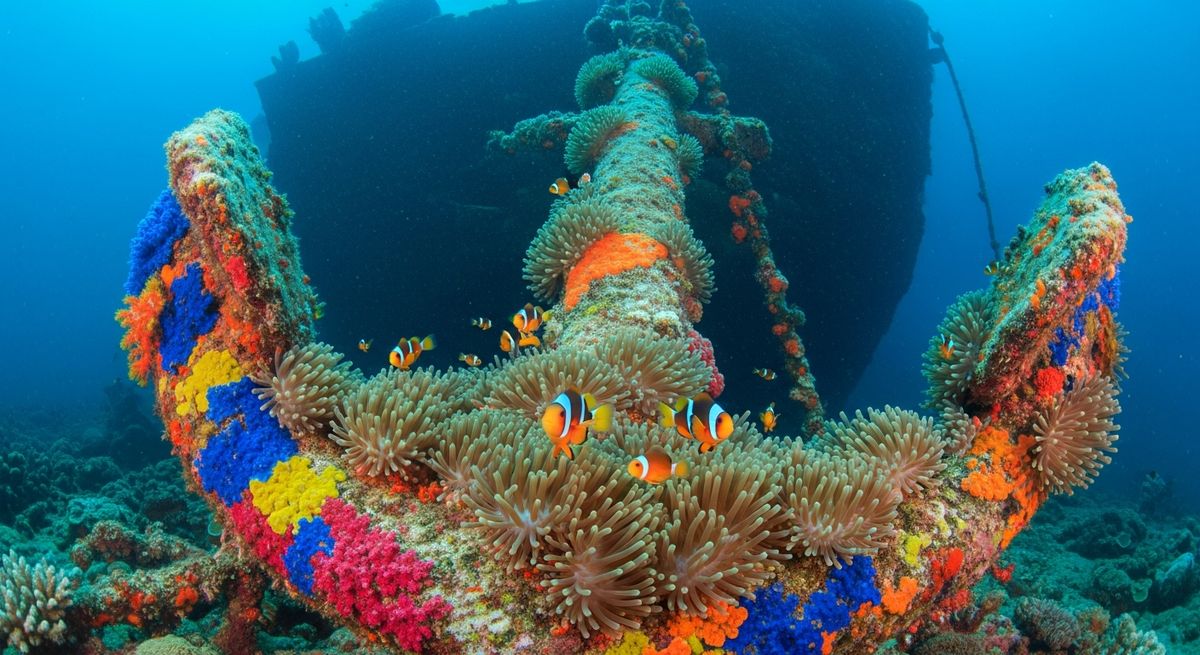
The Mundogas Oslo, now here’s a wreck with some real character. She went down fast in '66 after a collision, taking a near-vertical plunge, which means she sits upright, proud, and surprisingly intact at 50 metres. For us, the way she settled, stern-first into the seabed, gives the whole dive a unique feel. Descending down the mast into that cold, green Baltic light, you start to make out the bridge, almost perfectly preserved. We love exploring the superstructure, feeling the cold steel under our gloved hands as we peer into the cargo holds. The lack of current usually makes for a very relaxed drift along her length. You’ll spot schools of cod weaving through the plating, and the anemones have really taken hold, a soft white fuzz over the metalwork. Our favourite part has to be the propeller, still looking mighty at the stern, a real sense of her scale. This isn't a dive for the faint of heart or the inexperienced, given the depth, but for competent wreck divers, it’s a truly rewarding visit. You get a genuine sense of history here, a real ship frozen in time.
Typical MUNDOGAS OSLO Dive Profile
Illustrative profile based on site depth and type. Actual dive profiles vary - always follow your dive computer and training.
Safety Notes
Maximum depth 50m exceeds recreational limits (40m). Technical diving certification and equipment required.
Wreck site - avoid penetration without wreck diving certification. Watch for sharp metal and entanglement hazards.
Cold water this month (avg 11°C). Drysuit or thick wetsuit (7mm+) recommended.
Always perform a 3-minute safety stop at 5m before surfacing.
Reviews for MUNDOGAS OSLO
Conditions
Ocean conditions, forecast and tides for MUNDOGAS OSLO
MUNDOGAS OSLO Ocean Conditions
Monthly averages for MUNDOGAS OSLO, sourced from Open-Meteo marine data - nearest station: Open-Meteo marine grid (59.85, 20.79) (4km away)
October Averages
Sea Temperature
11°C
53°F · Range: 7.3–14.8°C
Air Temperature
8°C
47°F
Wind Speed
5.57 m/s
10.8 knots
Atmospheric Pressure
1010.6 hPa
Based on 4 years of monitoring data · Data sources: Open-Meteo marine data
Plan & book
Ways to dive Baltic Coast, from day trips to liveaboards.
Day trips & courses
via GetYourGuideGuided dives, courses and snorkel trips with instant booking.
Find dive trips in Baltic CoastPlaces to stay
via Booking.comHotels and dive resorts near Baltic Coast.
Search stays in Baltic CoastDive insurance
Most travel insurance excludes or limits scuba. Check what you need before you go.
Dive insurance explainedPartner links: we may earn a commission if you book, at no extra cost to you. How we make money
Where to Stay near MUNDOGAS OSLO
Prices from Booking.com. We may earn a commission at no extra cost to you.