Diving with Pygmy Seahorses
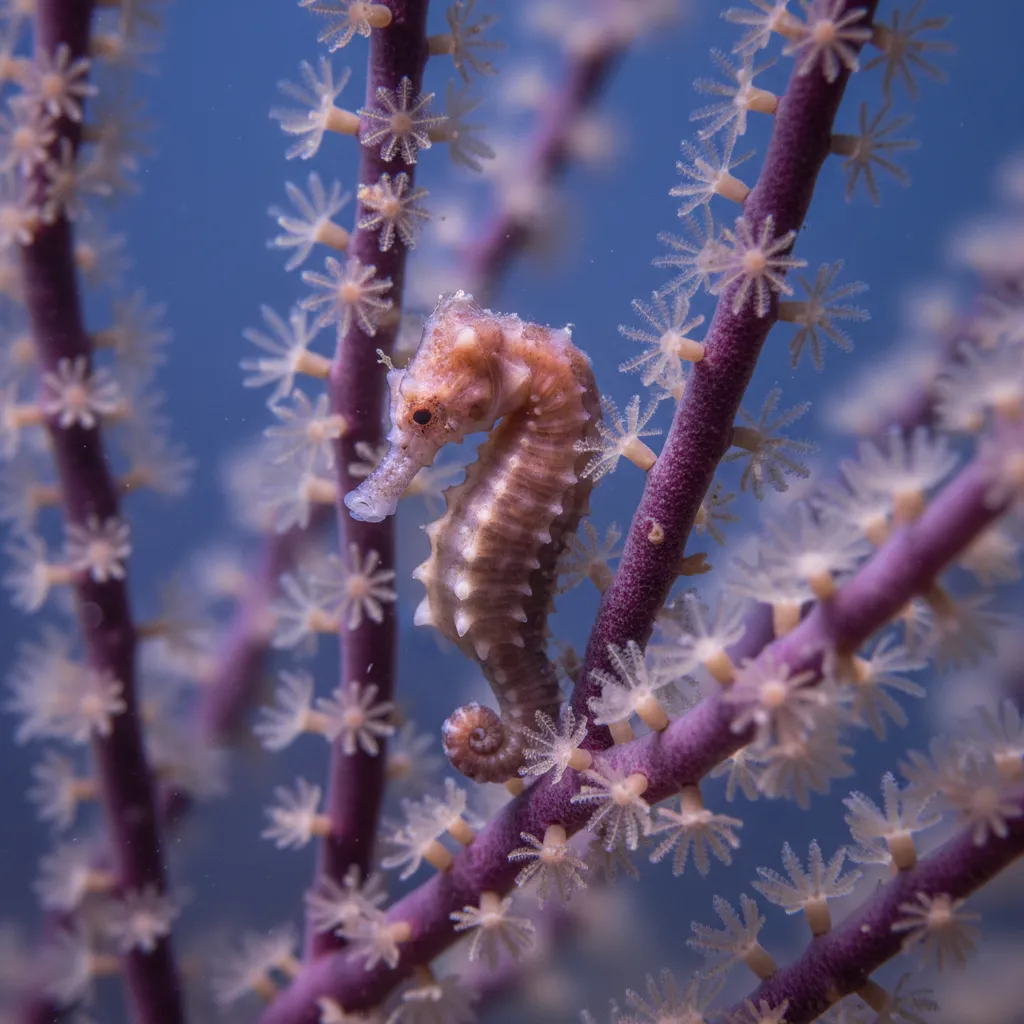
Pygmy seahorses are the ocean's ultimate masters of camouflage and among the most sought-after subjects in underwater macro photography. Measuring less than two centimetres from snout to tail tip - some species barely exceed one centimetre - these impossibly tiny fish are so perfectly matched to their host gorgonian sea fans and coral habitats that they went entirely unnoticed by science until 1969, when the first species, Bargibant's pygmy seahorse (Hippocampus bargibanti), was discovered accidentally on a gorgonian coral that had been collected for a museum aquarium in New Caledonia. Since then, at least seven species have been formally described, with more likely awaiting discovery. The most famous, Bargibant's pygmy seahorse, lives exclusively on Muricella gorgonian sea fans and matches their colour and texture so precisely - down to mimicking the bumpy calcium carbonate tubercles on the fan's surface - that even when you know exactly where one is, it can take minutes to pick it out from the background. Denise's pygmy seahorse (Hippocampus denise) is even smaller and smoother, found on a wider variety of gorgonians. More recently described species including Pontoh's pygmy seahorse and the Japan pig (Hippocampus japapigu) live not on gorgonians but on hydroids, algae, and Halimeda rubble, making them even harder to locate. For divers, finding and photographing a pygmy seahorse is a rite of passage - the pinnacle achievement of macro diving that requires sharp-eyed guides, patience, excellent buoyancy, and a willingness to spend an entire dive studying a single sea fan.
Where to Dive with Pygmy Seahorses
Found across 5 countries, based on 31 verified observation records.




Best Time to See Pygmy Seahorses
Lembeh Strait, Indonesia: pygmy seahorses are present year-round, with calm diving conditions from March to November. The transition months of April-May and October-November often combine good visibility with calm seas. Raja Ampat, Indonesia: best from October to April during the calmer season, though gorgonian fans hold pygmy seahorses year-round. Water temperatures are warm (27-30 degrees Celsius) throughout the year. Komodo, Indonesia: the cooler, nutrient-rich upwelling season from July to September brings the best visibility to southern sites where many gorgonians grow, though conditions can be challenging with strong currents. Anilao, Philippines: the peak macro diving season runs from November to June, with the calmest conditions and best visibility from December to May. Water temperatures range from 25-30 degrees Celsius. Japan (Osezaki, Kashiwajima): pygmy seahorses including the endemic Japan pig (Hippocampus japapigu) are found from June to November when water temperatures are warmest.
How to Dive with Pygmy Seahorses
The Coral Triangle of Southeast Asia is the epicentre of pygmy seahorse diversity and the best region in the world for encounters. Lembeh Strait in North Sulawesi, Indonesia, is legendary for macro diving and produces regular sightings of multiple pygmy seahorse species, particularly Bargibant's and Denise's on gorgonian fans at depths of 15-35 metres. Raja Ampat in West Papua offers pristine reefs festooned with large gorgonians harbouring pygmy seahorses - the current-swept walls of sites like Cape Kri and Blue Magic are productive hunting grounds. Komodo National Park combines dramatic diving with reliable pygmy seahorse sightings on the gorgonian-covered walls of sites like Batu Bolong and Crystal Rock. Anilao in the Philippines, just a few hours south of Manila, has established itself as a pygmy seahorse photography capital - skilled local guides know exactly which fans hold pygmy seahorses and check them regularly. Pontoh's pygmy seahorse, which lives on hydroids and soft corals rather than gorgonians, is an Anilao speciality. The key to a successful pygmy seahorse encounter is a knowledgeable local dive guide. These animals are so small and well-camouflaged that finding one independently borders on impossible for most divers. Guides maintain mental maps of which sea fans hold pygmy seahorses and check them regularly. Once your guide locates one, approach the sea fan slowly with impeccable buoyancy control - pygmy seahorses live in a three-dimensional world, and you may need to adjust your angle repeatedly to spot the animal clinging to the fan's branches.
Is it Safe to Swim with Pygmy Seahorses?
Pygmy seahorses are completely harmless - the safety concerns are entirely about protecting these delicate animals and their habitat. Never touch, poke, or prod a gorgonian sea fan to make a pygmy seahorse move into a better photographic position. The sea fan is both the seahorse's home and its camouflage; damaging it directly threatens the animal's survival. Avoid resting on, holding onto, or brushing against gorgonian fans with any part of your body or equipment. Control your buoyancy meticulously - an accidental fin kick against the fan can break branches and dislodge the seahorse. Limit your use of continuous focus lights, which can stress these tiny animals. Photographic flash is generally accepted for brief exposures but avoid extended rapid-fire strobing directly on the animal, which can cause stress and potentially temporary blindness. Some dive sites and operators now enforce flash limits - typically a maximum of 10-15 photos per animal. Do not exceed the depth limits of your certification or training level - many gorgonians with pygmy seahorses sit at 25-35 metres, making air consumption and decompression limits a real consideration during extended photography sessions.
Conservation Status
Pygmy seahorses are not individually assessed by the IUCN due to insufficient population data - a reflection of how recently these species were discovered and how difficult they are to study. However, they face significant threats. All seahorses (genus Hippocampus) are listed under CITES Appendix II, which regulates international trade. The primary threats to pygmy seahorses are destruction of coral reef habitat, particularly damage to the gorgonian sea fans on which several species are obligate residents. Anchoring, blast fishing, cyanide fishing, coral mining, and careless diver contact all damage gorgonians. Rising ocean temperatures cause coral bleaching events that can affect gorgonians, and ocean acidification may weaken the calcium carbonate structures that gorgonians build. Dive tourism itself presents a paradox - the economic value of pygmy seahorse encounters incentivises reef protection, but poorly managed diving pressure can damage the very gorgonians the seahorses depend on. Responsible dive operators limit the number of divers at known pygmy seahorse sites, enforce buoyancy skills requirements, and educate guests on appropriate interaction protocols. Supporting operators who demonstrate genuine commitment to reef protection is one of the most direct ways divers can contribute to pygmy seahorse conservation.
Species Profile


Recommended Equipment
A dedicated macro lens is absolutely essential for pygmy seahorse photography - a 100mm or 105mm macro is the standard choice, providing enough working distance to frame the subject without touching the sea fan. A 60mm macro can work but requires getting uncomfortably close to the gorgonian. A diopter or teleconverter can add magnification for frame-filling portraits of these sub-two-centimetre subjects. Dual strobes are critical for illuminating the intricate texture of both the seahorse and the gorgonian, which share the same colour palette. Snoot attachments that focus the strobe light into a narrow beam can create dramatic spotlight effects that isolate the seahorse from the busy gorgonian background - this technique has produced many of the most celebrated pygmy seahorse images. A focus light with a red filter helps locate and focus on the seahorse without disturbing it as much as white light. Buoyancy control is your most important piece of equipment - consider using a muck stick or reef pointer (for stabilisation on sand, never touching the fan) to maintain position in current. Patience is paramount: settle in, control your breathing, and wait for the tiny animal to shift position. The best pygmy seahorse photographers spend 20-30 minutes with a single animal.
Browse dive equipmentFrequently Asked Questions
Where is the best place to see pygmy seahorses?
The Coral Triangle of Southeast Asia offers the best pygmy seahorse encounters in the world. Lembeh Strait and Raja Ampat in Indonesia, Anilao in the Philippines, and Komodo National Park are the top destinations. All have skilled local dive guides who maintain knowledge of which gorgonian sea fans hold pygmy seahorses. Anilao is particularly accessible, being just a few hours from Manila.
How small are pygmy seahorses?
Pygmy seahorses are among the smallest vertebrates on Earth. Most species measure between 1.5 and 2 centimetres from snout to tail tip - roughly the size of a fingernail. Satomi's pygmy seahorse (Hippocampus satomiae) is one of the tiniest, barely exceeding 1 centimetre. Their minuscule size combined with extraordinary camouflage makes them incredibly difficult to spot without an experienced guide.
How many species of pygmy seahorse are there?
At least seven species have been formally described: Bargibant's (H. bargibanti), Denise's (H. denise), Pontoh's (H. pontohi), Satomi's (H. satomiae), Walea (H. waleananus), Coleman's (H. colemani), and the Japan pig (H. japapigu). Additional undescribed species likely exist - new pygmy seahorse species have been discovered regularly since the early 2000s, and the deep reefs of the Coral Triangle remain incompletely surveyed.
What camera settings are best for pygmy seahorse photography?
Use a dedicated macro lens (100mm or 105mm) with dual strobes for even illumination. Shoot at f/16 to f/22 for maximum depth of field - the tiny subjects demand every millimetre of sharpness. ISO 100-200 keeps noise low. Shutter speed of 1/160 to 1/250 syncs with strobes. Manual focus or back-button autofocus gives the most control. A snoot attachment on one strobe can create dramatic isolation of the subject against the gorgonian background.
Can pygmy seahorses survive without their host gorgonian?
Species like Bargibant's pygmy seahorse are obligate associates of specific Muricella gorgonian sea fans - they cannot survive without them. The seahorse's colour, texture, and body shape are specifically adapted to match its host fan, and it spends its entire adult life on a single gorgonian. If the fan is damaged or destroyed, the seahorse loses both its camouflage and its habitat. This is why protecting gorgonian sea fans from anchor damage, careless diver contact, and destructive fishing is critical for pygmy seahorse survival.
More Encounter Guides
Ocean Sunfish (Mola Mola)
The ocean sunfish is one of the most surreal creatures a diver can encounter. Holding the record as ...
Clownfish
Few marine creatures have captured the public imagination quite like the clownfish. Made famous by F...
Napoleon Wrasse
The Napoleon wrasse - also known as the humphead wrasse or Maori wrasse - is one of the most charism...
Lionfish
Few fish command attention quite like the lionfish. With its dramatic array of elongated, venomous s...
Barracuda
The great barracuda is one of the reef's most impressive predators - a silver torpedo with a mouth f...
Giant Moray Eels
The giant moray is the reef's most charismatic lurker. Reaching up to 3 metres in length and weighin...