Diving with Clownfish
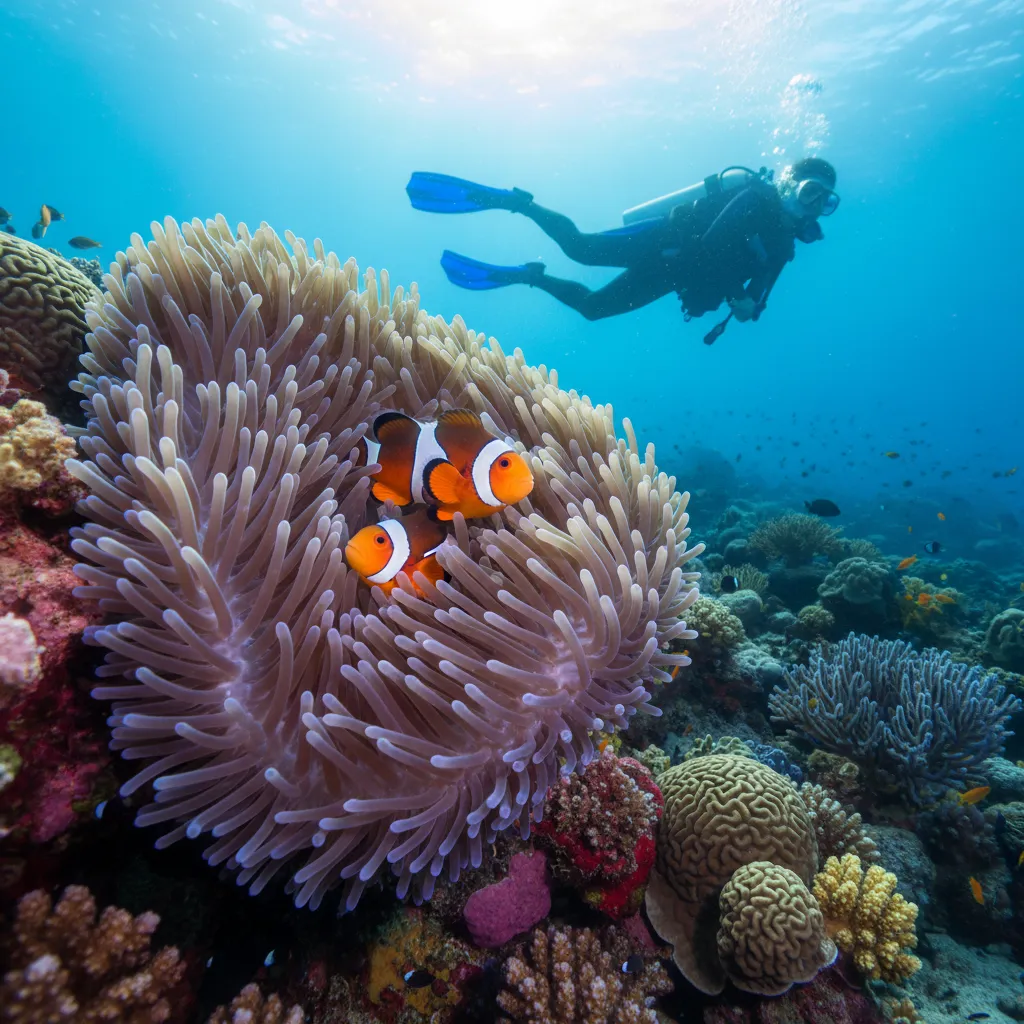
Few marine creatures have captured the public imagination quite like the clownfish. Made famous by Finding Nemo, these vibrant orange-and-white fish are a highlight of every tropical reef dive. But the reality of clownfish in the wild far exceeds their Hollywood portrayal. Living in a fascinating symbiotic relationship with sea anemones - whose stinging tentacles would kill other fish - clownfish have evolved a mucus coating that makes them immune to the venom. Watching a pair of clownfish dart in and out of their anemone home, fiercely defending their territory against fish many times their size, is endlessly entertaining. There are around 30 species of clownfish found across the Indo-Pacific, each with distinct colour patterns and preferred anemone hosts.
Where to Dive with Clownfish
Found across 7 countries, based on 176 verified observation records.







Best Time to See Clownfish
Clownfish are resident reef dwellers and can be observed year-round wherever healthy anemone populations exist. There is no migration or seasonal pattern to plan around. The best diving conditions vary by region: Indonesia and the Philippines offer excellent visibility from April to November. Thailand's Andaman coast is best from November to April. The Great Barrier Reef has optimal conditions from June to October. The Red Sea is diveable year-round with consistent clownfish sightings. Choose your destination based on overall diving conditions rather than clownfish-specific timing.
How to Dive with Clownfish
Clownfish are among the easiest marine animals to observe, making them perfect for divers of all levels. They are found on shallow coral reefs from 1 to 15 metres deep, living in anemones that are typically attached to hard substrates. The key to a great clownfish encounter is patience and slow movement. Approach an anemone slowly and settle at a comfortable distance - the clownfish will initially retreat into the tentacles but will re-emerge within a minute or two if you remain still. For photography, a macro lens (60mm or 100mm) is ideal. Open Water certification is more than sufficient. Some of the best clownfish encounters are on house reefs accessible from shore.
Is it Safe to Swim with Clownfish?
Clownfish pose zero danger to divers. They may make bluff charges at your mask or camera, which is entertaining rather than threatening. The main safety considerations are environmental: be mindful of your buoyancy near the reef to avoid damaging coral, and never touch or harass the anemone. Some anemone species can sting human skin and cause mild irritation. Be aware of your fin placement when photographing anemones in shallow water - accidental fin kicks are the biggest source of reef damage during macro photography. Never move or relocate a clownfish or its anemone.
Conservation Status
While the common clownfish (Amphiprion ocellaris) is not currently endangered, clownfish face several threats. The aquarium trade collects millions of clownfish annually, though captive breeding has reduced pressure on wild populations. Coral reef degradation from ocean warming, acidification, and pollution threatens their anemone hosts - without anemones, clownfish cannot survive. Bleaching events that kill anemones also displace clownfish. Ironically, the Finding Nemo effect initially increased demand for wild-caught clownfish as pets, though the film's sequel promoted conservation messaging. Supporting reef protection initiatives and avoiding the purchase of wild-caught clownfish helps preserve these iconic animals.
Species Profile

Recommended Equipment
Standard tropical scuba gear is all you need: a 3mm wetsuit or rash guard, BCD, and regulators. The real investment for clownfish encounters is camera equipment. A compact camera with a macro mode works well, but a DSLR or mirrorless camera with a dedicated macro lens (60mm or 100mm) and a strobe produces stunning results. A focus light helps the camera lock focus on the fast-moving fish. A pointer stick can be useful for stabilising yourself near the reef without touching coral. Bring patience - the best clownfish shots require waiting for the fish to settle in a photogenic position.
Browse dive equipmentFrequently Asked Questions
Where can you see clownfish while diving?
Clownfish are found throughout the Indo-Pacific, from the Red Sea to the Great Barrier Reef. Top destinations include Indonesia (particularly Raja Ampat and Komodo), the Philippines, Thailand, the Maldives, and Egypt's Red Sea. Any healthy tropical reef with anemones will have clownfish.
How many species of clownfish are there?
There are approximately 30 recognised species of clownfish (genus Amphiprion and Premnas). The most famous is the false clownfish (Amphiprion ocellaris), the species depicted in Finding Nemo. Other notable species include the tomato clownfish, maroon clownfish, and Clark's clownfish.
Why don't clownfish get stung by anemones?
Clownfish produce a special mucus coating on their skin that prevents the anemone's stinging cells (nematocysts) from firing. This immunity develops through a careful acclimation process when the fish first contacts the anemone. The relationship is mutually beneficial - the clownfish gets protection while the anemone gets food scraps and cleaning.
Are clownfish endangered?
The common clownfish is not currently classified as endangered, but they face threats from aquarium trade collection, coral reef destruction, and climate change-driven bleaching that kills their host anemones. Some rarer species have more limited ranges and face greater pressure.
What camera settings are best for clownfish photography?
Use a macro lens (60mm or 100mm), shoot at f/8 to f/16 for good depth of field, and use a strobe to bring out the vibrant orange colours. A fast shutter speed (1/200s or faster) helps freeze motion. Use a focus light to help autofocus lock onto the fish in low-light conditions near the anemone.
More Encounter Guides
Ocean Sunfish (Mola Mola)
The ocean sunfish is one of the most surreal creatures a diver can encounter. Holding the record as ...
Napoleon Wrasse
The Napoleon wrasse - also known as the humphead wrasse or Maori wrasse - is one of the most charism...
Lionfish
Few fish command attention quite like the lionfish. With its dramatic array of elongated, venomous s...
Barracuda
The great barracuda is one of the reef's most impressive predators - a silver torpedo with a mouth f...
Giant Moray Eels
The giant moray is the reef's most charismatic lurker. Reaching up to 3 metres in length and weighin...
Seahorses
Seahorses are among the ocean's most enchanting and improbable creatures. With their horse-shaped he...