Diving with Lionfish
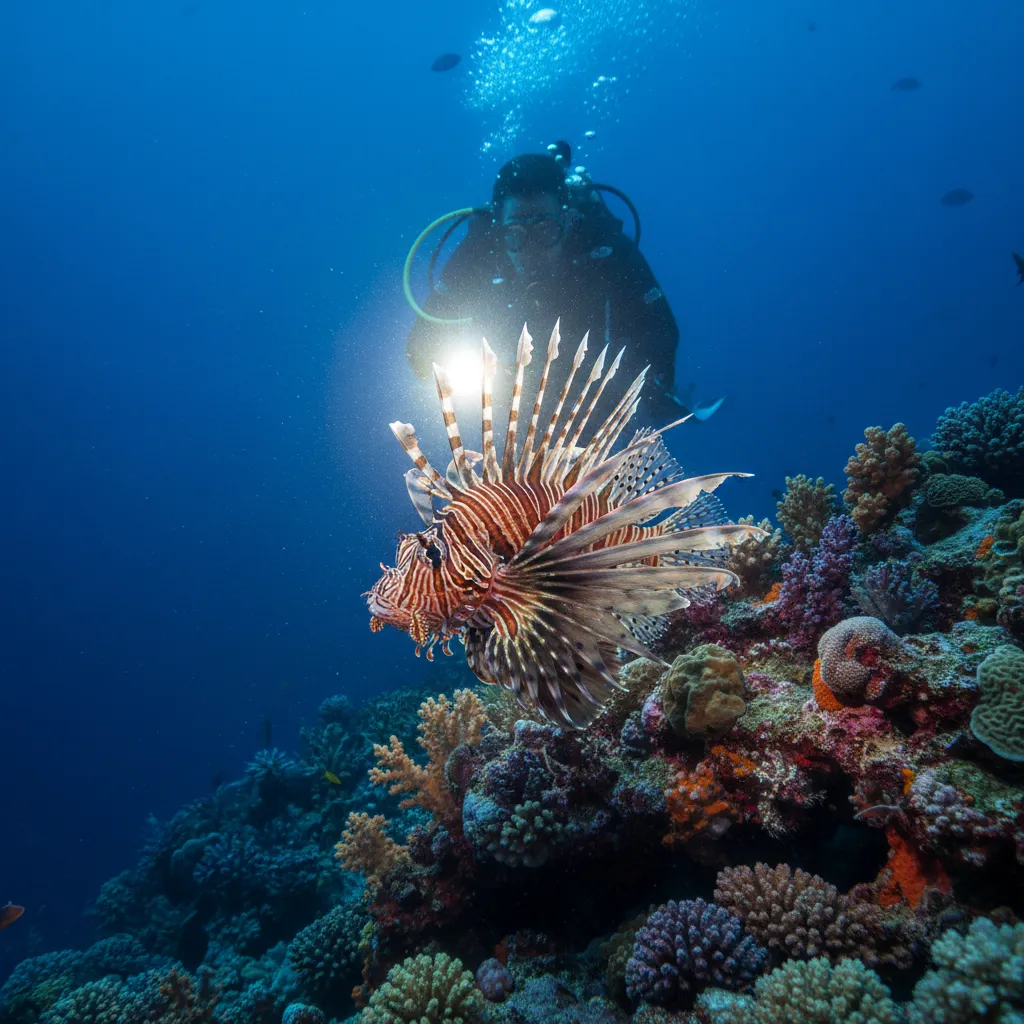
Few fish command attention quite like the lionfish. With its dramatic array of elongated, venomous spines fanning outward like a flowing mane, and its bold maroon-and-white striped body, the lionfish is simultaneously one of the most beautiful and most ecologically significant fish a diver can encounter. In its native Indo-Pacific range, lionfish are a natural part of the reef ecosystem, typically seen tucked under ledges or hovering motionless near coral heads during the day, emerging at dusk to hunt with remarkable precision. In the Caribbean and western Atlantic, however, the red lionfish has become one of the most devastating marine invasive species in history, decimating native reef fish populations with no natural predators to keep them in check. Diving with lionfish offers both a stunning visual spectacle and a window into one of the ocean's most pressing conservation challenges.
Where to Dive with Lionfish
Found across 46 countries, based on 3,394 verified observation records.

Puerto Rico
3 areas

Bahamas
6 areas

US Virgin Islands
2 areas

British Virgin Islands
2 areas

Venezuela
2 areas

Colombia
1 area

Philippines
6 areas
Cayman Islands
1 area
+ 38 more countries
Best Time to See Lionfish
Lionfish are non-migratory and can be observed year-round at virtually every tropical and subtropical reef. In their native Indo-Pacific range (Red Sea, Indonesia, Philippines, Thailand), they are found on healthy coral reefs in any season. In the invasive Caribbean/Atlantic range, they are present year-round on reefs from 1 to over 100 metres deep. Lionfish culling dives are offered year-round at most Caribbean dive operations, with some destinations hosting annual lionfish derby events - Bonaire, Roatan, Cozumel, and the Florida Keys all have active culling programmes. Water conditions vary by destination: the Red Sea is diveable year-round, Indonesia is best from April to November, and the Caribbean has optimal conditions from December to April.
How to Dive with Lionfish
Lionfish are easy to observe and photograph because they rely on their venomous spines for defence rather than fleeing. They are typically found under overhangs, in crevices, and along reef walls from the surface down to 300 metres, though most sightings occur between 5 and 40 metres. They are most active at dawn and dusk when they hunt. During the day, they rest in sheltered positions and are very approachable - you can get within centimetres for photography. Open Water certification is sufficient for most lionfish encounters. In the Caribbean, many dive operators organise lionfish culling dives where divers use specialised spears to remove invasive lionfish from the reef - these require a briefing but no special certification and are a unique way to contribute to conservation while diving.
Is it Safe to Swim with Lionfish?
Lionfish spines contain a potent venom that causes intense pain, swelling, and in rare cases more serious symptoms including nausea and breathing difficulties. Never touch a lionfish. While they are not aggressive and will not chase divers, accidental contact is possible in tight swim-throughs or when a diver reaches into a crevice without looking. If stung, immerse the affected area in hot water (as hot as bearable, around 45°C) for 30 to 90 minutes - heat breaks down the protein-based venom. Seek medical attention for severe reactions. On lionfish culling dives, wear puncture-resistant gloves and handle speared fish with dedicated containment tubes. Dead lionfish retain their venom, so exercise caution when handling them at any stage.
Conservation Status
The lionfish invasion of the western Atlantic is one of the most significant marine ecological events of the 21st century. Released from aquariums in Florida in the 1980s, red lionfish (Pterois volitans) have spread from North Carolina to Brazil, consuming native reef fish at alarming rates and reproducing year-round - a single female can release up to 2 million eggs per year. With no natural predators in the Atlantic, populations have exploded. Lionfish culling programmes, supported by dive operators and marine parks across the Caribbean, are the primary management tool. Eating lionfish is also encouraged - they are delicious, with firm white flesh - and lionfish derbies and restaurant programmes have become important conservation initiatives. In their native Indo-Pacific range, lionfish populations are naturally controlled by predators including groupers and moray eels.
Species Profile

Recommended Equipment
For observing and photographing lionfish, standard scuba gear is all you need. A macro lens (60mm or 100mm) is perfect for capturing the intricate detail of their fins and spines, while a wide-angle lens with a close-focus capability can produce dramatic portraits with reef backgrounds. A strobe is essential to bring out the rich reds and whites - at depth, lionfish lose their colour without artificial light. For culling dives in the Caribbean, you will need puncture-resistant gloves, a dedicated lionfish spear (typically a small pole spear or Hawaiian sling), and a containment tube (a clear plastic tube with a one-way flap) to safely store speared fish. Most operators provide the spear and containment gear.
Browse dive equipmentFrequently Asked Questions
Are lionfish dangerous to divers?
Lionfish will not attack divers, but their spines contain venom that causes intense pain if you accidentally touch them. Never reach into crevices without looking, and maintain a small distance. If stung, immerse the area in hot water (45°C) for 30-90 minutes and seek medical attention for severe reactions.
Why are lionfish a problem in the Caribbean?
Lionfish are invasive in the Caribbean and western Atlantic, released from aquariums in the 1980s. With no natural predators, they consume native reef fish at alarming rates and reproduce prolifically - up to 2 million eggs per female per year. They have spread from North Carolina to Brazil, devastating native reef ecosystems.
Can you eat lionfish?
Yes, lionfish are delicious and perfectly safe to eat once the venomous spines are removed. The flesh is firm, white, and mildly flavoured. Eating lionfish is actively encouraged as a conservation measure in the Caribbean, and many restaurants now feature them on menus.
What should you do if stung by a lionfish?
Immerse the sting site in the hottest water you can tolerate (around 45°C) for 30-90 minutes. The heat denatures the protein-based venom and provides significant pain relief. Remove any visible spine fragments, clean the wound, and seek medical attention if symptoms are severe or you experience an allergic reaction.
Where can you go on lionfish culling dives?
Lionfish culling dives are offered throughout the Caribbean, including Bonaire, Roatan (Honduras), Cozumel (Mexico), the Florida Keys, Grand Cayman, and Curacao. Many operators provide training and equipment. Annual lionfish derbies are held at several locations as competitive conservation events.
More Encounter Guides
Ocean Sunfish (Mola Mola)
The ocean sunfish is one of the most surreal creatures a diver can encounter. Holding the record as ...
Clownfish
Few marine creatures have captured the public imagination quite like the clownfish. Made famous by F...
Napoleon Wrasse
The Napoleon wrasse - also known as the humphead wrasse or Maori wrasse - is one of the most charism...
Barracuda
The great barracuda is one of the reef's most impressive predators - a silver torpedo with a mouth f...
Giant Moray Eels
The giant moray is the reef's most charismatic lurker. Reaching up to 3 metres in length and weighin...
Seahorses
Seahorses are among the ocean's most enchanting and improbable creatures. With their horse-shaped he...