Diving with Giant Moray Eels
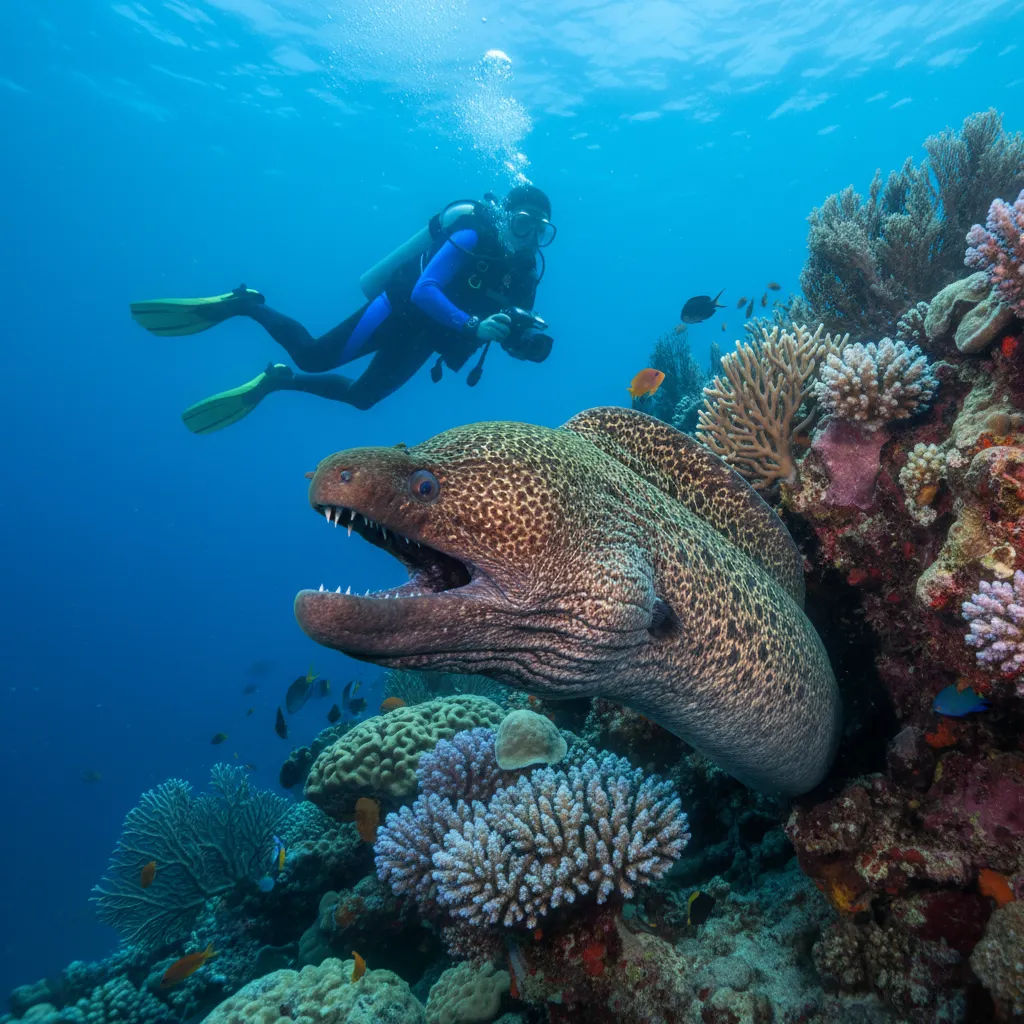
The giant moray is the reef's most charismatic lurker. Reaching up to 3 metres in length and weighing up to 30 kilograms, the giant moray eel (Gymnothorax javanicus) is the largest moray species and one of the most commonly encountered reef predators. Their reputation as fearsome creatures is largely undeserved - the classic image of a moray with its mouth agape and teeth bared is simply the animal breathing, pumping water over its gills. In reality, moray eels are shy, reclusive creatures that spend most of the day tucked into reef crevices with only their heads protruding. At night, they emerge to hunt, using their extraordinary sense of smell to track prey through the reef's labyrinthine passages. Watching a large moray being cleaned by tiny cleaner shrimp - the eel holding its mouth wide open while the shrimp crawls inside to pick parasites from its teeth - is one of diving's most extraordinary symbiotic spectacles.
Where to Dive with Giant Moray Eels
Found across 31 countries, based on 177 verified observation records.

Philippines
2 areas

Palau
1 area

Micronesia
2 areas

Thailand
2 areas

Marshall Islands
1 area
French Polynesia
2 areas

Tonga
3 areas

Vietnam
1 area
+ 23 more countries
Best Time to See Giant Moray Eels
Moray eels are year-round residents of tropical and subtropical reefs and can be observed in any season. The Red Sea offers exceptional moray encounters throughout the year, with species including the giant moray, yellow-margin moray, and the strikingly patterned snowflake moray. The Maldives is excellent year-round, particularly on night dives. Indonesia (Komodo, Bali, Raja Ampat) has outstanding moray diversity from April to November. The Great Barrier Reef is best from June to October. Caribbean reefs have spotted and green morays year-round. Night dives at any tropical destination dramatically increase the chances of seeing morays fully emerged and hunting.
How to Dive with Giant Moray Eels
Moray eels are found on tropical and subtropical reefs worldwide, from tidal rock pools to depths of over 50 metres. Most encounters happen between 5 and 30 metres on coral reefs, rocky outcrops, and wrecks. The best way to observe morays is to look under ledges, in crevices, and around coral heads - their heads are usually visible as they peer out from their daytime shelters. Move slowly and avoid sudden movements that could startle them back into their holes. Night dives offer the most dramatic moray encounters, as the eels emerge fully from their shelters to hunt along the reef. Open Water certification is all you need. Some sites in the Red Sea and Maldives have resident morays that are accustomed to divers and remarkably tolerant of close approach.
Is it Safe to Swim with Giant Moray Eels?
Moray eels are not aggressive toward divers and will not attack unprovoked. The vast majority of moray eel bites occur when divers put their hands into holes or crevices where an eel is sheltering - the eel bites in self-defence. Never put your hands in reef crevices, and never attempt to touch or feed a moray eel. Some morays at popular dive sites have been hand-fed by guides, which is dangerous and irresponsible - it teaches the eel to associate human hands with food. Moray eels have powerful jaws with backward-pointing teeth designed to grip slippery prey, so a bite can cause serious lacerations. If bitten, do not pull away (the backward teeth will cause more damage) - wait for the eel to release. Clean wounds thoroughly and seek medical attention, as bites are prone to infection.
Conservation Status
Giant moray eels are not currently considered threatened at a species level, though localised overfishing and reef degradation have reduced populations in some areas. Morays play an important ecological role as nocturnal reef predators, helping to control populations of reef fish, octopus, and crustaceans. Research has revealed a remarkable hunting partnership between giant morays and roving coral groupers - the grouper signals the location of hidden prey to the moray, which enters the crevice to flush it out. This cooperative interspecies hunting behaviour is one of the few documented examples in fish. Healthy moray populations indicate a well-functioning reef ecosystem, making them valuable indicator species for reef health.
Species Profile

Recommended Equipment
A macro lens is ideal for close-up portraits showing the moray's intricate skin patterns, teeth, and the remarkable detail of cleaning station interactions. A 60mm or 100mm macro lens produces striking head shots. A strobe is essential for bringing out the true colours of moray eels - many species that appear brown or dark green in ambient light reveal beautiful patterns of yellow, green, and black under strobe light. For night dives, a primary torch with a red filter option is useful, as red light is less likely to disturb the eels during their hunting forays. Standard tropical scuba gear is appropriate - 3mm wetsuit, BCD, and regulators.
Browse dive equipmentFrequently Asked Questions
Are moray eels dangerous to divers?
Moray eels are not aggressive toward divers and will not attack unprovoked. Almost all bites occur when divers put hands into crevices where eels are hiding. Never reach into reef holes, never attempt to touch or feed morays, and you will be perfectly safe.
Why do moray eels always have their mouths open?
Moray eels open and close their mouths rhythmically to breathe - they pump water over their gills this way since they lack the gill covers that most fish use. The gaping mouth with visible teeth looks threatening but is simply normal respiration, not a sign of aggression.
Where are the best places to dive with moray eels?
The Red Sea, Maldives, Indonesia, and the Great Barrier Reef all offer excellent moray encounters. Night dives at virtually any tropical reef will reveal morays hunting in the open. The Red Sea is particularly renowned for its diversity of moray species.
How big do moray eels get?
The giant moray (Gymnothorax javanicus) is the largest species, reaching up to 3 metres in length and 30 kilograms. The slender giant moray can reach even longer lengths. Most moray species encountered on dives are between 0.5 and 1.5 metres long.
Do moray eels hunt with groupers?
Yes, research has documented a remarkable cooperative hunting partnership between giant morays and roving coral groupers. The grouper signals the location of hidden prey by performing a headstand near the crevice, and the moray enters to flush the prey out. This is one of the few documented examples of cooperative interspecies hunting in fish.
More Encounter Guides
Ocean Sunfish (Mola Mola)
The ocean sunfish is one of the most surreal creatures a diver can encounter. Holding the record as ...
Clownfish
Few marine creatures have captured the public imagination quite like the clownfish. Made famous by F...
Napoleon Wrasse
The Napoleon wrasse - also known as the humphead wrasse or Maori wrasse - is one of the most charism...
Lionfish
Few fish command attention quite like the lionfish. With its dramatic array of elongated, venomous s...
Barracuda
The great barracuda is one of the reef's most impressive predators - a silver torpedo with a mouth f...
Seahorses
Seahorses are among the ocean's most enchanting and improbable creatures. With their horse-shaped he...