Sonic Boom Cave
Protected Area
Oke Bay
Why dive here
With 163+ marine species recorded in the area - including blue sharks, blue whales, dolphins, great white sharks and hammerhead sharks - Sonic Boom Cave offers some of Bay of Islands's richest wreck diving. Water ranges 16-22°C, warmest January, February, March.
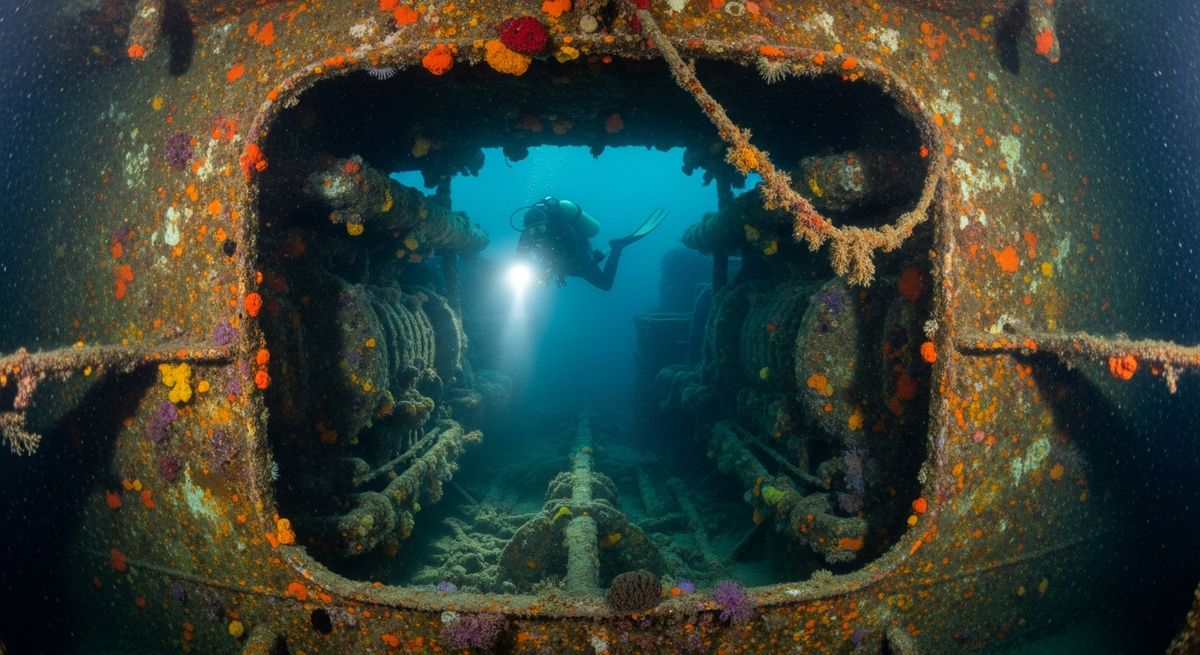
Sonic Boom Cave, just a short kick from Big Eyes Lair, definitely earns its name. You’ll probably hear it before you see it, a deep thrumming that vibrates through the water, especially if there's any surge running. That distinctive boom comes from the swell crashing at the back of the cave, so it’s best visited on calmer days. We love the feeling of that sound resonating through your chest, a primal reminder of the ocean's power. Inside, it’s a tight squeeze, not for the claustrophobic, but the walls are a mosaic of colourful sponges and anemones. Outside, the reef slopes away, and we've often seen schools of snapper hovering, and the occasional bronze whaler cruising past. For us, it’s the combination of the unique acoustics and the chance to spot everything from tiny gem nudibranchs to larger pelagics that makes it a standout. We’d suggest going at high tide on a calm day for the easiest entry and the best chance to really appreciate the sound.
Safety Notes
Wreck site - avoid penetration without wreck diving certification. Watch for sharp metal and entanglement hazards.
Nearest Dive Centres to Sonic Boom Cave
Dive shops near Sonic Boom Cave
View all dive centres in Bay of IslandsReviews for Sonic Boom Cave
Conditions
Ocean conditions, forecast and tides for Sonic Boom Cave
Sonic Boom Cave Ocean Conditions
Monthly averages for Sonic Boom Cave, sourced from Open-Meteo marine data - nearest station: Open-Meteo marine grid (-35.24, 174.22) (2km away)
October Averages
Sea Temperature
16°C
61°F · Range: 14.9–16.8°C
Air Temperature
16°C
60°F
Wind Speed
7.43 m/s
14.4 knots
Atmospheric Pressure
1019.1 hPa
Based on 4 years of monitoring data · Data sources: Open-Meteo marine data
Plan & book
Ways to dive Bay of Islands, from day trips to liveaboards.
Day trips & courses
via GetYourGuideGuided dives, courses and snorkel trips with instant booking.
Find dive trips in Bay of IslandsPlaces to stay
via Booking.comHotels and dive resorts near Bay of Islands.
Search stays in Bay of IslandsDive insurance
Most travel insurance excludes or limits scuba. Check what you need before you go.
Dive insurance explainedPartner links: we may earn a commission if you book, at no extra cost to you. How we make money
Where to Stay near Sonic Boom Cave
Prices from Booking.com. We may earn a commission at no extra cost to you.