ADELFOTIS
Protected Area
Quoin Rock Provincial Nature Reserve
Why dive here
With 269+ marine species recorded in the area - including blue sharks, blue whales, dolphins, dwarf minke whales and great white sharks - ADELFOTIS offers some of Cape Town & Western Cape's richest wreck diving. Water ranges 14-16°C, warmest February, March, April.
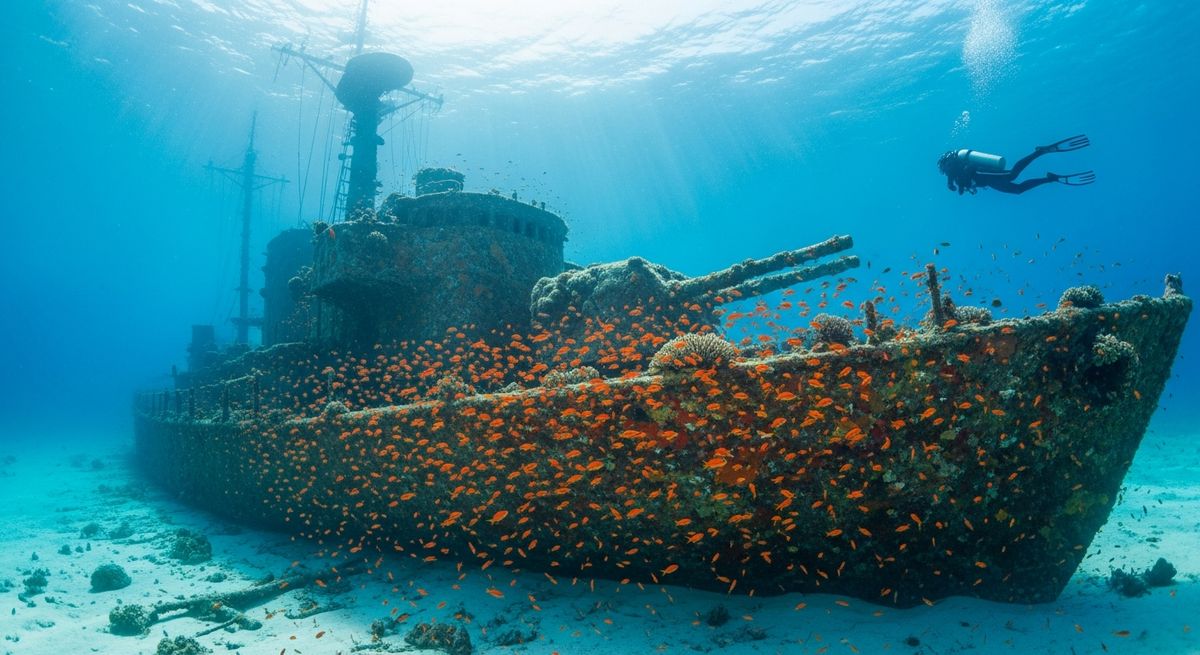
The Adelfotis, just shy of 90 metres long, is one of those wrecks we keep coming back to. She’s a steamship, sunk in 1956, and despite the "dangerous wreck" classification, she’s a genuinely approachable dive at 15 metres. We love that you can spend a whole dive just exploring her bones, the triple-expansion engines still impressive even after all these years. The main deck is pretty broken up now, but the bow and stern sections are still distinct. You’ll find plenty of hottentot and strepies darting through the rusted metal, and the occasional shy puffadder shy shark tucked into a crevice. Our favourite detail is the way the light filters through the gaps in the hull, illuminating the clouds of tiny silversides that often hang suspended inside. It's a proper swim-through playground, perfect for divers who appreciate the history and the way the ocean reclaims these structures. Visibility can be a bit variable here, so we always aim for a calm, post-southerly wind day for the best experience.
Typical ADELFOTIS Dive Profile
Illustrative profile based on site depth and type. Actual dive profiles vary - always follow your dive computer and training.
Safety Notes
Wreck site - avoid penetration without wreck diving certification. Watch for sharp metal and entanglement hazards.
Cold water this month (avg 15°C). Drysuit or thick wetsuit (7mm+) recommended.
Always perform a 3-minute safety stop at 5m before surfacing.
ADELFOTIS Wreck History
Year Sunk
1956
Vessel Type
cargo ship
Cause
unknown
The vessel now known as the Adelfotis had a long and varied career before settling on the seabed near Cape Town. Built in 1925 by the New Waterway Shipbuilding Company, she was a classic steamship powered by triple-expansion engines. Over her 31 years of service, she sailed under several names, including Monica Seed, Tovelil, and Ageles, reflecting her changing ownership and routes across the globe.
At the time of her loss on December 30, 1956, she was owned by the Agelef Shipping Company and named Adelfotis. The specific circumstances that led to her sinking are not well-documented, adding a layer of mystery to her story. She went down in the waters off the Western Cape, coming to rest in the shallows where she remains today.
Lying at a maximum depth of just 15 meters, the Adelfotis is a highly accessible and popular wreck dive. Her shallow depth allows for long bottom times and excellent light penetration, making it a superb site for photographers and novice wreck divers. The structure is now a thriving artificial reef, home to a wide array of South Africa's vibrant marine life. Divers can explore the ship's weathered hull and superstructure, which provide shelter for countless fish, crayfish, and colourful invertebrates.
Reviews for ADELFOTIS
Conditions
Ocean conditions, forecast and tides for ADELFOTIS
ADELFOTIS Ocean Conditions
Monthly averages for ADELFOTIS, sourced from Open-Meteo marine data - nearest station: Open-Meteo marine grid (-33.92, 18.46) (8km away)
October Averages
Sea Temperature
15°C
59°F · Range: 12.4–17.2°C
Air Temperature
17°C
62°F
Wind Speed
7.33 m/s
14.2 knots
Atmospheric Pressure
1018.1 hPa
Based on 4 years of monitoring data · Data sources: Open-Meteo marine data
Plan & book
Ways to dive Cape Town & Western Cape, from day trips to liveaboards.
Day trips & courses
via GetYourGuideGuided dives, courses and snorkel trips with instant booking.
Find dive trips in Cape Town & Western CapePlaces to stay
via Booking.comHotels and dive resorts near Cape Town & Western Cape.
Search stays in Cape Town & Western CapeDive insurance
Most travel insurance excludes or limits scuba. Check what you need before you go.
Dive insurance explainedPartner links: we may earn a commission if you book, at no extra cost to you. How we make money
Where to Stay near ADELFOTIS
Prices from Booking.com. We may earn a commission at no extra cost to you.