AN HUNG NO.1
Protected Area
Dyer Island Nature Reserve Complex
Why dive here
With 269+ marine species recorded in the area - including blue sharks, blue whales, dolphins, dwarf minke whales and great white sharks - AN HUNG NO.1 offers some of Cape Town & Western Cape's richest wreck diving. Water ranges 14-16°C, warmest February, March, April.
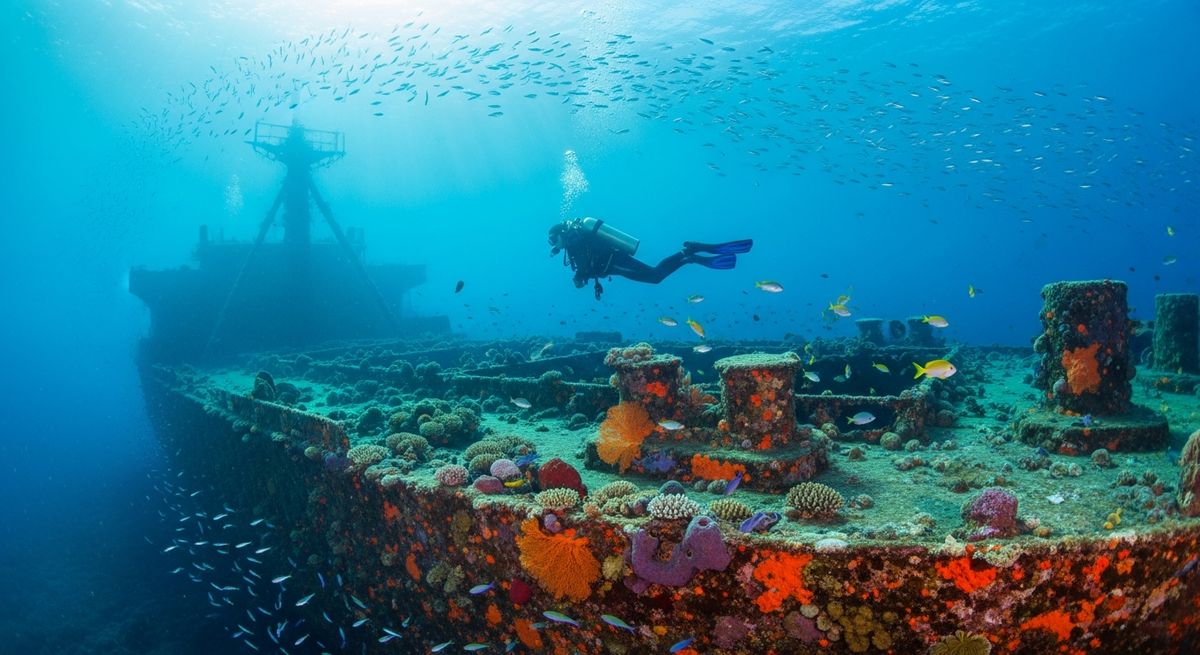
The An Hung No.1, oh, this one’s a quirky delight. We’re talking about a fishing vessel, sunk in 1990 after running aground just east of Danger Point, and it’s now lying in just two metres of water. We love a wreck that’s practically a snorkel, and this one delivers. It’s an easy dip, no tricky currents, just pull on your mask and fins. The wreck itself is well-broken, with bits of hull and superstructure spread across the seabed, but it’s still distinct enough to feel like a proper wreck dive, just in miniature. The steel plates are covered in a thick carpet of sea anemones and kelp, swaying gently with the surge. You’ll see schools of juvenile fish darting between the rusty ribs, and often a few shy octopus tucked into crevices. Our favourite part? Peering into the remains of the wheelhouse, imagining the chaos that must have unfolded. It’s a great spot for a relaxed afternoon with a camera, perfect for anyone who loves exploring history without the depth.
Typical AN HUNG NO.1 Dive Profile
Illustrative profile based on site depth and type. Actual dive profiles vary - always follow your dive computer and training.
Safety Notes
Wreck site - avoid penetration without wreck diving certification. Watch for sharp metal and entanglement hazards.
Cold water this month (avg 15°C). Drysuit or thick wetsuit (7mm+) recommended.
AN HUNG NO.1 Wreck History
Year Sunk
1990
Vessel Type
fishing vessel
Cause
grounding
The An Hung No. 1 was a Taiwanese fishing vessel whose final voyage came to an abrupt end on May 22, 1990. While on passage from Cape Town to Mauritius, the ship ran hard aground just east of Danger Point, a notoriously treacherous stretch of coastline. The crew was forced to abandon ship, but tragically, one life was lost in the incident. During the subsequent salvage and cleanup operations, a surprising discovery was made in the cargo hold: 50 protected Jackass (African) penguins, which were rescued and rehabilitated.
Today, the remains of the An Hung No. 1 lie in extremely shallow water, at a depth of only 2 meters. This makes the wreck highly accessible, not just for novice divers but also for snorkelers and freedivers. What remains of the hull is scattered across the seabed, providing shelter for a variety of local marine life. While the structure is broken up, it serves as a poignant reminder of the power of the sea and the strange twist of fate that turned a maritime disaster into a penguin rescue mission.
Nearest Dive Centres to AN HUNG NO.1
Dive shops near AN HUNG NO.1
View all dive centres in Cape Town & Western CapeReviews for AN HUNG NO.1
Conditions
Ocean conditions, forecast and tides for AN HUNG NO.1
AN HUNG NO.1 Ocean Conditions
Monthly averages for AN HUNG NO.1, sourced from Open-Meteo marine data - nearest station: Open-Meteo marine grid (-33.92, 18.46) (8km away)
October Averages
Sea Temperature
15°C
59°F · Range: 12.4–17.2°C
Air Temperature
17°C
62°F
Wind Speed
7.33 m/s
14.2 knots
Atmospheric Pressure
1018.1 hPa
Based on 4 years of monitoring data · Data sources: Open-Meteo marine data
Plan & book
Ways to dive Cape Town & Western Cape, from day trips to liveaboards.
Day trips & courses
via GetYourGuideGuided dives, courses and snorkel trips with instant booking.
Find dive trips in Cape Town & Western CapePlaces to stay
via Booking.comHotels and dive resorts near Cape Town & Western Cape.
Search stays in Cape Town & Western CapeDive insurance
Most travel insurance excludes or limits scuba. Check what you need before you go.
Dive insurance explainedPartner links: we may earn a commission if you book, at no extra cost to you. How we make money
Where to Stay near AN HUNG NO.1
Prices from Booking.com. We may earn a commission at no extra cost to you.