Ammunition Barges
Protected Area
Table Mountain National Park Marine Protected Area
Why dive here
With 269+ marine species recorded in the area - including blue sharks, blue whales, dolphins, dwarf minke whales and great white sharks - Ammunition Barges offers some of Cape Town & Western Cape's richest wreck diving. Water ranges 14-16°C, warmest February, March, April.
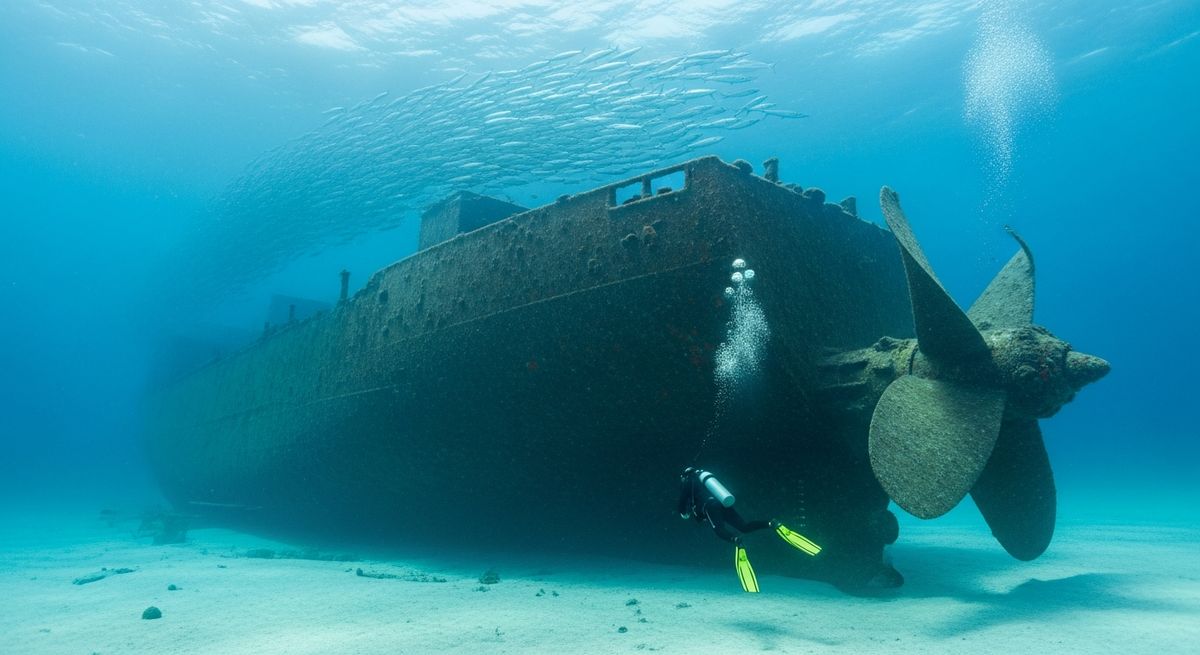
Alright, let's talk about the Ammunition Barges. If you’re in False Bay and looking for a dive that’s a bit different, a bit eerie, this is one of our favourites. It’s not deep, just 9 metres, which makes for a lovely long bottom time, but don't let that fool you into thinking it's simple. You’ve got two steel barges, mostly broken up now, lying side-by-side on a flat sandy bottom. What we love here is the sheer density of life that has moved in. These wrecks, even in their fragmented state, are magnets. Expect to duck your head through schools of hottentot and strepies that swirl around the remains of the hulls. We've often found shy sharks tucked into crevices, their eyes watching you pass. The light here can be incredible, especially on a sunny day, filtering down through the kelp (if it's in season) and illuminating the metalwork. The atmosphere is definitely one of gentle decay; you can still make out the ribs of the barges, sections of plating, but they’re completely encrusted with sponges and soft corals. It's an easy dive for anyone comfortable in open water, and a fantastic site for photographers keen on marine macro life or moody wreck shots. Just keep an eye on the surge; it can get a bit bouncy if the south-easterly is up.
Typical Ammunition Barges Dive Profile
Illustrative profile based on site depth and type. Actual dive profiles vary - always follow your dive computer and training.
Safety Notes
Wreck site - avoid penetration without wreck diving certification. Watch for sharp metal and entanglement hazards.
Cold water this month (avg 15°C). Drysuit or thick wetsuit (7mm+) recommended.
Ammunition Barges Wreck History
Vessel Type
barge
Cause
scuttled
During both World Wars, steel shortages led to the innovative construction of concrete-hulled vessels. These two barges near Cape Town are fascinating relics of that era, likely used during WWII to transport ammunition and supplies to naval ships anchored in the bay. After the war, with their purpose served, they were deliberately sunk or scuttled, joining a collection of other vessels in the area to form artificial reefs. Their simple, utilitarian design speaks to a period of wartime urgency and ingenuity.
Lying in just 9 meters of water, the Ammunition Barges are an exceptionally accessible dive site, perfect for novice divers, photographers, and those looking for a long, relaxed bottom time. The two 20-meter-long wrecks rest on a sandy bottom, their blocky, concrete forms creating an unusual underwater playground. The shallow depth allows for ample sunlight, illuminating the kelp and colorful invertebrates that have colonized the structures. Divers can easily explore the open holds and swim through the simple frameworks, often encountering the rich marine life of False Bay, including shy sharks, nudibranchs, and schools of small fish that use the barges for shelter.
Nearest Dive Centres to Ammunition Barges
Dive shops near Ammunition Barges
Ollava
Pisces Divers
Cape Town Dive Centre
Learn to Dive Today
Scuba Shack
Blue Flash
Reviews for Ammunition Barges
Conditions
Ocean conditions, forecast and tides for Ammunition Barges
Ammunition Barges Ocean Conditions
Monthly averages for Ammunition Barges, sourced from Open-Meteo marine data - nearest station: Open-Meteo marine grid (-33.92, 18.46) (8km away)
October Averages
Sea Temperature
15°C
59°F · Range: 12.4–17.2°C
Air Temperature
17°C
62°F
Wind Speed
7.33 m/s
14.2 knots
Atmospheric Pressure
1018.1 hPa
Based on 4 years of monitoring data · Data sources: Open-Meteo marine data
Plan & book
Ways to dive Cape Town & Western Cape, from day trips to liveaboards.
Day trips & courses
via GetYourGuideGuided dives, courses and snorkel trips with instant booking.
Find dive trips in Cape Town & Western CapePlaces to stay
via Booking.comHotels and dive resorts near Cape Town & Western Cape.
Search stays in Cape Town & Western CapeDive insurance
Most travel insurance excludes or limits scuba. Check what you need before you go.
Dive insurance explainedPartner links: we may earn a commission if you book, at no extra cost to you. How we make money
Where to Stay near Ammunition Barges
Prices from Booking.com. We may earn a commission at no extra cost to you.