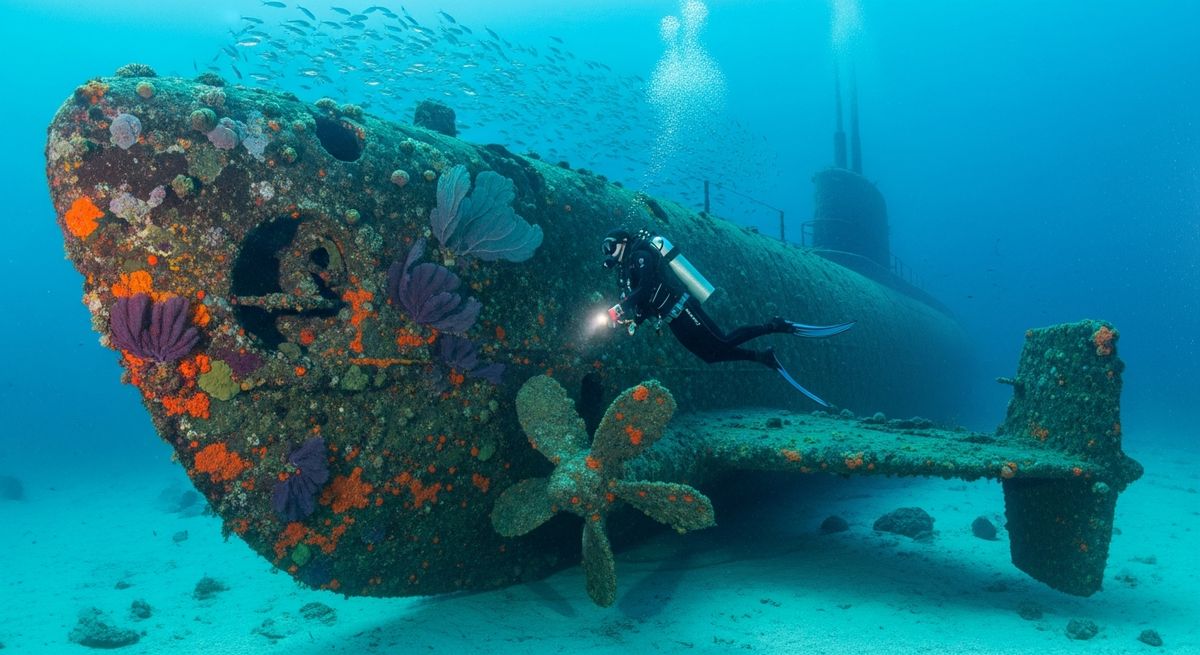
ALCESTIS
Protected Area
Quoin Rock Provincial Nature Reserve
Why dive here
With 269+ marine species recorded in the area - including blue sharks, blue whales, dolphins, dwarf minke whales and great white sharks - ALCESTIS offers some of Cape Town & Western Cape's richest wreck diving. Water ranges 14-16°C, warmest February, March, April.
The Alcestis isn't your average Cape Town wreck, and that's exactly why we love it. Forget the kelp forests and the chilly Atlantic; this steamship sits on the Agulhas Bank, offering a completely different vibe, warmer water, and an Indian Ocean feel. You’re looking at a deeper dive, hitting 31 metres, so it’s one for the experienced wreck enthusiasts. Dropping down, the first thing you notice is the sheer scale. She’s broken, yes, but recognisable as a substantial vessel. We always spend time exploring the boilers, enormous and almost completely encrusted now. Visibility here can be a bit variable; we’ve had days where it’s a stunning 20 metres, and others where it’s more like 8, so pick your day carefully. What makes this site special is the life: big shoals of red roman and hottentot dart through the structure, and we’ve spotted ragged-tooth sharks cruising by on a few occasions. The Alcestis is a proper expedition, a long boat ride out, but if you’re keen on a proper deep wreck dive with a hint of the wild Agulhas currents, this one’s a firm favourite.
Typical ALCESTIS Dive Profile
Illustrative profile based on site depth and type. Actual dive profiles vary - always follow your dive computer and training.
Safety Notes
Deep dive (31m) - monitor air consumption closely. Advanced certification recommended.
Wreck site - avoid penetration without wreck diving certification. Watch for sharp metal and entanglement hazards.
Cold water this month (avg 15°C). Drysuit or thick wetsuit (7mm+) recommended.
Always perform a 3-minute safety stop at 5m before surfacing.
ALCESTIS Wreck History
Year Sunk
1892
Vessel Type
cargo ship
Cause
grounding
In 1892, the steamship Alcestis was on a long passage to Mauritius when she met a sudden and violent end. Navigating the infamous waters off Cape Agulhas, the southernmost tip of Africa known to sailors as the "Cape of Storms," the vessel struck a submerged object. Whether it was an uncharted rock or, as some records suggest, the wreck of a previous maritime victim, the impact was fatal. The Alcestis foundered, sinking to the seabed and becoming another permanent resident of one of the world's most notorious shipping graveyards.
Today, the Alcestis rests at a depth of 31 metres, offering a compelling dive for advanced recreational divers. The wreck lies in an area known for strong currents and challenging conditions, but the reward is a visit to a well-preserved piece of late 19th-century maritime history. Divers can explore the ship's structure, imagining its final moments in the turbulent waters above. The wreck is home to a rich diversity of marine life typical of the Western Cape, with colourful anemones, sea fans, and schools of fish creating a vibrant tableau against the backdrop of the rusting hull.
Reviews for ALCESTIS
Conditions
Ocean conditions, forecast and tides for ALCESTIS
ALCESTIS Ocean Conditions
Monthly averages for ALCESTIS, sourced from Open-Meteo marine data - nearest station: Open-Meteo marine grid (-33.92, 18.46) (8km away)
October Averages
Sea Temperature
15°C
59°F · Range: 12.4–17.2°C
Air Temperature
17°C
62°F
Wind Speed
7.33 m/s
14.2 knots
Atmospheric Pressure
1018.1 hPa
Based on 4 years of monitoring data · Data sources: Open-Meteo marine data
Plan & book
Ways to dive Cape Town & Western Cape, from day trips to liveaboards.
Day trips & courses
via GetYourGuideGuided dives, courses and snorkel trips with instant booking.
Find dive trips in Cape Town & Western CapePlaces to stay
via Booking.comHotels and dive resorts near Cape Town & Western Cape.
Search stays in Cape Town & Western CapeDive insurance
Most travel insurance excludes or limits scuba. Check what you need before you go.
Dive insurance explainedPartner links: we may earn a commission if you book, at no extra cost to you. How we make money
Where to Stay near ALCESTIS
Prices from Booking.com. We may earn a commission at no extra cost to you.