M 36 (POSSIBLY)
Protected Area
Stenrev sydøst for Langeland
Why dive here
With 95+ marine species recorded in the area - including seals & sea lions, sea turtles and jellyfish lake - M 36 (POSSIBLY) offers some of North Sea Coast's richest wreck diving. Water ranges 3-19°C, warmest July, August, September.
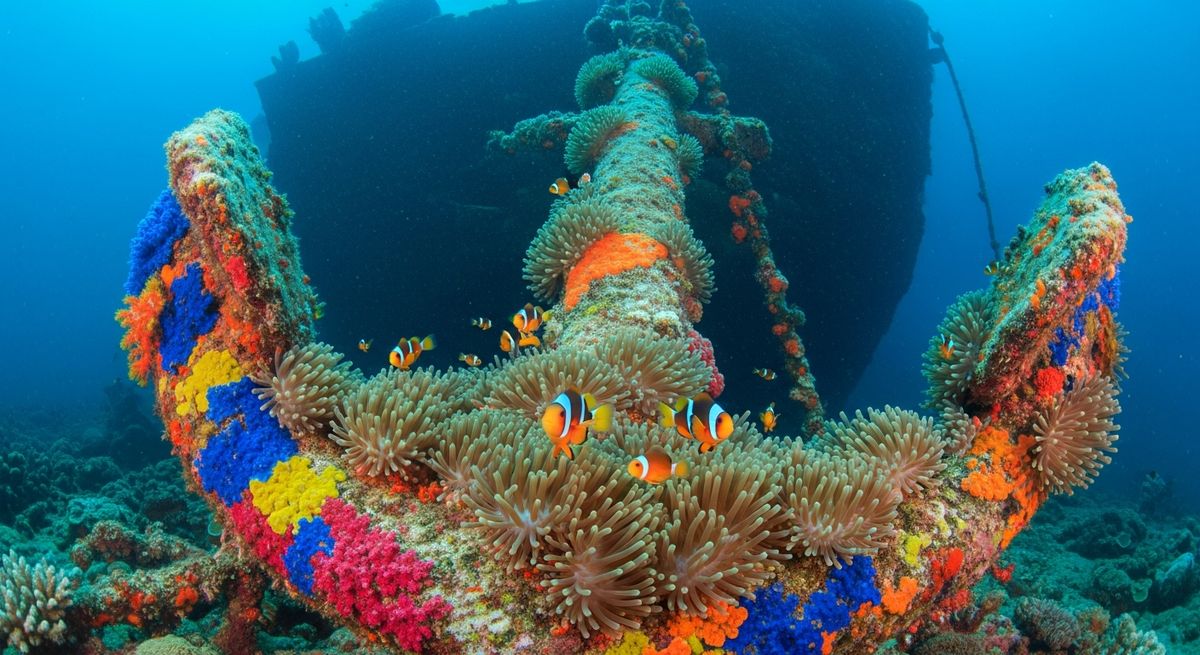
The M 36, or what we strongly suspect is her, is a proper North Sea wreck. Not one for the faint of heart, but rewarding for those who enjoy a bit of history and a dark, moody dive. She sits at 22 metres, a minesweeper sunk by Allied bombing in the closing days of WWII, and you can really feel that weight of history when you descend. We love the bow section; it’s still impressively intact, with the anchor chains draped like giant necklaces. Visibility can be hit or miss – some days you'll get 10 metres and a clear view of her structure, other days it’s closer to five, making for a truly atmospheric penetration if you're qualified and careful. Our favourite moments here are spotting the massive conger eels that have made her their home, peering out from portholes, and the sheer number of cod lurking in the shadows. We'd suggest timing your dive for slack water; the currents around here can be fierce, making for a much more enjoyable exploration of her various compartments. She's a fantastic dive for experienced wreck enthusiasts who appreciate the raw, untouched nature of an historical site.
Typical M 36 (POSSIBLY) Dive Profile
Illustrative profile based on site depth and type. Actual dive profiles vary - always follow your dive computer and training.
Safety Notes
Depth of 22m - Advanced Open Water certification recommended.
Wreck site - avoid penetration without wreck diving certification. Watch for sharp metal and entanglement hazards.
Cold water this month (avg 13°C). Drysuit or thick wetsuit (7mm+) recommended.
Always perform a 3-minute safety stop at 5m before surfacing.
Nearest Dive Centres to M 36 (POSSIBLY)
Dive shops near M 36 (POSSIBLY)
View all dive centres in North Sea CoastReviews for M 36 (POSSIBLY)
Conditions
Ocean conditions, forecast and tides for M 36 (POSSIBLY)
M 36 (POSSIBLY) Ocean Conditions
Monthly averages for M 36 (POSSIBLY), sourced from Open-Meteo marine data - nearest station: Open-Meteo marine grid (55.31, 9.86) (1km away)
October Averages
Sea Temperature
13°C
56°F · Range: 10.7–16.8°C
Air Temperature
11°C
52°F
Wind Speed
7.69 m/s
14.9 knots
Atmospheric Pressure
1010.5 hPa
Based on 4 years of monitoring data · Data sources: Open-Meteo marine data
Plan & book
Ways to dive North Sea Coast, from day trips to liveaboards.
Day trips & courses
via GetYourGuideGuided dives, courses and snorkel trips with instant booking.
Find dive trips in North Sea CoastPlaces to stay
via Booking.comHotels and dive resorts near North Sea Coast.
Search stays in North Sea CoastDive insurance
Most travel insurance excludes or limits scuba. Check what you need before you go.
Dive insurance explainedPartner links: we may earn a commission if you book, at no extra cost to you. How we make money
Where to Stay near M 36 (POSSIBLY)
Prices from Booking.com. We may earn a commission at no extra cost to you.