AFRICAN VIOLET
Protected Area
Área marina de La Isleta
Why dive here
With 76+ marine species recorded in the area - including dolphins, octopuses, sea turtles, sperm whales and cuttlefish - AFRICAN VIOLET offers some of Canary Islands's richest wreck diving. Water ranges 20-24°C, warmest August, September, October.
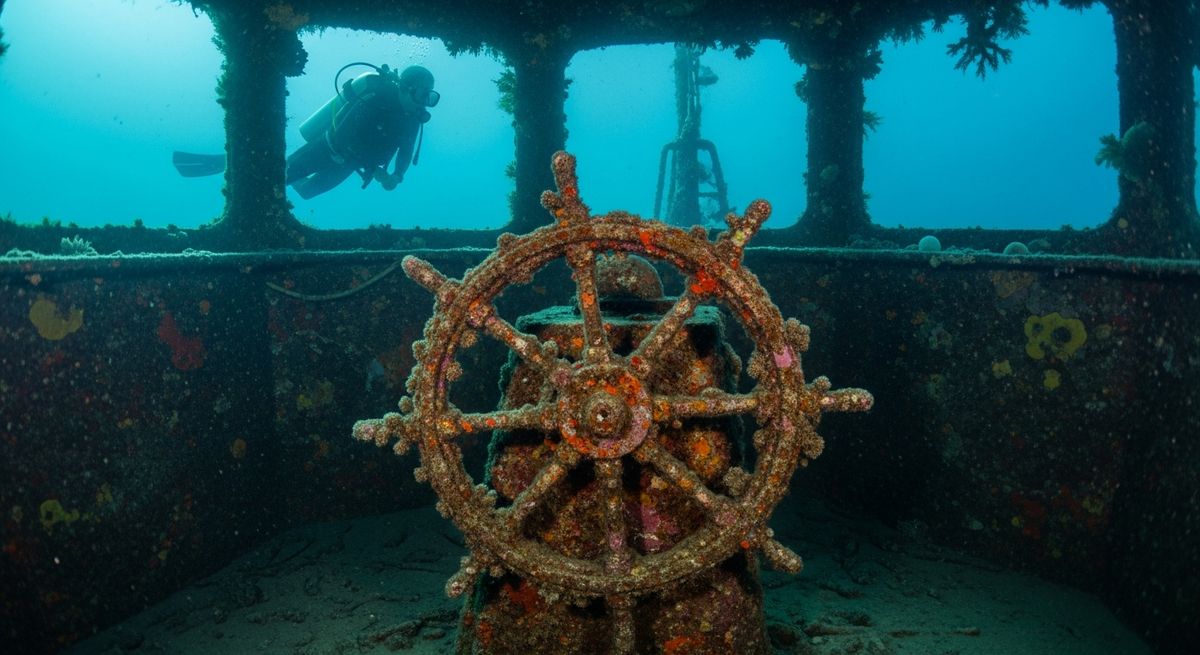
The African Violet is a bit of a local legend, and for good reason. She’s a 61-metre motor vessel, purposely sunk back in '83, sitting upright and mostly intact on a sandy seabed at 24 metres. We love how accessible she is, with open cargo holds perfect for a gentle penetration if you’re comfortable, letting ambient light stream in and highlight the schools of glassy sweepers darting through the beams. Down here, it’s not about huge pelagics, but the smaller, more intimate stuff. Look for ornate wrasse flitting over the deck plates, and we’ve often spotted scorpionfish camouflaged against the rusted metal, waiting for an unsuspecting meal. The bow is our favourite, with its anchor chain leading off into the blue, creating a dramatic backdrop for photographs. It’s a superb dive for anyone who enjoys wreck exploration without strong currents or excessive depth, making it a solid choice for advanced open water divers looking to hone their skills. Best dived in the morning before any wind picks up, keeping the visibility clear.
Typical AFRICAN VIOLET Dive Profile
Illustrative profile based on site depth and type. Actual dive profiles vary - always follow your dive computer and training.
Safety Notes
Depth of 24m - Advanced Open Water certification recommended.
Wreck site - avoid penetration without wreck diving certification. Watch for sharp metal and entanglement hazards.
Always perform a 3-minute safety stop at 5m before surfacing.
AFRICAN VIOLET Wreck History
Year Sunk
1983
Vessel Type
cargo ship
Cause
unknown
The story of the African Violet is one of quiet decay followed by a sudden disappearance. Built in Hamburg in 1959, this motor vessel spent its final days not on the high seas, but at rest. For a year and a half, she lay at anchor off Las Palmas, a silent silhouette against the Canary Islands' skyline. Then, on October 8, 1983, she slipped beneath the waves for reasons that remain unclear, sinking in the very spot where she had waited for so long.
Today, the African Violet rests on a sandy bottom at a depth of 24 meters. Her solitary end has made her an intriguing destination for divers. The wreck is largely intact, offering a fascinating glimpse into a mid-century cargo ship's structure. Over the decades, the vessel has been claimed by the Atlantic, becoming a thriving artificial reef teeming with the vibrant marine life characteristic of the Canary Islands, including moray eels, damselfish, and schools of bream.
Nearest Dive Centres to AFRICAN VIOLET
Dive shops near AFRICAN VIOLET
El Azul Gran Canaria Dive Center
Mirafondos, Centro de Buceo
BUCEO CANARIAS BY MEDUSA
Buceo La Vieja
KARAPAT DIVE
Buceo Norte
Reviews for AFRICAN VIOLET
Conditions
Ocean conditions, forecast and tides for AFRICAN VIOLET
AFRICAN VIOLET Ocean Conditions
Monthly averages for AFRICAN VIOLET, sourced from Open-Meteo marine data + Copernicus Marine (EU) - nearest station: Open-Meteo marine grid (28.18, -15.41) (10km away)
October Averages
Sea Temperature
24°C
74°F · Range: 22.2–25.4°C
Current Speed
10 cm/s
Direction: SE (126.9°)
Chlorophyll-a
0.081 mg/m³
Very clear (oligotrophic)
Salinity
36.89 PSU
Based on 4 years of monitoring data · Data sources: Open-Meteo marine data + Copernicus Marine (EU)
Plan & book
Ways to dive Canary Islands, from day trips to liveaboards.
Day trips & courses
via GetYourGuideGuided dives, courses and snorkel trips with instant booking.
Find dive trips in Canary IslandsPlaces to stay
via Booking.comHotels and dive resorts near Canary Islands.
Search stays in Canary IslandsDive insurance
Most travel insurance excludes or limits scuba. Check what you need before you go.
Dive insurance explainedPartner links: we may earn a commission if you book, at no extra cost to you. How we make money
Where to Stay near AFRICAN VIOLET
Prices from Booking.com. We may earn a commission at no extra cost to you.