AMERICAN STAR
Protected Area
Cueva de Lobos
Why dive here
With 76+ marine species recorded in the area - including dolphins, octopuses, sea turtles, sperm whales and cuttlefish - AMERICAN STAR offers some of Canary Islands's richest wreck diving. Water ranges 20-24°C, warmest August, September, October.
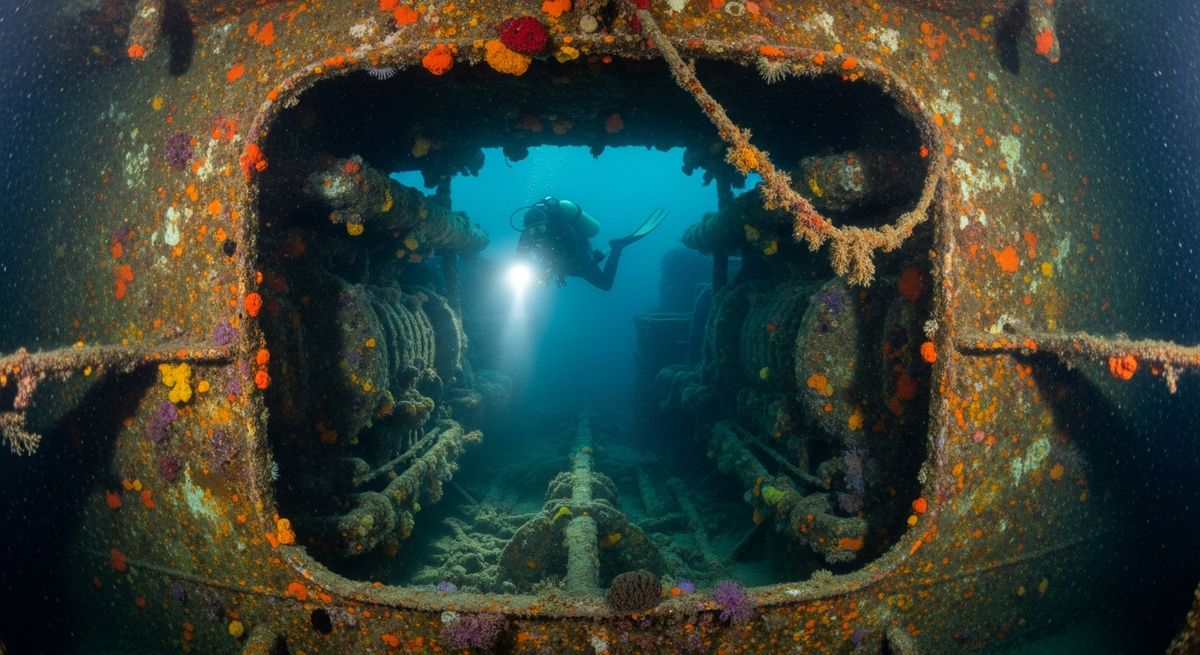
The American Star wreck is a site we still talk about long after the dive. She’s not deep, just 4m, so it’s less of a dive and more of a snorkel, but don’t let that put you off. This old merchant vessel, broken in two, lies right on the beach at Playa de Garcey. We loved swimming around the bow section, seeing the huge anchor chains draped like necklaces across the sand, the steel plates now a rusty tapestry. What makes it special for us is the sheer size of her, even in pieces. The stern section, which used to be the more intact part, was battered beyond recognition by a storm in 2007, then finally disappeared under the waves in 2022. Now, it's just the bow, but it's still impressive. The shallow depth means sunlight penetrates everywhere, illuminating shoals of sardines that shimmer against the rust-coloured steel. You’ll spot the occasional curious grunt or a small octopus tucked into a crevice. It’s a fascinating place to spend an hour, imagining the ship’s past life. We’d suggest going at low tide for the clearest views of the scattered remains. It’s a unique experience, a giant skeleton slowly returning to the ocean, perfect for snorkelers or freedivers wanting a glimpse into maritime history without needing a tank.
Typical AMERICAN STAR Dive Profile
Illustrative profile based on site depth and type. Actual dive profiles vary - always follow your dive computer and training.
Safety Notes
Wreck site - avoid penetration without wreck diving certification. Watch for sharp metal and entanglement hazards.
AMERICAN STAR Wreck History
Year Sunk
1994
Vessel Type
passenger ship
Cause
grounding
The SS American Star had a long and storied career that began long before she came to rest on the shores of Fuerteventura. Launched in 1940 as the magnificent SS America for the United States Lines, she was a pinnacle of American naval architecture. Her service was varied and patriotic; she served as the troop transport USS West Point during World War II, carrying soldiers across treacherous seas. After the war, she returned to passenger service, later sailing under different flags and names, including the popular SS Australis for a Greek-owned line, carrying countless passengers across the globe.
Her final chapter began in 1994. After years of service, the old liner was sold with the intention of being converted into a five-star hotel ship in Thailand. Renamed the American Star, she was taken under tow from Greece. However, during a severe Atlantic storm, the tow lines snapped, leaving the grand old ship at the mercy of the waves. On January 18, 1994, she ran hard aground at Playa de Garcey, her back broken by the relentless surf, creating one of the most photographed shipwrecks of the modern era.
For years, the American Star was a haunting landmark, slowly surrendering to the power of the ocean. Today, the wreck is no longer visible above the waves, having completely collapsed onto the seabed. Lying in just 4 meters of water, her scattered remains have become a vibrant artificial reef. While the proud structure is gone, divers and snorkelers can explore the debris field, which teems with the Canary Islands' diverse marine life, a final, living monument to a legendary ocean liner.
Nearest Dive Centres to AMERICAN STAR
Dive shops near AMERICAN STAR
fuerte DIVERS
Acuarios Jandia
Dive Pro Fuerte
FUERTEVENTURA DIVING S.L.
Deep Blue S.L.
Tauchschule Fuerteventura Buceo
Reviews for AMERICAN STAR
Conditions
Ocean conditions, forecast and tides for AMERICAN STAR
AMERICAN STAR Ocean Conditions
Monthly averages for AMERICAN STAR, sourced from Open-Meteo marine data + Copernicus Marine (EU) - nearest station: Open-Meteo marine grid (28.18, -15.41) (10km away)
October Averages
Sea Temperature
24°C
74°F · Range: 22.2–25.4°C
Current Speed
10 cm/s
Direction: SE (126.9°)
Chlorophyll-a
0.081 mg/m³
Very clear (oligotrophic)
Salinity
36.89 PSU
Based on 4 years of monitoring data · Data sources: Open-Meteo marine data + Copernicus Marine (EU)
Plan & book
Ways to dive Canary Islands, from day trips to liveaboards.
Day trips & courses
via GetYourGuideGuided dives, courses and snorkel trips with instant booking.
Find dive trips in Canary IslandsPlaces to stay
via Booking.comHotels and dive resorts near Canary Islands.
Search stays in Canary IslandsDive insurance
Most travel insurance excludes or limits scuba. Check what you need before you go.
Dive insurance explainedPartner links: we may earn a commission if you book, at no extra cost to you. How we make money
Where to Stay near AMERICAN STAR
Prices from Booking.com. We may earn a commission at no extra cost to you.