Anchors Canary
Protected Area
Sebadales de Corralejo
Why dive here
With 76+ marine species recorded in the area - including dolphins, octopuses, sea turtles, sperm whales and cuttlefish - Anchors Canary offers some of Canary Islands's richest wreck diving. Water ranges 20-24°C, warmest August, September, October.
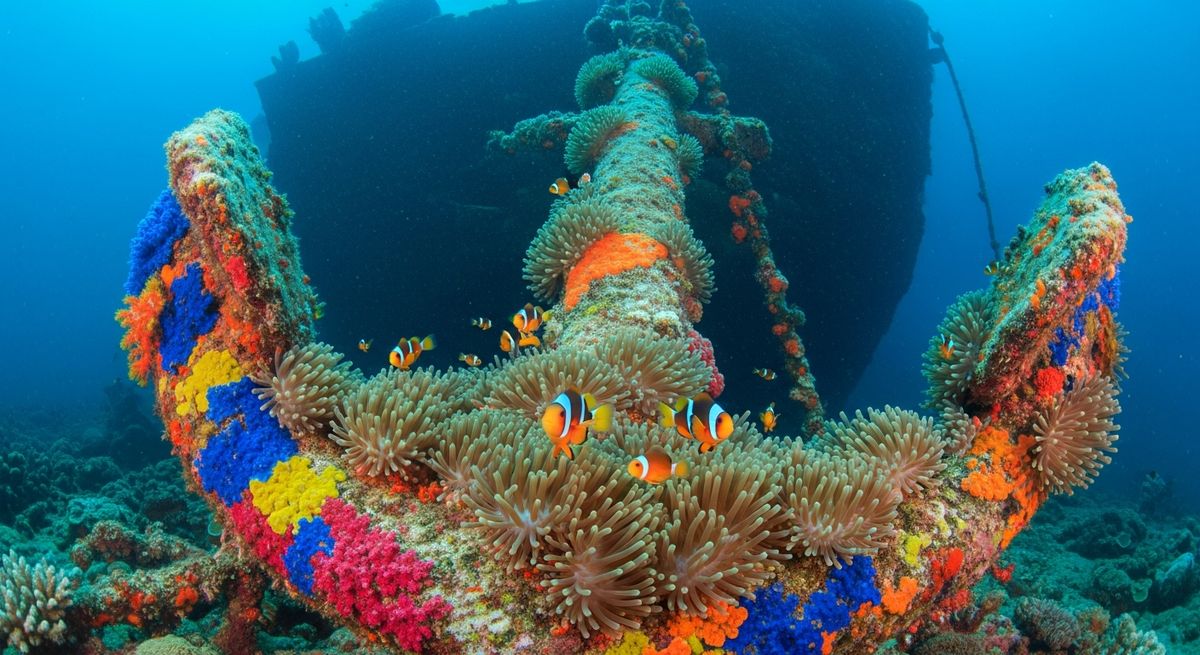
Forget any notions of a sleek, intact vessel; Anchors Canary is a different kind of wreck dive, and we love it for its character. Picture a jumbled playground of broken machinery, thick chains, and, yes, several genuinely ancient anchors scattered across a sandy seabed at 23 metres. It’s less about a grand ship structure and more about exploring a historical junkyard that’s now thoroughly claimed by the ocean. We’ve seen some brilliant stuff here: big schools of barracuda hanging out in the gloom, moray eels peeking from crevices in the metal, and octopus often tucked into the nooks. Our favourite part is navigating through the various pieces, feeling that sense of discovery as you round a bent hull plate to find another colossal anchor draped in sponges. It’s an intermediate dive, straightforward on most days, but it’s worth checking the local conditions as currents can pick up. Go slow, bring a good torch, and really take your time looking into the shadows. You'll be surprised what's lurking.
Typical Anchors Canary Dive Profile
Illustrative profile based on site depth and type. Actual dive profiles vary - always follow your dive computer and training.
Safety Notes
Depth of 23m - Advanced Open Water certification recommended.
Wreck site - avoid penetration without wreck diving certification. Watch for sharp metal and entanglement hazards.
Always perform a 3-minute safety stop at 5m before surfacing.
Anchors Canary Wreck History
Vessel Type
unknown
Cause
unknown
Unlike a traditional shipwreck, "Anchors Canary" is a unique underwater graveyard of maritime history located off the Canary Islands. Resting at a comfortable depth of 23 meters, this site is not a single sunken vessel but a collection of massive, historic anchors. Their origins are a subject of speculation, but they likely belong to the galleons and trading ships that have navigated these strategic Atlantic waters for centuries, falling victim to storms or battles and leaving a piece of their story on the seabed.
Diving here feels like exploring an open-air museum. Each anchor tells a silent tale, their immense size and antiquated design hinting at the colossal ships they once secured. Over time, they have become artificial reefs, colonized by the Canary Islands' rich marine life. Divers can expect to see moray eels peering from crevices, colorful damselfish flitting between the flukes, and perhaps even a passing angel shark or ray. It's a dive that combines the thrill of discovery with a tangible connection to the age of sail.
Nearest Dive Centres to Anchors Canary
Dive shops near Anchors Canary
Punta Amanay SL
Pura Vida Lanzarote Diving
Rubicon Diving Lanzarote
Las Toninas
Dive College Lanzarote
Windblue Lanzarote
Reviews for Anchors Canary
Conditions
Ocean conditions, forecast and tides for Anchors Canary
Anchors Canary Ocean Conditions
Monthly averages for Anchors Canary, sourced from Open-Meteo marine data + Copernicus Marine (EU) - nearest station: Open-Meteo marine grid (28.18, -15.41) (10km away)
October Averages
Sea Temperature
24°C
74°F · Range: 22.2–25.4°C
Current Speed
10 cm/s
Direction: SE (126.9°)
Chlorophyll-a
0.081 mg/m³
Very clear (oligotrophic)
Salinity
36.89 PSU
Based on 4 years of monitoring data · Data sources: Open-Meteo marine data + Copernicus Marine (EU)
Plan & book
Ways to dive Canary Islands, from day trips to liveaboards.
Day trips & courses
via GetYourGuideGuided dives, courses and snorkel trips with instant booking.
Find dive trips in Canary IslandsPlaces to stay
via Booking.comHotels and dive resorts near Canary Islands.
Search stays in Canary IslandsDive insurance
Most travel insurance excludes or limits scuba. Check what you need before you go.
Dive insurance explainedPartner links: we may earn a commission if you book, at no extra cost to you. How we make money
Where to Stay near Anchors Canary
Prices from Booking.com. We may earn a commission at no extra cost to you.