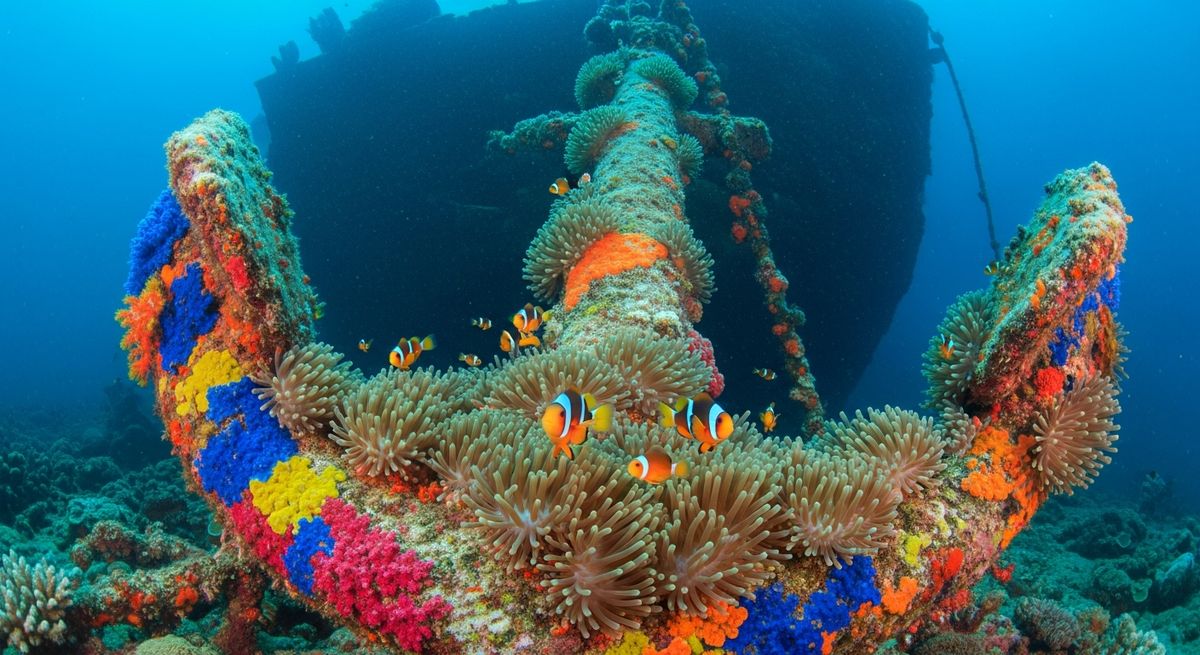
Artificial - Block2
Protected Area
Franja marina de Mogán
Why dive here
With 76+ marine species recorded in the area - including dolphins, octopuses, sea turtles, sperm whales and cuttlefish - Artificial - Block2 offers some of Canary Islands's richest wreck diving. Water ranges 20-24°C, warmest August, September, October.
Block 2, off the Canaries, isn't your typical wreck dive. Forget dramatic upright ships or intact superstructures. This site is a dispersed field of concrete blocks, remnants from a failed harbour project back in the 1970s. We know, "concrete blocks" doesn't exactly scream adventure, but give it a chance. Dropping down, you hit a surprisingly vibrant artificial reef. The blocks lie scattered on a sandy bottom, some piled high, others resting individually, creating a maze of nooks and crannies. It's a fantastic spot for macro life and the occasional pelagic fly-by. We’ve found huge arrow crabs tucked into crevices, moray eels peering out from beneath the biggest blocks, and schools of barracuda circling overhead on a good day. Our favourite is navigating the gaps between the larger stacks; it feels like exploring an underwater city in miniature. Visibility here can be excellent, often hitting 25 metres, especially in the late morning before any afternoon chop picks up. It’s an intermediate dive because of potential surge around the shallower blocks, but mostly it’s a calm, exploratory drift over a genuinely interesting human-made habitat that nature has well and truly claimed.
Typical Artificial - Block2 Dive Profile
Illustrative profile based on site depth and type. Actual dive profiles vary - always follow your dive computer and training.
Safety Notes
Depth of 20m - Advanced Open Water certification recommended.
Wreck site - avoid penetration without wreck diving certification. Watch for sharp metal and entanglement hazards.
Always perform a 3-minute safety stop at 5m before surfacing.
Artificial - Block2 Wreck History
Vessel Type
unknown
Cause
scuttled
As part of a planned underwater park, "Block2" is one of several structures sunk to form an extensive artificial reef system in the Canary Islands. These purpose-built reef elements, often large concrete blocks or frames, are designed to maximise habitat space for marine creatures. At a depth of 20 metres, this site is perfect for observing how marine life colonises a new structure. What was once a bare object is now a bustling neighbourhood for octopus, moray eels, and countless invertebrates. The geometric shapes provide a fascinating contrast to the fluid movements of the fish, making it a fantastic subject for underwater photographers exploring the vibrant waters of the Canaries.
Nearest Dive Centres to Artificial - Block2
Dive shops near Artificial - Block2
Nautico Dive Academy
Scuba Sur Gran Canaria
Ocean Fit
Go Diving
Puerto Rico diving
Leagues Ahead Diving
Reviews for Artificial - Block2
Conditions
Ocean conditions, forecast and tides for Artificial - Block2
Artificial - Block2 Ocean Conditions
Monthly averages for Artificial - Block2, sourced from Open-Meteo marine data + Copernicus Marine (EU) - nearest station: Open-Meteo marine grid (28.18, -15.41) (10km away)
October Averages
Sea Temperature
24°C
74°F · Range: 22.2–25.4°C
Current Speed
10 cm/s
Direction: SE (126.9°)
Chlorophyll-a
0.081 mg/m³
Very clear (oligotrophic)
Salinity
36.89 PSU
Based on 4 years of monitoring data · Data sources: Open-Meteo marine data + Copernicus Marine (EU)
Plan & book
Ways to dive Canary Islands, from day trips to liveaboards.
Day trips & courses
via GetYourGuideGuided dives, courses and snorkel trips with instant booking.
Find dive trips in Canary IslandsPlaces to stay
via Booking.comHotels and dive resorts near Canary Islands.
Search stays in Canary IslandsDive insurance
Most travel insurance excludes or limits scuba. Check what you need before you go.
Dive insurance explainedPartner links: we may earn a commission if you book, at no extra cost to you. How we make money
Where to Stay near Artificial - Block2
Prices from Booking.com. We may earn a commission at no extra cost to you.