Diving in Canary Islands
Why dive here
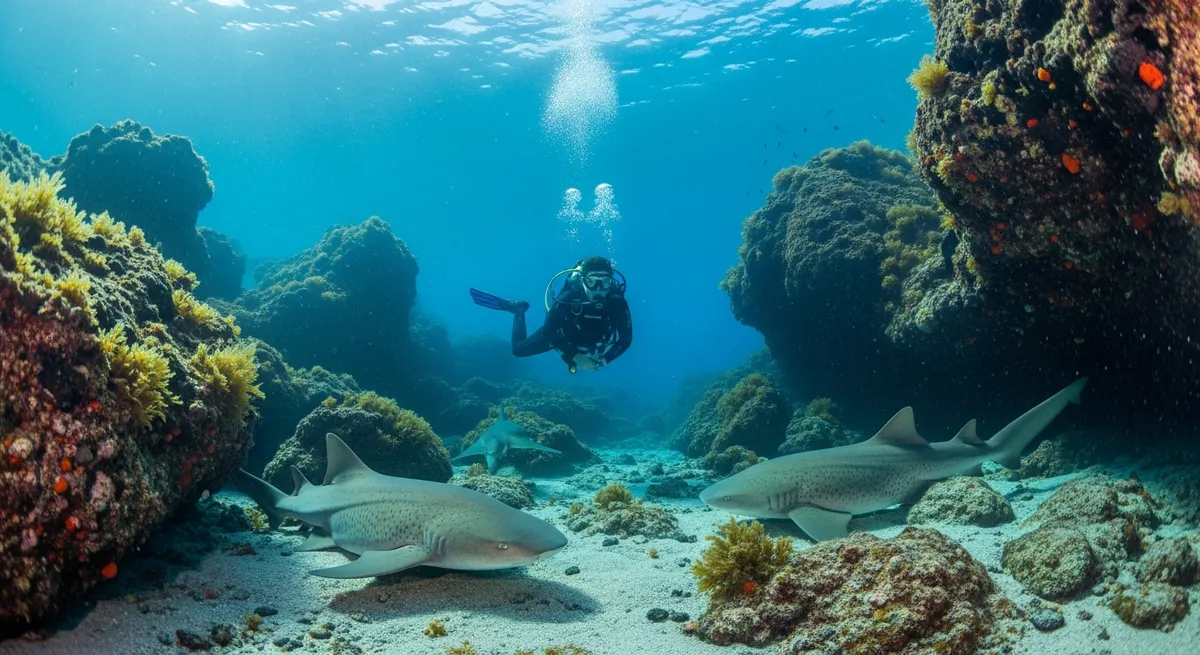
Canary Islands offers some of Spain's richest diving, with 76+ marine species recorded in the area - including dolphins, octopuses, sea turtles, sperm whales and cuttlefish. Water ranges 19-24°C, warmest August, September, October.
We’ll be honest, when most people think of European diving, the Canaries aren’t the first place that springs to mind. But you’d be missing out. These volcanic islands offer something genuinely different: dramatic underwater architecture carved from ancient lava flows. Think dark, moody caves, swim-throughs, and arches, often with schools of salema or blacktail bream flickering in the shafts of light. Our favourite spots are often the deeper pinnacles, where we’ve regularly encountered squadrons of devilfish cruising past. Keep an eye out for angel sharks, particularly in the sandier patches - they're masters of camouflage, so a good dive guide helps here. We’ve also had some incredible luck with manta rays passing through, though they’re not an everyday sight. The currents can be playful, especially around the exposed sites, so check the conditions before you jump in. We love it for the blend of Atlantic marine life and unexpected tropical visitors, all set against that stunning, otherworldly backdrop.
Canary Islands Dive Site Map
Dive sites and dive centres in Canary Islands
Canary Islands Dive Sites
197 dive sites in Canary Islands
Abakas I
Abakas I is a shallower site, peaking around 15 metres, making it a good choice for newer intermediate divers looking for an easy profile. Expect to spend your bottom time navigating a series of volcanic rock formations, with moray eels often tucked into the crevices. It’s a comfortable dive, often with good visibility, and a solid choice for a second dive of the day when you're not looking for anything too strenuous.
AFRICAN VIOLET
The African Violet is a bit of a local legend, and for good reason. She’s a 61-metre motor vessel, purposely sunk back in '83, sitting upright and mostly intact on a sandy seabed at 24 metres. We love how accessible she is, with open cargo holds perfect for a gentle penetration if you’re comfortable, letting ambient light stream in and highlight the schools of glassy sweepers darting through the beams. Down here, it’s not about huge pelagics, but the smaller, more intimate stuff. Look for ornate wrasse flitting over the deck plates, and we’ve often spotted scorpionfish camouflaged against the rusted metal, waiting for an unsuspecting meal. The bow is our favourite, with its anchor chain leading off into the blue, creating a dramatic backdrop for photographs. It’s a superb dive for anyone who enjoys wreck exploration without strong currents or excessive depth, making it a solid choice for advanced open water divers looking to hone their skills. Best dived in the morning before any wind picks up, keeping the visibility clear.
AL MOTAWAKIL
The Al Motawakil wreck is one of those sites we always come back to, especially if we’re looking for a relaxed dive with plenty of time to poke around. She’s a stern trawler, easy to navigate, sitting upright in just seven metres of water after she sank following a fire in Las Palmas harbour back in 1985. We love how the shallow depth means long bottom times, perfect for photographers or anyone who just wants to take it all in without rushing. You’ll fin through schools of damselfish that shimmer over the deck, and we've often spotted trumpetfish weaving through the rusted superstructure. Keep an eye out for moray eels tucked into the crevices; they seem to have claimed the Al Motawakil as their own. The engine room is open enough to peer into, giving a real sense of the vessel’s past. It's an ideal spot for newer wreck divers, or anyone who enjoys a peaceful dive with a bit of history to it.
AMERICAN STAR
The American Star wreck is a site we still talk about long after the dive. She’s not deep, just 4m, so it’s less of a dive and more of a snorkel, but don’t let that put you off. This old merchant vessel, broken in two, lies right on the beach at Playa de Garcey. We loved swimming around the bow section, seeing the huge anchor chains draped like necklaces across the sand, the steel plates now a rusty tapestry. What makes it special for us is the sheer size of her, even in pieces. The stern section, which used to be the more intact part, was battered beyond recognition by a storm in 2007, then finally disappeared under the waves in 2022. Now, it's just the bow, but it's still impressive. The shallow depth means sunlight penetrates everywhere, illuminating shoals of sardines that shimmer against the rust-coloured steel. You’ll spot the occasional curious grunt or a small octopus tucked into a crevice. It’s a fascinating place to spend an hour, imagining the ship’s past life. We’d suggest going at low tide for the clearest views of the scattered remains. It’s a unique experience, a giant skeleton slowly returning to the ocean, perfect for snorkelers or freedivers wanting a glimpse into maritime history without needing a tank.
Añaza
Añaza offers a straightforward dive, topping out at 18 meters, making it a good spot for newer divers getting comfortable in the Canaries. You'll find a rocky seabed with scattered patches of sand, home to a decent collection of Mediterranean reef fish like ornate wrasse and schooling damselfish. It's a reliable choice for a relaxed afternoon dip, especially if you're looking for an easy entry and minimal current.
Anchors Canary
Forget any notions of a sleek, intact vessel; Anchors Canary is a different kind of wreck dive, and we love it for its character. Picture a jumbled playground of broken machinery, thick chains, and, yes, several genuinely ancient anchors scattered across a sandy seabed at 23 metres. It’s less about a grand ship structure and more about exploring a historical junkyard that’s now thoroughly claimed by the ocean. We’ve seen some brilliant stuff here: big schools of barracuda hanging out in the gloom, moray eels peeking from crevices in the metal, and octopus often tucked into the nooks. Our favourite part is navigating through the various pieces, feeling that sense of discovery as you round a bent hull plate to find another colossal anchor draped in sponges. It’s an intermediate dive, straightforward on most days, but it’s worth checking the local conditions as currents can pick up. Go slow, bring a good torch, and really take your time looking into the shadows. You'll be surprised what's lurking.
Anfi Beach
Anfi Beach is a straightforward dive, perfect for those taking their first breaths underwater. It’s a shallow sandy bottom, around 7m, which means plenty of light and easy navigation. You'll often spot trumpetfish, small rays partially buried in the sand, and shoals of juvenile fish darting around. It's a solid spot for check dives or refreshing skills, rather than seeking out anything grand.
Anfiteatro
Anfiteatro, or "Amphitheater," offers a straightforward dive down to 20 meters. It’s a good spot for newer divers to get comfortable, with easy conditions and typically calm seas. You’ll find a sandy bottom with some scattered rocks, home to various small reef fish and sometimes an octopus or cuttlefish. We'd suggest it as a relaxed second dive or a training location.
ANGELA PANDO (FWD PART)
The forward section of the *Angela Pando* is a proper wreck dive, sitting upright at 20 metres. We love how the bow points majestically towards the surface, a real sense of its former grandeur even broken in half. Dropping down, you’re straight onto the expansive deck, which is now home to schools of barracuda and amberjacks that cruise past. Inside, the holds are open, allowing for easy, shallow penetration – just enough to feel like you're exploring without getting too deep into trouble. Look for the swim-throughs around the superstructure too; they’re often filled with glassy sweepers, their eyes reflecting your torch beam. This half of the *Angela Pando* offers a solid hour of exploration for divers comfortable with a spacious wreck.
AOW Deep
The AOW Deep site in the Canary Islands offers a controlled environment for divers working towards their Advanced Open Water certification. It's a straightforward dive to 22m, typically over a sandy bottom or gentle slopes where you might spot a stingray or some bottom dwellers. We find it a good spot for buoyancy practice and getting comfortable with deeper limits, without the distraction of a busy reef. Suits intermediate divers focused on training.
Arguineguin Reef
Arguineguin Reef sits just off the coast, a shallow, sheltered spot that’s perfect for getting back into the swing of things. At a maximum depth of 16 metres, it’s an easy dive, especially good for those new to the Canaries’ underwater world or refreshing their skills. We often see parrotfish munching away, octopus tucked into crevices, and schools of damselfish flitting around. It’s not going to blow your mind with massive pelagics, but it's a solid, enjoyable dive for a relaxed afternoon.
ARONA
The *Arona* is a proper wreck dive, sitting upright in about 30 metres of water off the south coast of Tenerife. This 96-metre motor vessel caught fire back in '78, and you can still see the evidence of that blaze along her decks. We like exploring the holds and peeking into the bridge area, where schools of amberjacks often hang out, along with the resident groupers. It's a solid dive for those comfortable at depth, offering a real sense of history and plenty of nooks and crannies for curious divers.
Show all 197 dive sites in Canary Islands
- Arrecifal
- Artificial
- Artificial - Block2
- Artificial - Block3
- Artificial - Blok1
- ASTILLEROS GONDON II
- Atalaya
- Atlantida
- Atlantis
- Bahia Alcalá
- Bahia Blanca
- Bahía de Garachico
- BAHIA DE PASAJES
- Bahia Fish
- Bahia Verde
- BAILEN
- Baja de Luis
- Bajo de la Vieja
- Bajón del Río
- Balito Deep
- Balito Princess
- Balitown
- Benthos Buceo
- Black Tip
- BLANCO SOLER
- Boca Cangrejo
- Boca de Esquinzo
- Bocayna
- Brains Cave
- BRITISH STEEL
- Buceo Norte
- Calamareo
- CALA RAS
- Calzedonia
- CB Timanfaya
- Cementerio de Barco (Mole)
- Centro de Buceo El Hierro
- CHIEN CHUEN NO 6
- Chupadero - El Puertito de La Lajita
- Coladas
- Coloradas Reef
- CONDESITO
- Coral
- CROMO
- Cruentats Cave
- Cuesta del Faro
- Cueva de Radazul
- Cuevitas
- DAE WANG NO 202
- DEGAMA
- Digger (Sueño Azul)
- Dive Pro Fuerte
- Diver entry point
- DONG WON NO 505
- DUMBO
- DURBAN
- Easy Divers
- El Bajón
- El Bajonito
- El Balito
- El Cabezón
- El Caseron
- El Condesito (Wreck)
- El Coral de Garachico
- El Emisario / Twin Pipes
- El Fafo
- El Marrajo
- El Monasterio
- El Narcótico
- El Pajar Bay
- El Peñon (Wreck)
- El Poris
- El Puente
- El Puertito
- El Tablado
- Extra Divers El Hierro
- FAN Diving
- Faro del Lobos
- Fish Tower
- Flamingo Wall
- Fonsalía
- Fortaleza
- FRANCES MARIE
- Galeones
- GAMKO-1
- Großes Muränenriff
- GURE CONCHI
- Hafenmauer
- HARVEST AQUARIUS
- Helena Reef
- Hole in the Wall
- JUCAR
- KALAIS
- KALLIPATEIRA
- Kleines Muränenriff
- Komotu
- KOS ISLAND
- KOUTOUBIA
- La Caleta
- La Carrera
- La Catedral
- La Cueva del Garachico
- La Cuevita
- La Deriva
- La Jaca Bay
- La Lagunita
- La Lajita
- La Morena
- Lanzarote Non Stop Divers
- Las Anclas
- Las Coloradas
- Las Eras
- Las Toninas
- La Tixera
- Leagues Ahead Diving
- Magmar Watersport
- MARIA TERESA ALONSO
- Marina San Miguel
- Media Almud
- media almud shallow
- MERCEDES DE ABONA
- Meridian (Wreck)
- Meteor, Arguineguin, Gran Canaria
- Mirafondos, Centro de Buceo
- Montaña Amarilla
- Montaña Roja
- Muelle de Morro Jable
- Neptune’s Cave
- NUEVA UNION
- OCEANIC KLIF
- OLETA
- Palm-mar Cave
- Palm-Mar Wall / Bufadero
- Pasito Blanco
- Pechiguera
- Pecio Arona
- Perchel Caves
- Piper Airplane, wreck
- Playa de La Caleta del Espigon
- Playa de la Cebada
- Playa de las Vistas
- Playa La Bombilla
- Playa Los Cristianos
- Playa San Juan, Gym
- Pool Radazul Sport Center
- PORTU BARRI
- Pozo Negro
- Puerto del Carmen (east)
- Puerto del Carmen (west)
- Puerto Naos - Playa Chica
- PUNTA ANAGA
- Punta Berrugo
- PUNTA CIRES (POSSIBLY).
- RAINFROST
- RAS ALGETHY
- Ray Bank, Gran Canaria
- ROGER DE ILURIA
- Roncadores del Faro
- Roncadores del Palmar
- Sailboat
- Sailboat Deep
- Salobre Reef
- SAN JUAN NO.2
- SAVVAS L
- Sea Lion Oasis Wild Life
- Shark Point Las Palmas
- SMIPE I
- Snorkeling Experience
- SS America
- SUN WARM VI
- Tauchschule Stefan Heidler
- Telamon
- Tesoro Negro
- The Rubicon Marina Ramp
- The Tongues
- TIKONKO 7
- Timanfaya
- Tufia
- Turtle Village
- Twin Wrecks (Wreck)
- UNIQUE
- VAGRANT
- Veril Blanco Gran Tarajal
- VIGO
- Wreck of Temple Hall
Canary Islands Dive Centres
99 dive shops and operators in Canary Islands
Acuarios Jandia
Apnea Academy West Europe
APNEA CANARIAS
Aqua-Marina
Aquanautic Club Lanzarote
Aquarius Dive Center SL
Aquatis Dive Center
Arrecifal
Show all 99 dive centres in Canary Islands
- Barracuda Scuba Diving Lanzarote
- Benthos Buceo
- Biosub
- Blue Magma Diving
- BOREALSUB
- BROTHERS DIVING S.C.P. CIF J13696935
- BUCEO CANARIAS BY MEDUSA
- Buceo El Bajón
- Buceo El Bajón
- Buceo La Graciosa Divers
- Buceo La Vieja
- Buceo Norte
- BUCEO PANDORA
- Buceo Sub
- Canary Diving Adventures
- CB Seadive
- CB Timanfaya
- Centro de Buceo El Cardumen
- Centro de Buceo El Hierro
- Club de Buceo El Pejín
- Club de Buceo - Rincon de Arona
- Deep Blue S.L.
- Deep Fin Tenerife Diving Center
- Delphinus
- dive-art.com
- Dive Club Ocean Trek
- Dive College Lanzarote
- Dive Community
- DIVE LOVERS TENERIFE
- Dive Pro Fuerte
- Diveria Diving Center
- Diving Center
- DSDivers Gran Canaria
- Easy Divers
- Ecological Divers Tenerife
- El Azul Gran Canaria Dive Center
- Espiritu de Buceo Tenerife
- Extra Divers El Hierro
- FAN Diving
- fuerte DIVERS
- FUERTEOCEAN
- FUERTEVENTURA DIVING S.L.
- Go Diving
- GooDiving
- Gran Canaria Divers
- Island Watersports
- KARAPAT DIVE
- Lanzarote Dive Centre
- La Santa Diving
- Las Toninas
- Leagues Ahead Diving
- Liquid Planet
- Los Gigantes Diving Centre
- MAGMA FREEDIVING SCHOOL FUERTEVENTURA
- Magmar Watersport
- MARGULLAR DIVING
- MARIPOSA DIVING SL
- MEDANODIVE
- Mirafondos, Centro de Buceo
- Mojo Dive
- Mojo Dive
- Morena Diving Center
- Native Diving
- Nautico Dive Academy
- Northdiving Lanzarote
- Ocean Dreams Tenerife S.l.
- Ocean Fit
- ONE TWO DIVE
- Pama Diving
- PAPAGAYO WATERSPORTS
- Paradise Divers
- Puerto Rico diving
- Punkfish Diving School
- Punta Amanay SL
- Pura Vida Lanzarote Diving
- Rubicon Diving Lanzarote
- Sa Caleta Tenerife
- safari diving
- Safari Diving
- Scubafriends
- Scuba Legends Dive Center Lanzarote
- Scubanana Dive Center
- Scuba Sur Gran Canaria
- Squatina sub
- Tauchpartner La Palma sl.
- Tauchschule Fuerteventura Buceo
- Tenerife Diving Academy
- The Big Blue Scuba Dive Surf Windsurf Kitesurf School
- WET MONSTER - DIVE CENTER TENERIFE
- Windblue Lanzarote
- Zeus Dive Center
Ocean Wildlife in Canary Islands
76 species recorded in Canary Islands
Canary Islands Daylight & Sunrise/Sunset
Sunrise and sunset times for Canary Islands, calculated from coordinates
Today - Sunday 11 October
Sunrise
06:00
Sunset
17:39
Daylight
11h 39m
Golden Hour
17:07
First light (dawn) at 05:36 · Last light (dusk) at 18:02
Monthly Averages
| Month | Sunrise | Sunset | Daylight |
|---|---|---|---|
| Jan | 06:55 | 17:27 | 10h 32m |
| Feb | 06:41 | 17:52 | 11h 11m |
| Mar | 06:13 | 18:10 | 11h 57m |
| Apr | 05:38 | 18:27 | 12h 48m |
| May | 05:13 | 18:44 | 13h 31m |
| JunLongest | 05:05 | 19:00 | 13h 55m |
| Jul | 05:14 | 19:01 | 13h 47m |
| Aug | 05:31 | 18:43 | 13h 11m |
| Sep | 05:47 | 18:09 | 12h 22m |
| OctNow | 06:02 | 17:34 | 11h 33m |
| Nov | 06:23 | 17:10 | 10h 47m |
| DecShortest | 06:46 | 17:08 | 10h 22m |
Times are approximate local times based on longitude. Actual times may vary slightly depending on the exact timezone observed in Canary Islands.
Where to Stay near Canary Islands
Prices from Booking.com. We may earn a commission at no extra cost to you.
Marine Protected Areas near Canary Islands
47 protected areas near Canary Islands - please respect local regulations when diving
Espacio marino del oriente y sur de Lanzarote-Fuerteventura
Espacio marino de La Gomera-Teno
Espacio marino de La Bocayna
Franja marina Teno-Rasca
Franja marina de Mogán
Espacio marino de Mogán-La Aldea
Fuerteventura
Franja marina Santiago-Valle Gran Rey
Área marina de La Isleta
Sebadales de Güigüí
Cueva de Lobos
Playa de Sotavento de Jandía
Showing 12 largest of 47
Getting to Canary Islands
Gran Canaria Island
Tenerife
Tenerife
Plan & book
Ways to dive Canary Islands, from day trips to liveaboards.
Day trips & courses
via GetYourGuideGuided dives, courses and snorkel trips with instant booking.
Find dive trips in Canary IslandsPlaces to stay
via Booking.comHotels and dive resorts near Canary Islands.
Search stays in Canary IslandsDive insurance
Most travel insurance excludes or limits scuba. Check what you need before you go.
Dive insurance explainedPartner links: we may earn a commission if you book, at no extra cost to you. How we make money