ACCLIVITY
Protected Area
Castle Point to Cullernose Point
Why dive here
With 112+ marine species recorded in the area - including dolphins, dwarf minke whales, humpback whales, ocean sunfish (mola mola) and orcas - ACCLIVITY offers some of Scottish East Coast & Borders's richest wreck diving.
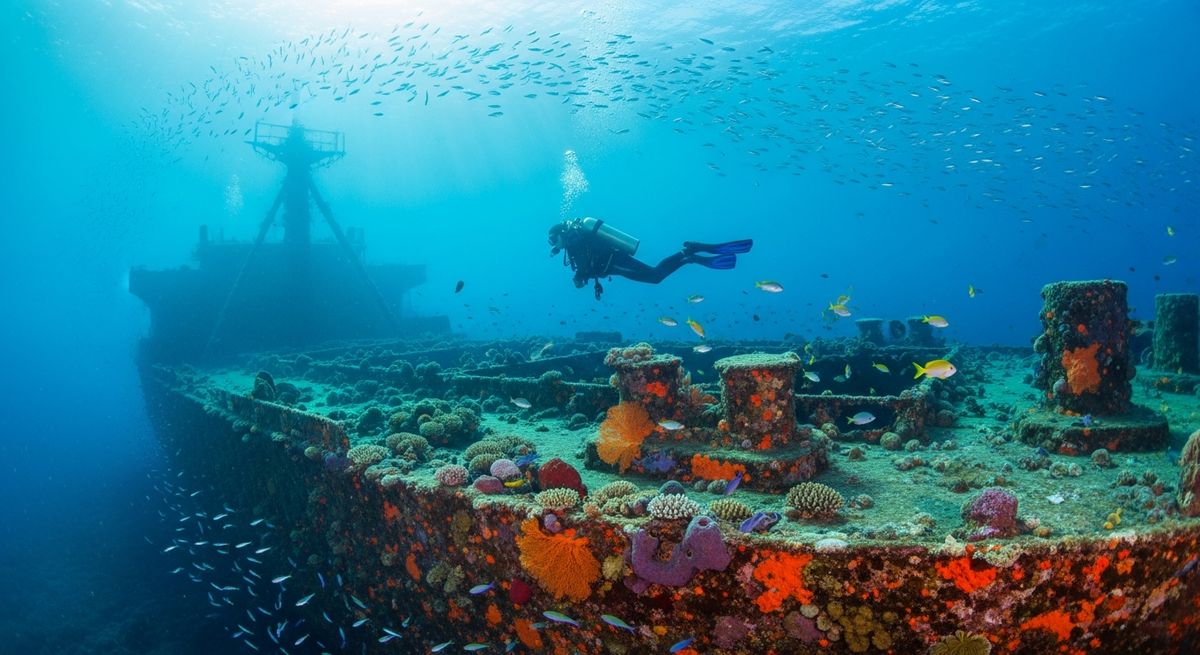
The Acclivity is one of our favourite Scottish wrecks, a tanker that went down in 1952. She’s a good size at 50 metres, and sits upright at 26m, so you get plenty of bottom time to explore. The visibility can be hit-or-miss, typical for the East Coast, but on a good day, when the light penetrates, it’s a properly atmospheric dive. We love dropping down onto the stern, where the engine room is still quite intact. You can nose around the superstructure, see the old donkey boiler, and imagine the crew’s final moments. The bow section is more broken up, but it's draped in dead man's fingers, a ghostly white against the steel. Look for the resident conger eels, they’re often tucked into the deeper recesses of the wreck. We've seen some absolute monsters here. It’s a dive for experienced wreckies, definitely not one for your first time in cold water. Strong tides can rip through, so pick your slack water window carefully. Even if the viz is only a few metres, the sheer presence of this old girl makes it a worthwhile trip.
Typical ACCLIVITY Dive Profile
Illustrative profile based on site depth and type. Actual dive profiles vary - always follow your dive computer and training.
Safety Notes
Depth of 26m - Advanced Open Water certification recommended.
Wreck site - avoid penetration without wreck diving certification. Watch for sharp metal and entanglement hazards.
Always perform a 3-minute safety stop at 5m before surfacing.
ACCLIVITY Wreck History
Year Sunk
1952
Vessel Type
tanker
Cause
unknown
The ACCLIVITY was a classic coastal tanker, built in 1931 in Greenock, Scotland. For over two decades, she served her owners, the well-known British shipping company F. T. Everard & Sons Ltd., faithfully plying the waters around the UK. In January 1952, the single-shaft motor tanker departed Thames Haven, but this would be her final voyage. She was lost off the Scottish East Coast, taking her story with her to the seabed.
Today, the ACCLIVITY rests in 26 meters of water, making it an excellent dive for advanced recreational divers. The wreck offers a fascinating glimpse into the design of a mid-20th-century tanker. Subject to the strong currents and chilly temperatures of the North Sea, the vessel has become a thriving artificial reef, its steel structure now home to a variety of local marine life. Divers can explore its decks and superstructure, pondering the unrecorded events that led to its sinking over 70 years ago.
Nearest Dive Centres to ACCLIVITY
Dive shops near ACCLIVITY
View all dive centres in Scottish East Coast & BordersReviews for ACCLIVITY
Conditions
Ocean conditions, forecast and tides for ACCLIVITY
Plan & book
Ways to dive Scottish East Coast & Borders, from day trips to liveaboards.
Day trips & courses
via GetYourGuideGuided dives, courses and snorkel trips with instant booking.
Find dive trips in Scottish East Coast & BordersPlaces to stay
via Booking.comHotels and dive resorts near Scottish East Coast & Borders.
Search stays in Scottish East Coast & BordersDive insurance
Most travel insurance excludes or limits scuba. Check what you need before you go.
Dive insurance explainedPartner links: we may earn a commission if you book, at no extra cost to you. How we make money
Where to Stay near ACCLIVITY
Prices from Booking.com. We may earn a commission at no extra cost to you.