ALBANO
Protected Area
Northumbria Coast
Why dive here
With 112+ marine species recorded in the area - including dolphins, dwarf minke whales, humpback whales, ocean sunfish (mola mola) and orcas - ALBANO offers some of Scottish East Coast & Borders's richest wreck diving.
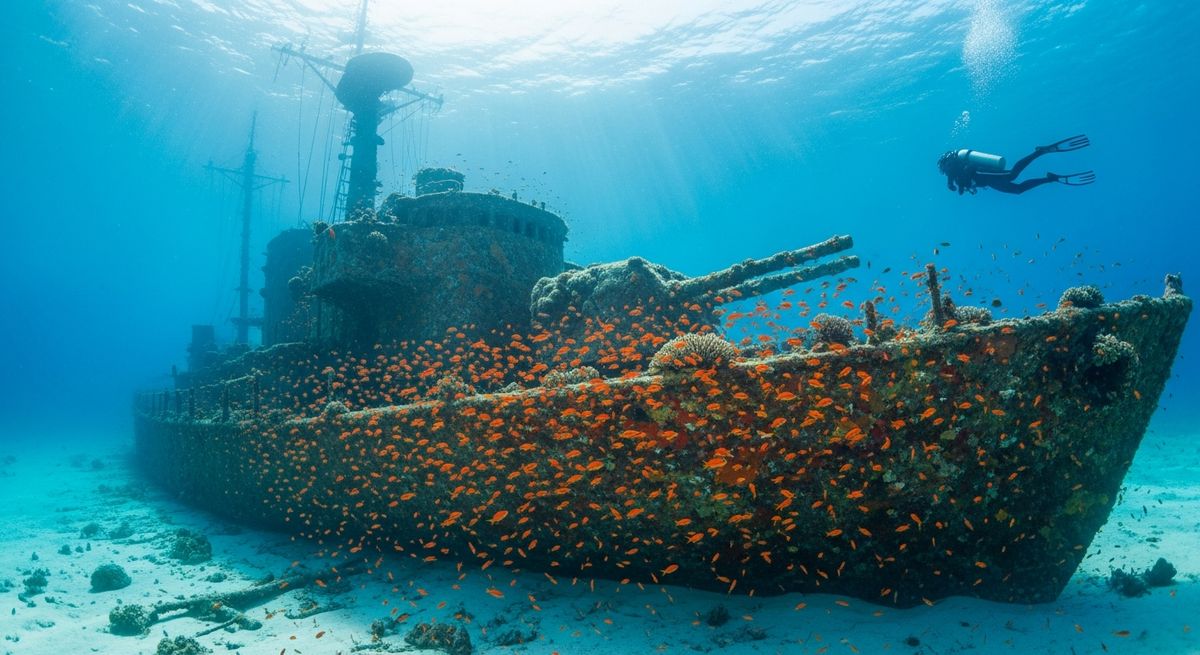
The Albano is a serious wreck dive, no doubt about it. Dropping onto her from the surface, the whole ship unfolds below you, resting upright and mostly intact on a flat seabed at 49 metres. We love that she’s a proper historical piece, sunk by a German mine back in 1940. You’ll find the triple expansion engine still standing proud amidships, a real testament to her robust build. Visibility here, as with many North Sea dives, can vary wildly, but when it’s good, it’s truly atmospheric. Picture the massive boiler looming out of the gloom, now home to clouds of cod and pollack darting through the rusted steel. The bow and stern sections offer plenty of points for exploration, though given the depth, keeping a close eye on your no-decompression limits is key. We’d suggest this dive for experienced cold-water wreck enthusiasts who appreciate a deep, relatively undisturbed piece of maritime history rather than colourful corals. Expect strong currents sometimes; plan your slack water window carefully. It’s a dive that rewards good technique and a bit of patience.
Typical ALBANO Dive Profile
Illustrative profile based on site depth and type. Actual dive profiles vary - always follow your dive computer and training.
Safety Notes
Maximum depth 49m exceeds recreational limits (40m). Technical diving certification and equipment required.
Wreck site - avoid penetration without wreck diving certification. Watch for sharp metal and entanglement hazards.
Always perform a 3-minute safety stop at 5m before surfacing.
ALBANO Wreck History
Year Sunk
1940
Vessel Type
cargo ship
Cause
torpedo
The SS Albano was a steamship built in 1912 by Earl's Co Ltd in Hull for the Ellerman Wilson Line, a major British shipping company. Powered by a triple-expansion engine, the Albano was a workhorse of the merchant fleet, plying trade routes between the UK and continental Europe for nearly three decades.
Its civilian service came to a violent end in the early months of World War II. On March 2, 1940, while on a voyage from Hull to Bergen, Norway, the Albano was spotted by the German U-boat U-20. It was torpedoed and sunk, becoming another victim of the Battle of the Atlantic which sought to cripple Britain's vital supply lines.
The wreck of the Albano now lies deep, at 49 meters off the Scottish East Coast. This is a challenging technical dive reserved for experienced, suitably qualified divers. The cold, dark waters of the North Sea have preserved the wreck remarkably well, but conditions can be demanding with strong currents and limited visibility. Those who make the descent are rewarded with a view of a largely intact WWII casualty, sitting upright on the seabed.
Nearest Dive Centres to ALBANO
Dive shops near ALBANO
Northumbria Scuba Divers
Aquanorth
Scuba-Life
The Diving Centre Ltd
Aqua Purists
Newcastle University Sub Aqua Society
Reviews for ALBANO
Conditions
Ocean conditions, forecast and tides for ALBANO
Plan & book
Ways to dive Scottish East Coast & Borders, from day trips to liveaboards.
Day trips & courses
via GetYourGuideGuided dives, courses and snorkel trips with instant booking.
Find dive trips in Scottish East Coast & BordersPlaces to stay
via Booking.comHotels and dive resorts near Scottish East Coast & Borders.
Search stays in Scottish East Coast & BordersDive insurance
Most travel insurance excludes or limits scuba. Check what you need before you go.
Dive insurance explainedPartner links: we may earn a commission if you book, at no extra cost to you. How we make money
Where to Stay near ALBANO
Prices from Booking.com. We may earn a commission at no extra cost to you.