ANLABY
Protected Area
Isle of May
Why dive here
With 112+ marine species recorded in the area - including dolphins, dwarf minke whales, humpback whales, ocean sunfish (mola mola) and orcas - ANLABY offers some of Scottish East Coast & Borders's richest wreck diving.
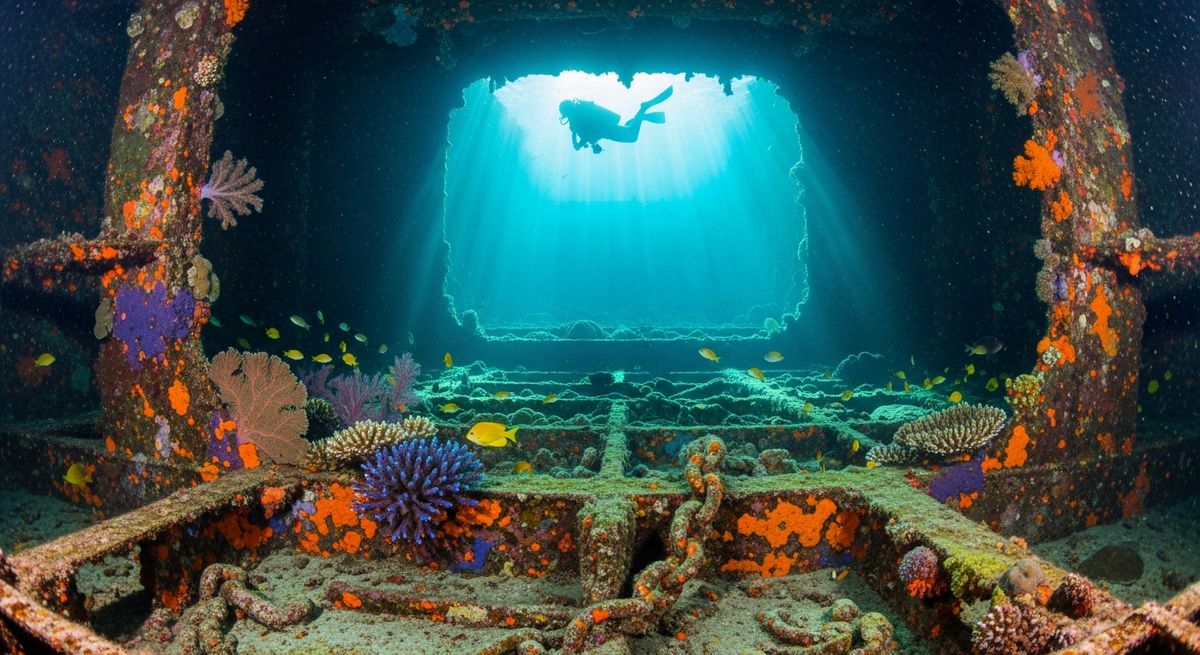
The Anlaby wreck off May Island is one of our favourite Scottish dives when conditions allow. She’s a proper historical piece, an iron steamship that ran aground back in 1873. You descend onto the scattered remains, mostly broken up now, but the sheer scale of the iron plates and frames hints at her original size – a substantial 70 metres. We love picking through the debris, especially when the light filters down, illuminating the plates draped in dead man's fingers. It's not a wreck for penetration, more an archaeological ramble around the scattered bones of a ship. The single boiler is a good focal point, often swarming with wrasse. Look closely among the wreckage for nudibranchs and squat lobsters; the cracks and crevices are full of them. Visibility can be hit or miss, but on a good day, with a gentle swell, it’s a genuinely atmospheric dive, an accessible slice of maritime history for confident divers comfortable with colder waters and potentially strong currents. Our advice? Go at slack water, it makes a world of difference.
Typical ANLABY Dive Profile
Illustrative profile based on site depth and type. Actual dive profiles vary - always follow your dive computer and training.
Safety Notes
Depth of 20m - Advanced Open Water certification recommended.
Wreck site - avoid penetration without wreck diving certification. Watch for sharp metal and entanglement hazards.
Always perform a 3-minute safety stop at 5m before surfacing.
ANLABY Wreck History
Year Sunk
1873
Vessel Type
cargo ship
Cause
grounding
Tonnage
941 GRT
The SS ANLABY was an iron-hulled steamship built in 1872, a modern vessel for its time. In August 1873, while on a passage from Leith, Scotland to Danzig (now Gdansk, Poland) with a cargo of coal, it encountered thick fog. Navigating blindly, the ship ran hard aground on the treacherous rocks of the Isle of May. A desperate attempt was made to save the vessel by lightering its cargo, but the damage was too severe. The ANLABY slipped off the reef and sank into the cold waters of the North Sea.
Today, the remains of the ANLABY lie scattered in 20 meters of water, a testament to over a century of Scottish storms. While the hull has broken up, divers can still clearly identify major components like its single large boiler and compound expansion engine. The wreckage provides a fascinating habitat for the area's marine life, with colourful cuckoo wrasse, crabs, and lobsters hiding amongst the corroded iron plates. It's a classic UK east coast wreck dive, offering a tangible connection to 19th-century maritime history.
Nearest Dive Centres to ANLABY
Dive shops near ANLABY
View all dive centres in Scottish East Coast & BordersReviews for ANLABY
Conditions
Ocean conditions, forecast and tides for ANLABY
Plan & book
Ways to dive Scottish East Coast & Borders, from day trips to liveaboards.
Day trips & courses
via GetYourGuideGuided dives, courses and snorkel trips with instant booking.
Find dive trips in Scottish East Coast & BordersPlaces to stay
via Booking.comHotels and dive resorts near Scottish East Coast & Borders.
Search stays in Scottish East Coast & BordersDive insurance
Most travel insurance excludes or limits scuba. Check what you need before you go.
Dive insurance explainedPartner links: we may earn a commission if you book, at no extra cost to you. How we make money
Where to Stay near ANLABY
Prices from Booking.com. We may earn a commission at no extra cost to you.