ANU (PROBABLY)
Protected Area
Barry Links
Why dive here
With 112+ marine species recorded in the area - including dolphins, dwarf minke whales, humpback whales, ocean sunfish (mola mola) and orcas - ANU (PROBABLY) offers some of Scottish East Coast & Borders's richest wreck diving.
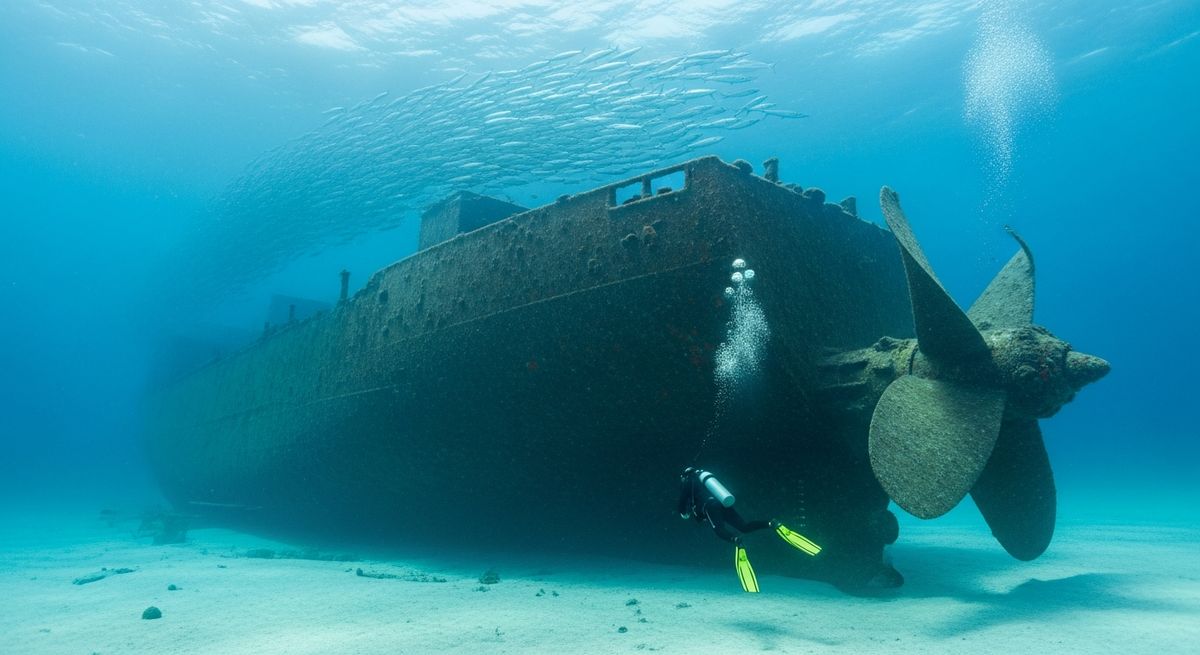
The ANU is one of those wrecks that really gets under your skin. We love it because it’s a proper historical dive, not just a pile of plates. She lies mostly upright, well-preserved considering her age and the North Sea’s temperament. Dropping down, you’ll start to pick out her lines – the bow is particularly photogenic, often swarming with small pollock and a few curious wrasse. Our favourite part is exploring the midships, where the single boiler dominates the scene, a massive cylindrical beast that hints at the power she once held. Look closely at the deck plating around it; you can often spot large velvet swimming crabs scuttling into crevices, their eyes glinting. Penetration is limited and only for those with proper training and equipment, but there’s plenty to see from the outside. The stern offers some interesting structural elements too, with sections of deck collapsed in, creating nooks and crannies that lobsters and conger eels call home. It’s a dive that rewards slow exploration, letting your eyes adjust to the ambient light, taking in the scale of this old steamer. We’d suggest a slack water dive for the best experience, as currents here can be a bit frisky.
Typical ANU (PROBABLY) Dive Profile
Illustrative profile based on site depth and type. Actual dive profiles vary - always follow your dive computer and training.
Safety Notes
Depth of 22m - Advanced Open Water certification recommended.
Wreck site - avoid penetration without wreck diving certification. Watch for sharp metal and entanglement hazards.
Always perform a 3-minute safety stop at 5m before surfacing.
ANU (PROBABLY) Wreck History
Year Sunk
1940
Vessel Type
cargo ship
Cause
torpedo
Tonnage
1,409 GRT
The vessel that sank as the SS Anu had a long and varied career, reflecting the changing tides of maritime commerce. Built in 1883 in South Shields as the SS Billio, she sailed for over half a century under several names, including Excelsior and Wylo. By the time World War II began, the aging steamship was sailing under the Estonian flag as the Anu, a testament to her durability and the constant demand for cargo vessels.
In the early months of the war, the North Sea was one of the most dangerous shipping lanes in the world. On February 6, 1940, the Anu was en route from Blyth to Gothenburg, Sweden, with a full cargo of coal. Off the Farne Islands, she was spotted by the German U-boat U-13. A single torpedo struck the ship, and the old steamer sank quickly, resulting in the loss of 11 of her 18 crew members.
Today, the wreck of the Anu rests in just 22 metres of water, making it a popular and highly accessible dive on the Scottish East Coast. Years on the seabed and the force of her sinking have left the vessel heavily broken up, with wreckage scattered across the seabed. Despite this, her large boiler and engine block stand proud, providing a clear focal point for the dive. The scattered plates and ribs of the hull now provide a perfect habitat for a host of marine life, including lobsters, crabs, and large conger eels, making the Anu a fantastic dive for both history buffs and underwater photographers.
Reviews for ANU (PROBABLY)
Conditions
Ocean conditions, forecast and tides for ANU (PROBABLY)
Plan & book
Ways to dive Scottish East Coast & Borders, from day trips to liveaboards.
Day trips & courses
via GetYourGuideGuided dives, courses and snorkel trips with instant booking.
Find dive trips in Scottish East Coast & BordersPlaces to stay
via Booking.comHotels and dive resorts near Scottish East Coast & Borders.
Search stays in Scottish East Coast & BordersDive insurance
Most travel insurance excludes or limits scuba. Check what you need before you go.
Dive insurance explainedPartner links: we may earn a commission if you book, at no extra cost to you. How we make money
Where to Stay near ANU (PROBABLY)
Prices from Booking.com. We may earn a commission at no extra cost to you.