ARBUTUS
Protected Area
Lindisfarne
Why dive here
With 112+ marine species recorded in the area - including dolphins, dwarf minke whales, humpback whales, ocean sunfish (mola mola) and orcas - ARBUTUS offers some of Scottish East Coast & Borders's richest wreck diving.
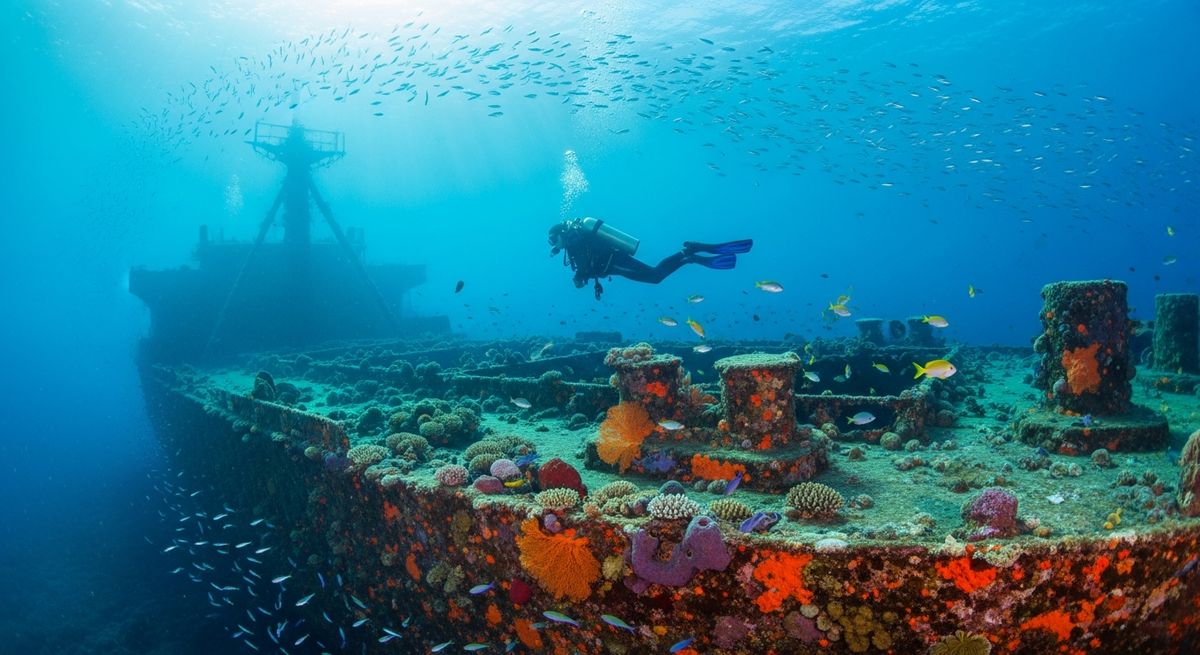
The Arbutus is one of those wrecks that just delivers, a proper piece of history right off Holy Island. We’ve always had a soft spot for it. She broke in two after hitting Goldstone Rock back in 1890, so what you get now is two distinct sections, lying around 14 metres. We prefer the bow section; it’s more intact, with a nice bit of penetration if you’re comfortable in overhead environments. Think dark, rusty holds and the faint glint of torchlight on old machinery. Even at this depth, the light often filters down, illuminating the clouds of juvenile coalfish that swarm around the decking. Look for conger eels tucked into the deeper crevices and the occasional inquisitive grey seal pup checking you out. It’s a cracker of a dive for experienced wreck enthusiasts. The current can pick up, so time your dive for slack water. Our tip? Go on a sunny day if you can, the visibility genuinely feels better and the whole experience is richer.
Typical ARBUTUS Dive Profile
Illustrative profile based on site depth and type. Actual dive profiles vary - always follow your dive computer and training.
Safety Notes
Wreck site - avoid penetration without wreck diving certification. Watch for sharp metal and entanglement hazards.
Always perform a 3-minute safety stop at 5m before surfacing.
ARBUTUS Wreck History
Year Sunk
1890
Vessel Type
cargo ship
Cause
grounding
Tonnage
590 GRT
The SS Arbutus was a typical late-Victorian steamship, plying the coastal trade routes of the United Kingdom. In the heart of winter, on January 17, 1890, she was steaming south on a routine voyage from Dundee to Seaham, likely carrying coal or other industrial goods. As she navigated the notoriously challenging waters off the coast of Northumberland, she sailed toward a fate met by countless other vessels in the age of steam and sail.
The ship's journey came to an abrupt and violent end when she struck Goldstone Rock, a treacherous reef near Holy Island that has claimed many victims over the centuries. The force of the impact was devastating, and the wounded ship was left at the mercy of the sea. The powerful currents and waves eventually broke the vessel in two, and the sections sank into deeper water near the rock where she had met her demise.
Lying at a maximum depth of 14 meters, the Arbutus is now a fantastic and accessible wreck dive for those exploring the Scottish Borders and Northumberland coast. Having been underwater for over a century, the ship is well broken up, but key features like her boiler and engine block are still clearly identifiable. The scattered hull plates and ribs have become a thriving habitat for marine life, encrusted with anemones and soft corals, and providing shelter for crabs, lobsters, and various species of fish. It's a dive that offers both a glimpse into maritime history and a rich natural ecosystem.
Nearest Dive Centres to ARBUTUS
Dive shops near ARBUTUS
View all dive centres in Scottish East Coast & BordersReviews for ARBUTUS
Conditions
Ocean conditions, forecast and tides for ARBUTUS
Plan & book
Ways to dive Scottish East Coast & Borders, from day trips to liveaboards.
Day trips & courses
via GetYourGuideGuided dives, courses and snorkel trips with instant booking.
Find dive trips in Scottish East Coast & BordersPlaces to stay
via Booking.comHotels and dive resorts near Scottish East Coast & Borders.
Search stays in Scottish East Coast & BordersDive insurance
Most travel insurance excludes or limits scuba. Check what you need before you go.
Dive insurance explainedPartner links: we may earn a commission if you book, at no extra cost to you. How we make money
Where to Stay near ARBUTUS
Prices from Booking.com. We may earn a commission at no extra cost to you.