ARCHANGEL
Protected Area
Foveran Links
Why dive here
With 112+ marine species recorded in the area - including dolphins, dwarf minke whales, humpback whales, ocean sunfish (mola mola) and orcas - ARCHANGEL offers some of Scottish East Coast & Borders's richest wreck diving.
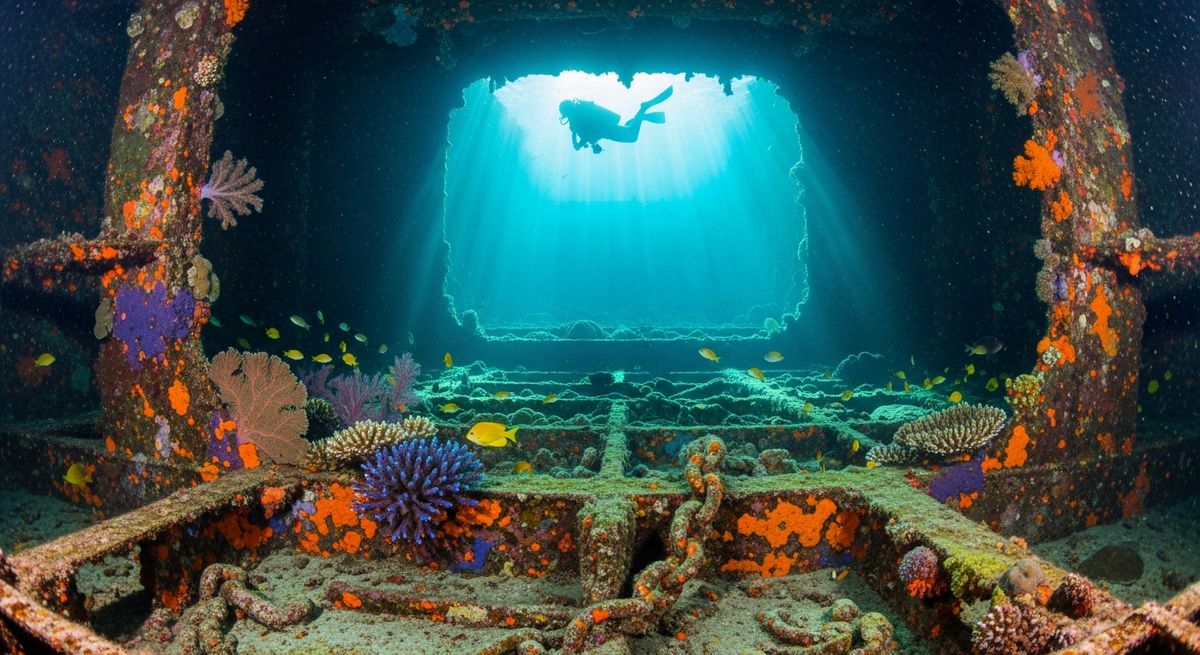
The Archangel is a proper old girl, a steamship sunk back in 1941, and we think she’s a fantastic dive when conditions play ball. Lying in a relatively shallow 12 metres, she’s perfect for extended bottom times, allowing you to really soak in the history without constantly watching your gauge. We’ve always been drawn to her sheer scale – over 100 metres long – and even after all these years, you can still get a feel for her original shape, especially the impressive boilers. There’s a real sense of exploration here; you can potter around the deck, peer into cargo holds, and often spot lobsters tucked away in the darker corners. While it’s not a vibrant coral reef, the Archangel is teeming with local life. You’ll find shoals of coalfish darting through the superstructure, crabs scuttling over the plates, and often, some surprisingly large conger eels making their homes in the deeper recesses. It’s a dive for those who appreciate maritime history and the hardy marine life that thrives in these cooler waters. Our tip? Aim for a calm day with minimal swell. The visibility can be hit-or-miss, but when it’s good, the Archangel truly shines.
Typical ARCHANGEL Dive Profile
Illustrative profile based on site depth and type. Actual dive profiles vary - always follow your dive computer and training.
Safety Notes
Wreck site - avoid penetration without wreck diving certification. Watch for sharp metal and entanglement hazards.
Always perform a 3-minute safety stop at 5m before surfacing.
ARCHANGEL Wreck History
Year Sunk
1941
Vessel Type
passenger ship
Cause
aircraft
Tonnage
2,488 GRT
Launched in 1910 as the SS St. Petersburg, this elegant steamship was built by the renowned John Brown & Company shipyard in Clydebank for the Great Eastern Railway's passenger ferry service between Harwich and the Hook of Holland. Following service in the First World War, she was renamed SS Archangel. With the outbreak of the Second World War, she was once again requisitioned for military duty, this time serving as a troopship, carrying soldiers to various postings around the UK.
Her long career came to a violent end on May 16, 1941. While sailing off the coast of Aberdeenshire near the village of St Cyrus, the Archangel was spotted and attacked by German bombers. The ship sustained direct hits and sank, though thankfully with no loss of life. Her sinking was a stark reminder of the long reach of the Luftwaffe, even along the Scottish coast.
Lying in just 12 metres of water, the Archangel is now a heavily broken but fascinating wreck site, accessible to divers of all levels. The ship was extensively salvaged for its valuable metals after the war, leaving a wide debris field. Her five massive boilers, however, remain the most prominent feature, standing proud from the seabed and providing a fantastic focal point for exploration and a popular habitat for local marine life.
Reviews for ARCHANGEL
Conditions
Ocean conditions, forecast and tides for ARCHANGEL
Plan & book
Ways to dive Scottish East Coast & Borders, from day trips to liveaboards.
Day trips & courses
via GetYourGuideGuided dives, courses and snorkel trips with instant booking.
Find dive trips in Scottish East Coast & BordersPlaces to stay
via Booking.comHotels and dive resorts near Scottish East Coast & Borders.
Search stays in Scottish East Coast & BordersDive insurance
Most travel insurance excludes or limits scuba. Check what you need before you go.
Dive insurance explainedPartner links: we may earn a commission if you book, at no extra cost to you. How we make money
Where to Stay near ARCHANGEL
Prices from Booking.com. We may earn a commission at no extra cost to you.